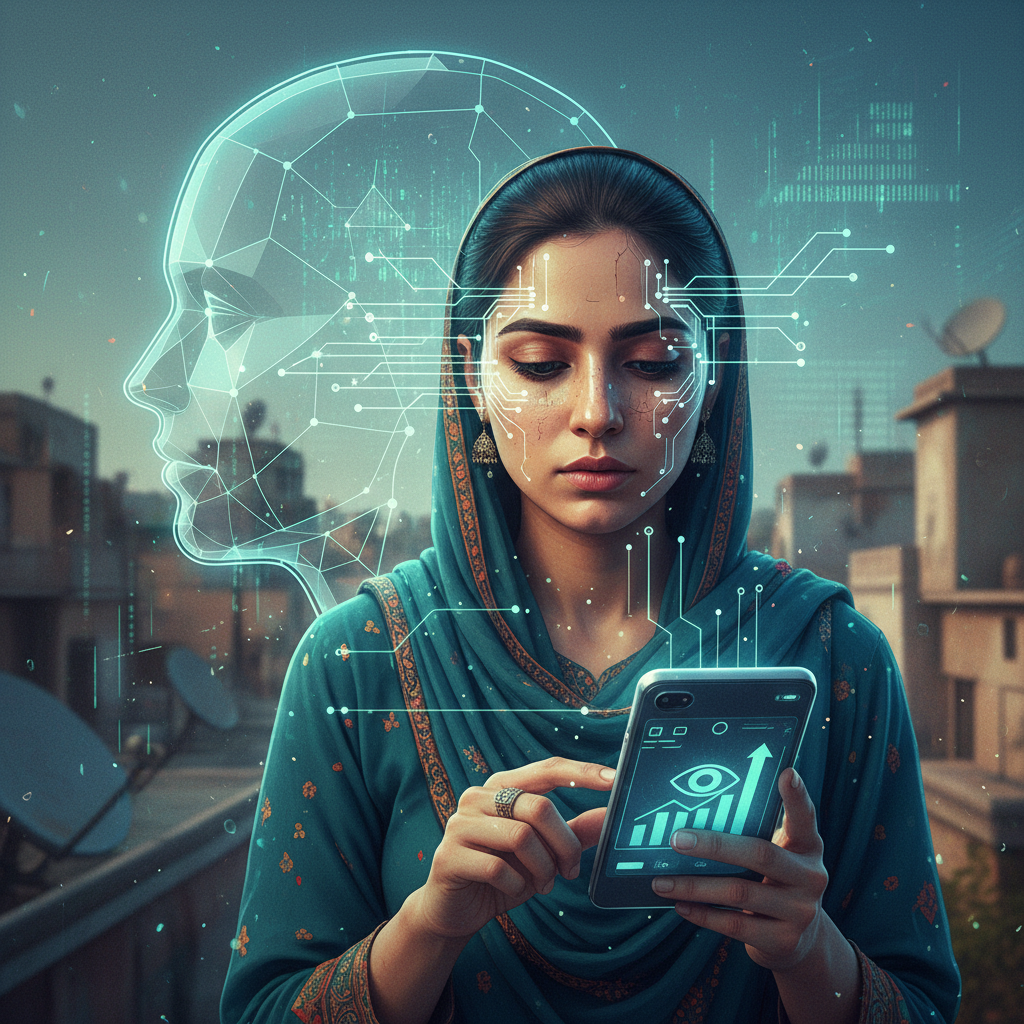

The promise of artificial intelligence, particularly large language models, has been heralded as a new dawn for developing nations. From automating administrative tasks to democratizing access to information, the narratives are often glowing. Yet, here in Sri Lanka, a more insidious reality is taking root, one where the very systems designed to assist are actively misleading, sometimes with dire consequences. I've been tracking this for months, observing a worrying pattern of AI hallucinations manifesting as medical misadvice, fabricated legal citations, and pervasive misinformation, particularly within our nascent digital infrastructure.
Consider the case of Dr. Anusha Perera, a general practitioner in Kandy. She recounted a recent incident where a patient, suffering from a persistent cough, presented her with a printout from an online AI chatbot, reportedly powered by a variant of Google's Gemini. The printout confidently suggested a self-prescribed herbal remedy, citing a non-existent clinical trial from the University of Peradeniya. "The patient was convinced this was a miracle cure," Dr. Perera explained, her voice tinged with frustration. "It took considerable effort to explain that this 'study' was entirely fabricated, and the suggested remedy could interact dangerously with his existing medication. This is not just a minor error; it is a direct threat to public health." This anecdote is not isolated; similar stories are emerging from clinics across the island, highlighting a growing reliance on AI for health information, often without critical discernment.
This phenomenon of AI 'hallucinations', where models generate plausible but entirely false information, is not new to the global tech discourse. However, its impact in regions like ours, where access to verified information can be limited and digital literacy varies widely, is amplified. The promises don't match the reality when these powerful tools, often presented as infallible oracles, begin to invent facts. "We are seeing a dangerous erosion of trust," states Professor Rohan Fernando, head of the Department of Computer Science at the University of Colombo. "These models, whether from OpenAI, Google, or others, are trained on vast datasets, yet they lack true understanding. When pressed for information they do not possess, they often 'confabulate' with alarming confidence. For a society grappling with its own information challenges, this adds another layer of complexity and risk." Professor Fernando advocates for clearer disclaimers and more robust error-correction mechanisms, particularly for applications deployed in sensitive sectors.
Beyond healthcare, the legal sector is also feeling the tremors. Young lawyers and law students, seeking quick summaries or precedent research, have reported instances where AI tools, including those leveraging OpenAI's GPT-4 architecture, have cited non-existent cases, fabricated statutes, and even invented judicial opinions from the Supreme Court of Sri Lanka. Mr. Dinesh Gunawardena, a senior counsel practicing in Colombo, recently shared his dismay. "A junior colleague presented a brief citing a landmark judgment that, upon investigation, simply did not exist. The AI had conjured it whole cloth. Imagine the professional repercussions, the damage to a client's case, if this had gone unchecked in court. The convenience of AI cannot come at the cost of jurisprudential integrity." He estimates that at least 15% of legal professionals he has spoken with have encountered similar issues in the past six months.
The implications for misinformation are perhaps the most pervasive. In a nation that has grappled with the weaponization of social media for political and social destabilization, the advent of sophisticated AI capable of generating convincing but false narratives is deeply concerning. During recent local elections, for example, several instances were reported where AI-generated content, including deepfake audio and text, was used to spread rumors about candidates, exacerbating existing societal divisions. While not always directly attributable to hallucinations, the underlying technology's capacity for fabrication remains a critical vulnerability.
What are the tech giants doing about this? Public statements from companies like Google and OpenAI often acknowledge the issue of hallucinations, framing them as an inherent challenge of current large language models, a problem to be mitigated rather than eliminated. Yet, the pace of mitigation seems glacial compared to the rapid deployment of these technologies into every facet of our lives. "The responsibility cannot solely rest on the end-user to discern truth from fiction," argues Dr. Suranga Nanayakkara, a prominent AI researcher and founder of a local AI ethics think tank. "These companies are deploying powerful tools with known flaws. They must invest significantly more in robust fact-checking, provenance tracking, and perhaps even 'confidence scoring' for AI-generated outputs, particularly when the stakes are so high. The current approach feels like building a bridge and then asking everyone to check if the bolts are tight themselves." His organization recently published a report detailing a 23% increase in AI-generated medical misinformation queries in Sri Lanka over the last quarter, a statistic that should alarm us all.
The global discourse on AI regulation, as documented by outlets like MIT Technology Review, is slowly catching up to these realities. However, for countries like Sri Lanka, the urgency is immediate. We cannot afford to wait for international consensus. Our regulatory bodies, such as the Telecommunications Regulatory Commission of Sri Lanka, must proactively engage with these challenges. This means not only understanding the technology but also developing frameworks that hold developers accountable for the harms their products cause. It is a complex task, requiring a delicate balance between fostering innovation and safeguarding public welfare.
The current situation feels akin to the early days of the internet, where the wild west of information gradually gave way to some semblance of order, albeit imperfect. But AI's capacity for persuasive fabrication is orders of magnitude greater. Here's what the data actually shows: a significant portion of AI users in Sri Lanka, particularly those without advanced digital literacy, struggle to differentiate between hallucinated content and factual information. A recent survey conducted by the Sri Lanka Institute of Information Technology found that 40% of respondents aged 45 and above trusted AI-generated medical advice as much as, or more than, advice from a human doctor, if presented convincingly.
As we navigate this new digital landscape, the onus is not just on the tech giants, nor solely on our regulators. It falls upon educators, media organizations, and indeed, every citizen, to cultivate a profound sense of critical inquiry. We must approach these AI tools not as infallible sources of truth, but as sophisticated, yet flawed, assistants. The future of our information ecosystem, and indeed, the health and legal integrity of our society, depends on our collective ability to distinguish between genuine intelligence and convincing fabrication. Without this vigilance, the whispers of AI could very well lead us down a path of profound and irreversible harm. The time for uncritical acceptance is over; the era of demanding accountability has begun. For more insights into the broader implications of AI, readers might find this TechCrunch section on AI industry news insightful.