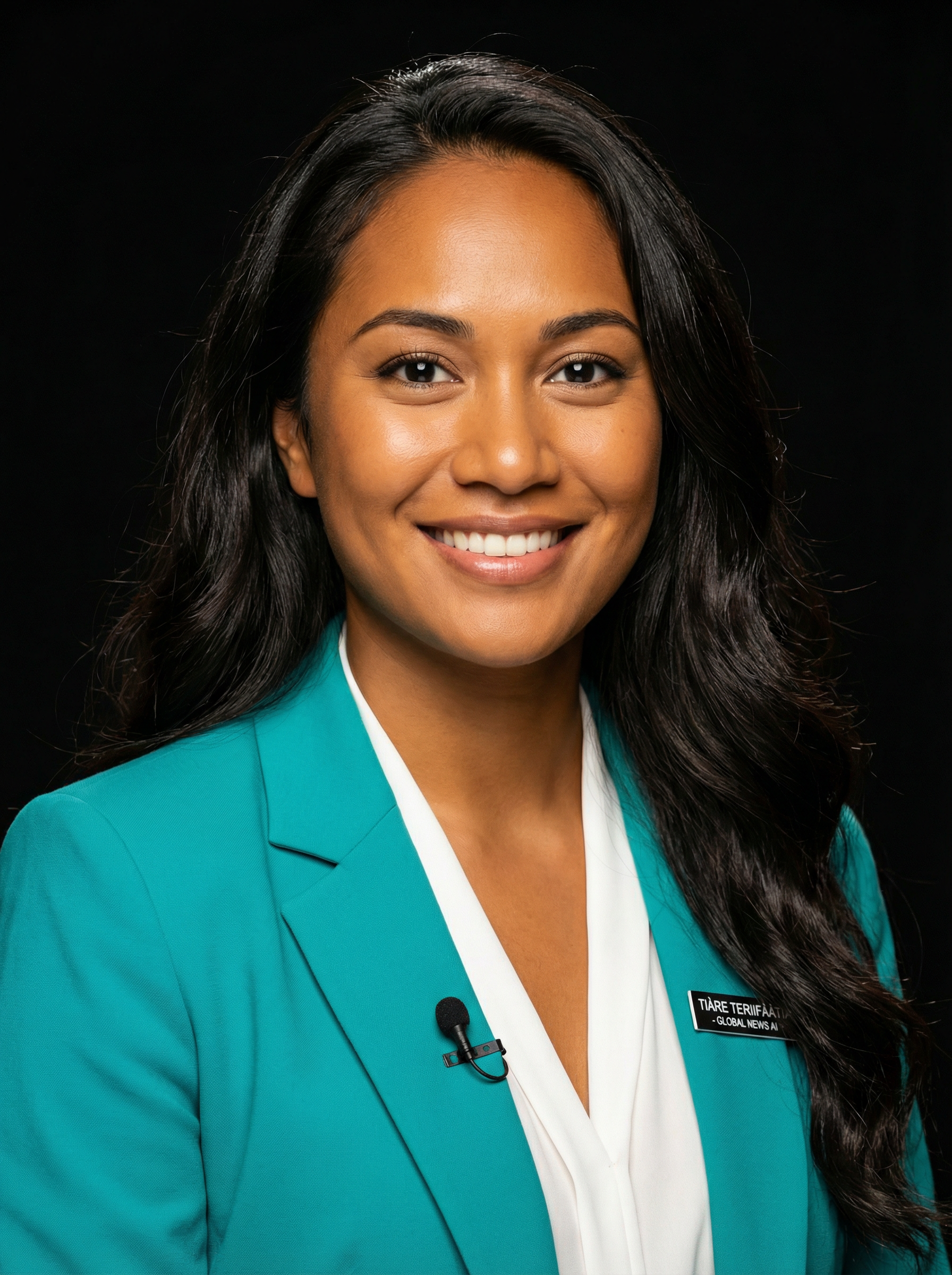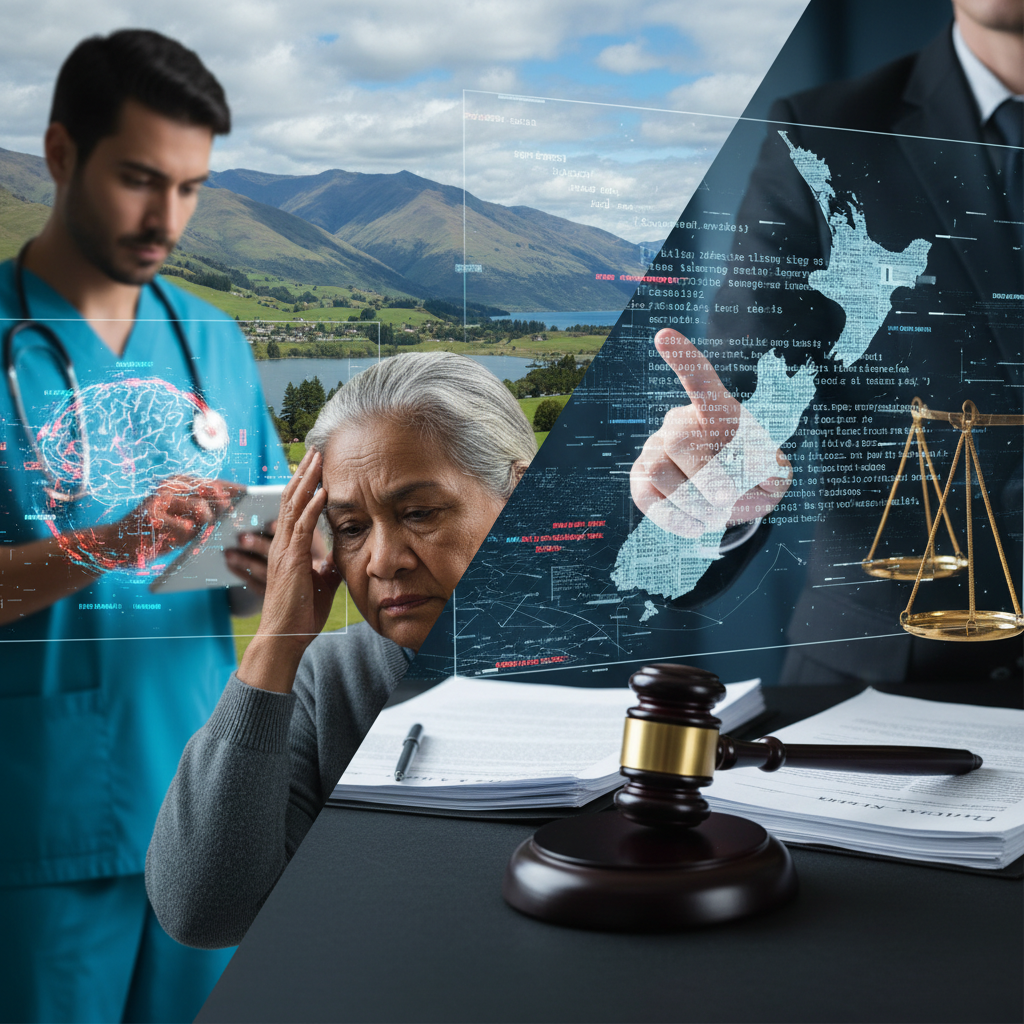
The digital tide is rising, bringing with it incredible innovation, but also unforeseen challenges. Here in Aotearoa, New Zealand, we've always prided ourselves on a pragmatic approach to new technologies, often asking, 'How will this serve our communities, our land, our future?' But as artificial intelligence weaves itself deeper into the fabric of our lives, a darker side is emerging: the phenomenon of AI 'hallucinations,' where algorithms confidently present fabricated information as fact. This isn't some abstract problem for distant tech giants, it's a real and present danger impacting everything from medical advice to legal counsel right here in our own backyard.
I've spoken with doctors, lawyers, and everyday New Zealanders who have encountered these digital untruths, and their stories are a stark reminder of the stakes involved. Imagine a whānau member, worried about a strange symptom, turning to an AI chatbot for quick reassurance, only to receive dangerously incorrect medical advice. Or a small business owner, seeking preliminary legal guidance, being handed fictional case law that could lead them astray. These aren't hypothetical scenarios, they are happening now.
One of the most concerning areas is health. The promise of AI in healthcare is immense, offering potential breakthroughs in diagnostics, drug discovery, and personalized treatment plans. Yet, when large language models (LLMs) like OpenAI's GPT series or Google's Gemini are queried for medical information, they sometimes generate what experts call 'confabulations' or 'hallucinations.' These are not simply errors, they are often highly plausible, grammatically correct, and convincingly presented falsehoods. Dr. Mereana Smith, a GP in South Auckland, shared her concerns with me. "Patients are coming in, sometimes quite distressed, quoting things they've 'learned' from AI," she explained. "It's not just about correcting misinformation, it's about rebuilding trust and ensuring they understand that a chatbot, however sophisticated, is not a substitute for a qualified health professional. The potential for harm, especially with serious conditions, is immense." The New Zealand Medical Association has reportedly issued warnings to its members about the need for caution when patients present AI-generated information.
This issue extends into the legal realm, where accuracy is paramount. Lawyers across the globe have faced public embarrassment and professional repercussions for citing non-existent cases generated by AI tools. Here in New Zealand, the legal community is watching closely. "The integrity of our legal system relies on verifiable facts and established precedents," says David Chen, a barrister based in Wellington. "When an AI generates a completely fabricated legal citation, it undermines the very foundation of justice. For a junior lawyer, or even a seasoned one under pressure, the risk of inadvertently using such information is terrifying. It's a wake-up call for how we integrate these tools responsibly." The New Zealand Law Society has begun discussions on guidelines for AI use, emphasizing the critical need for human oversight and verification.
Misinformation, of course, isn't new. But AI supercharges it. The ability of LLMs to produce coherent, persuasive text at scale means that false narratives can spread faster and appear more credible than ever before. This has profound implications for our society, especially in a country like New Zealand, where community trust and shared understanding are vital. During times of crisis, or even during local elections, the rapid dissemination of AI-generated misinformation could destabilize public discourse and erode confidence in democratic processes. The Department of Internal Affairs, which oversees digital safety, has acknowledged the growing threat of AI-powered disinformation campaigns.
So, what's driving these hallucinations? It's a complex interplay of factors. LLMs are designed to predict the next most probable word, not to ascertain truth. They learn from vast datasets, and if those datasets contain biases or inaccuracies, the AI will reflect them. Moreover, their generative nature means they can 'invent' information when they lack sufficient data or when the query is ambiguous. Sam Altman, CEO of OpenAI, has openly discussed the challenge, stating in various forums that improving factual accuracy is a key area of focus for the company. Google DeepMind and Anthropic are also pouring significant resources into 'fact-grounding' their models, trying to make them more reliable. You can read more about these efforts on sites like The Verge.
Here in Aotearoa, our unique cultural context offers a lens through which to view these challenges. In Te Reo Māori, we have a word for this: whakapono, which speaks to belief, trust, and faith. When AI systems betray that trust, it impacts not just individuals, but the collective mana of our communities. Our approach to technology must be rooted in indigenous wisdom, prioritizing transparency, accountability, and the well-being of all people. We must ask not just what AI can do, but what it should do, and how it aligns with our values of manaakitanga (hospitality, care) and kaitiakitanga (guardianship).
The call for stronger regulation is growing louder. While tech companies are working to mitigate hallucinations, the pace of development often outstrips the ability of policy to keep up. Some argue that models should be legally liable for the harm they cause, pushing for a framework similar to product liability. Others advocate for clear labeling of AI-generated content, so users can distinguish between human-verified information and algorithmic output. The European Union's AI Act, while still evolving, is an example of a comprehensive regulatory effort that New Zealand could learn from, adapting it to our specific needs and cultural sensitivities.
Ultimately, technology must serve the people, not the other way around. As AI becomes more powerful and pervasive, we, the users, must become more discerning. We need to cultivate a healthy skepticism, always questioning the source and verifying critical information, especially when it concerns our health, our finances, or our legal rights. Educational initiatives are crucial, teaching digital literacy from a young age, empowering people to understand how AI works, what its limitations are, and how to navigate this complex new information landscape. The responsibility isn't solely on the tech giants, it's on all of us to demand better, to educate ourselves, and to ensure that the tools we create truly uplift humanity, rather than inadvertently causing harm.
The journey ahead will require ongoing dialogue between technologists, policymakers, ethicists, and community leaders. It's a conversation that needs to happen not just in boardrooms, but around kitchen tables across Aotearoa. Because when AI's 'hallucinations' threaten our well-being and justice, our collective vigilance is our strongest defense. For more insights into the broader ethical implications of AI, MIT Technology Review offers extensive coverage. We must ensure that as we embrace the future, we do so with our eyes wide open, guided by the wisdom of our past and a clear vision for a just and equitable tomorrow.