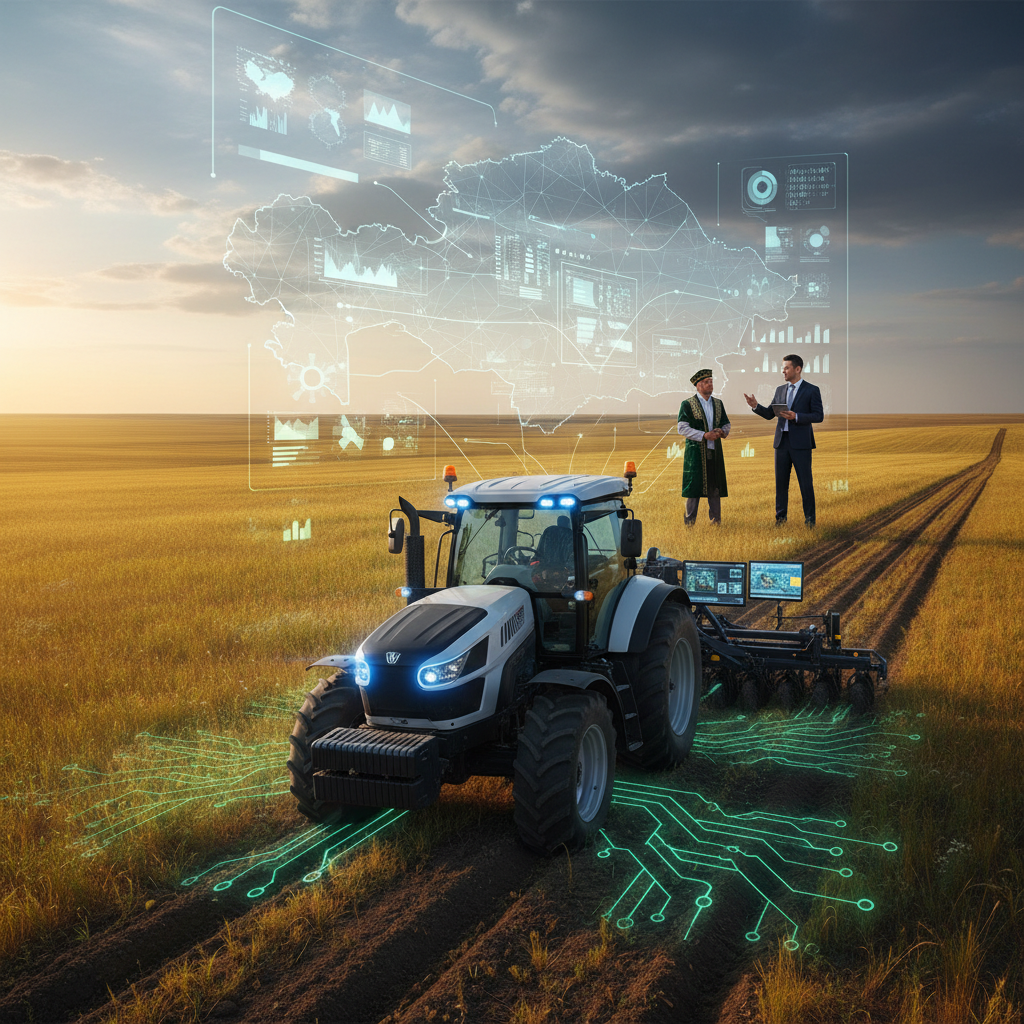

Kazakhstan, with its immense steppes stretching across Central Asia, has long been a breadbasket, its agricultural output critical to both national and regional stability. For generations, farming here has been a dance with nature, a test of endurance against harsh winters and scorching summers. Now, a new partner has entered this dance: artificial intelligence. The promise of AI in agriculture, particularly in precision farming, crop monitoring, and yield optimization, is alluring. It speaks of efficiency, sustainability, and increased prosperity. But as a journalist from this land, I am compelled to look beyond the glossy projections and examine the mechanics of this technological shift, to understand how it truly works, and for whom.
The Big Picture: Cultivating Data for a Bountiful Future
At its core, AI-driven precision agriculture aims to make farming smarter, not just harder. Imagine a farmer no longer relying solely on intuition or broad-stroke applications across vast fields. Instead, every square meter of land is understood, its needs precisely met. This is the vision. The system acts as an intelligent overseer, collecting colossal amounts of data about soil, weather, plant health, and even pest infestations. It then processes this information using sophisticated algorithms to provide actionable insights. The goal is to optimize every input, from water and fertilizer to pesticides, minimizing waste and maximizing output. For a country like Kazakhstan, where water resources can be strained and land utilization is paramount, such efficiency could be transformative.
The Building Blocks: Sensors, Satellites, and Neural Networks
To understand how this complex machine operates, we must first break it down into its fundamental components. Think of it as a sophisticated digital ecosystem:
- Data Collection Layer: This is the sensory apparatus of the system. It includes:
- Satellite Imagery: High-resolution images from space provide a macro view of fields, tracking changes in vegetation health, moisture levels, and growth patterns over time. Companies like Planet Labs and Maxar Technologies offer these services globally.
- Drone Technology: Unmanned aerial vehicles equipped with multispectral or hyperspectral cameras fly over fields, capturing detailed images at a much finer resolution than satellites. These cameras can detect plant stress invisible to the human eye.
- Ground Sensors: Networks of sensors embedded in the soil measure moisture, temperature, pH levels, and nutrient content in real time.
- Weather Stations: Localized weather data, including rainfall, wind speed, and humidity, are crucial inputs.
- Farm Equipment Telemetry: Modern tractors and harvesters are often equipped with GPS and sensors that record operational data, such as planting density, fertilizer application rates, and yield maps.
-
Data Processing and Analysis Layer: This is where the 'intelligence' resides. Raw data from the collection layer is fed into powerful computing systems. Here, machine learning algorithms, particularly deep learning models like convolutional neural networks (CNNs), are employed. These neural networks are trained on vast datasets of historical crop performance, disease patterns, and environmental conditions. They learn to identify correlations and predict outcomes.
-
Decision Support and Actuation Layer: Based on the analysis, the system generates recommendations. These might be displayed on a farmer's tablet or integrated directly into automated farm machinery. Actuation involves precision equipment, such as variable-rate irrigation systems that deliver water only where needed, or smart sprayers that target specific weeds, minimizing chemical use.
Step by Step: From Data Ingestion to Optimized Yield
Let us trace the journey of data through this system:
- Observation: Satellites capture daily images of a farmer's wheat fields near Kostanay. Drones conduct weekly flights, taking detailed multispectral photographs. Soil sensors report moisture levels every hour.
- Ingestion: All this disparate data is streamed to a central cloud platform. This platform, often powered by major cloud providers like Microsoft Azure or Google Cloud, acts as the central nervous system.
- Pre-processing: The raw data is cleaned, organized, and standardized. For example, satellite images are corrected for atmospheric interference, and sensor readings are calibrated.
- Feature Extraction: AI models extract meaningful features. For instance, from multispectral images, the Normalized Difference Vegetation Index (ndvi) is calculated, indicating plant vigor. From soil data, nutrient deficiencies are identified.
- Modeling and Prediction: Machine learning models, having been trained on years of historical data from similar regions and crop types, analyze these features. A CNN might detect early signs of rust disease in a specific section of the field based on subtle color changes in drone imagery. Another model might predict optimal nitrogen application rates for different zones based on soil tests and expected yield targets.
- Recommendation Generation: The system synthesizes these predictions into actionable advice. For example, it might recommend applying a specific fungicide to a 5-hectare patch in the northeast corner of the field, or increasing irrigation by 15% in a dry zone.
- Execution: The farmer receives these recommendations via a mobile app. Alternatively, if the farm uses autonomous equipment, the instructions are sent directly to a variable-rate sprayer or an irrigation system, which then precisely applies the necessary inputs. This closed-loop system allows for continuous monitoring and adjustment.
A Worked Example: Battling Wheat Rust in Akmola Region
Consider a wheat farmer in the Akmola region, a vital agricultural hub in northern Kazakhstan. In late spring, a common threat emerges: wheat rust, a fungal disease that can devastate yields. Traditionally, farmers might spray their entire field preventatively or wait until visible signs of widespread infection appear, by which point significant damage has already occurred.
With AI, the process is different. Weekly drone flights capture high-resolution multispectral images of the wheat fields. These images, invisible to the human eye, reveal subtle changes in plant reflectance that indicate early fungal stress, long before symptoms are visually apparent. An AI model, trained on thousands of images of healthy and rust-infected wheat, analyzes these new drone images. It identifies a small, nascent outbreak in a specific 10-hectare section of a 500-hectare field.
The system immediately alerts the farmer, pinpointing the exact coordinates of the affected area. It also recommends the precise type and quantity of fungicide required, based on current weather conditions, disease severity, and historical efficacy data. The farmer can then dispatch a drone or a tractor equipped with a precision sprayer to treat only that specific 10-hectare patch, saving significant costs on chemicals, reducing environmental impact, and preventing the disease from spreading across the entire field. This targeted intervention is a hallmark of precision agriculture.
Why It Sometimes Fails: Limitations and Edge Cases
Despite its promise, AI in agriculture is not without its challenges. My investigation reveals several critical points where these systems can falter:
- Data Quality and Availability: The accuracy of AI models is entirely dependent on the quality and quantity of the data they are trained on. In regions like rural Kazakhstan, comprehensive, long-term historical agricultural data can be scarce or inconsistent. Poor sensor calibration, cloud cover obstructing satellite imagery, or inconsistent drone flights can lead to unreliable inputs.
- Model Generalizability: An AI model trained on data from one region, with specific soil types and climate, may not perform well in another. The unique agro-ecological conditions across Kazakhstan, from the fertile north to the arid south, demand localized model training and continuous adaptation.
- Connectivity and Infrastructure: High-speed internet connectivity is essential for streaming vast amounts of data from fields to cloud platforms and for receiving real-time recommendations. Many remote agricultural areas in Kazakhstan still lack robust internet infrastructure, creating a significant barrier to adoption.
- Farmer Adoption and Expertise: Farmers must be willing and able to integrate these technologies into their practices. This requires training, trust in the technology, and a shift in traditional farming mindsets. The initial investment cost for advanced sensors, drones, and compatible machinery can also be prohibitive for smaller farms.
- Cybersecurity and Data Ownership: As farming becomes more digital, it also becomes more vulnerable. My investigation reveals concerns about the security of agricultural data, which could be exploited by malicious actors. Furthermore, the question of who owns the vast datasets generated by farmers, the farmers themselves, the tech companies, or the equipment manufacturers, remains a contentious issue. This is a critical area where Kazakhstan's digital ambitions hide a complex reality, necessitating clear regulatory frameworks.
Where This Is Heading: The Autonomous Farm and Beyond
The trajectory of AI in agriculture points towards increasingly autonomous systems. We are already seeing the emergence of robotic farm equipment that can plant, weed, and harvest with minimal human intervention. Companies like John Deere are heavily investing in AI and robotics, developing self-driving tractors and intelligent sprayers that can differentiate between crops and weeds with remarkable accuracy. The money trail leads to significant venture capital flowing into agricultural tech startups globally, focusing on everything from AI-powered vertical farms to gene-editing tools for crop resilience.
The future will likely see more sophisticated predictive models that integrate not just current data, but also climate change projections, global market prices, and even consumer demand patterns to optimize the entire agricultural supply chain. The development of 'digital twins' of farms, virtual replicas that simulate real-world conditions and allow for testing different strategies, is also on the horizon. For Kazakhstan, embracing these technologies thoughtfully, with a keen eye on data sovereignty and equitable access, will be crucial. The potential for increased food security and economic growth is immense, but so too are the challenges of ensuring this digital transformation benefits all, not just a select few.
As we navigate this new era, the lessons from our past, of resilience and adaptation, must guide our path. The steppe has always demanded respect and careful stewardship. Now, it demands intelligent stewardship, powered by algorithms, but guided by human wisdom. For more insights into the broader impact of AI, consider exploring analyses on MIT Technology Review. The intersection of technology and society is a field ripe for continuous scrutiny, as detailed by Wired and other leading publications. The global agricultural sector is undergoing a profound transformation, with companies like NVIDIA providing the computational backbone for many of these AI advancements, as reported by Reuters.