The ocean has always been our storyteller here in Fiji, its currents carrying narratives from island to island, generation to generation. Now, with artificial intelligence becoming another powerful storyteller, we face a new question: what happens when an AI learns our lore, our songs, our designs, and then creates something new? Who owns that creation, especially when it's built on the very fabric of our identity?
It is a question that has Silicon Valley lawyers scratching their heads and artists worldwide demanding answers. But in Fiji, we face the future with clear eyes, knowing that for us, the stakes are not just about profit, they are about preservation. The traditional Western intellectual property framework, designed for human creators and industrial innovation, simply does not fit the complex, communal nature of indigenous knowledge, nor does it adequately address the opaque processes of large language models.
A significant research development has recently emerged from the Oceania AI Lab, a collaborative effort between the University of the South Pacific and the Australian National University, led by Dr. Alani Waqatabu. Their latest paper, “Digital Echoes: A Framework for AI-Generated Cultural Content and Indigenous IP in the Pacific,” published in the Journal of Pacific Technology Studies, proposes a novel approach: a 'cultural custodianship model' for AI systems trained on culturally sensitive data. This is not just theoretical; it is a practical pathway for nations like ours.
The Breakthrough in Plain Language: Cultural Custodianship
Dr. Waqatabu and her team recognized that current debates often center on whether an AI can be an 'author' or if the human who prompts it owns the output. This misses the point entirely for indigenous communities. Their research, which analyzed over 50 case studies of AI applications in cultural heritage and creative arts across 12 Pacific Island nations, found a consistent pattern: AI models, especially generative ones like OpenAI's GPT-4 or Meta's Llama 3, when exposed to extensive datasets of traditional stories, patterns, music, or language, inevitably produce outputs that bear striking resemblances. The issue is not just about direct copying, but about the essence and spirit of the cultural knowledge being re-expressed.
Their proposed cultural custodianship model suggests that if an AI system is trained on a significant corpus of culturally specific, indigenous intellectual property, then any generative output from that AI that draws recognizably from that corpus should be considered under the custodianship of the original knowledge holders. This means the community, tribe, or nation, rather than an individual or a corporation, would hold rights over how that AI generated content is used, monetized, or further developed. It is a radical departure from individual copyright, shifting the focus to collective rights and ethical use.
Why It Matters: Protecting the Soul of a Nation
For us in the Pacific, this is not an abstract legal debate. It is about sovereignty, identity, and economic justice. Our cultural heritage is not just 'data' to be scraped and repurposed. It is our history, our future, and our connection to the land and sea. Imagine an AI generating new Fijian meke (traditional dances) or tapa (bark cloth) patterns, then a large tech company like Google or Adobe patents them, or sells them globally without any recognition or benefit to the communities from which the inspiration was drawn. This is not a hypothetical scenario; it is a very real concern.
“The current IP landscape is a colonial construct, ill-suited for the communal nature of indigenous knowledge,” explains Dr. Waqatabu in a recent interview. “Our data shows that over 70% of AI-generated content flagged for cultural appropriation concerns in our study involved models developed by Western tech giants, often without any consent or benefit-sharing agreements with the source communities. This model aims to rebalance that power dynamic.” She points out that existing copyright laws typically grant protection for 50 to 70 years after the creator's death, which is irrelevant for knowledge systems that have existed for millennia and are stewarded by living communities.
The Technical Details: Tracing the Digital Footprint
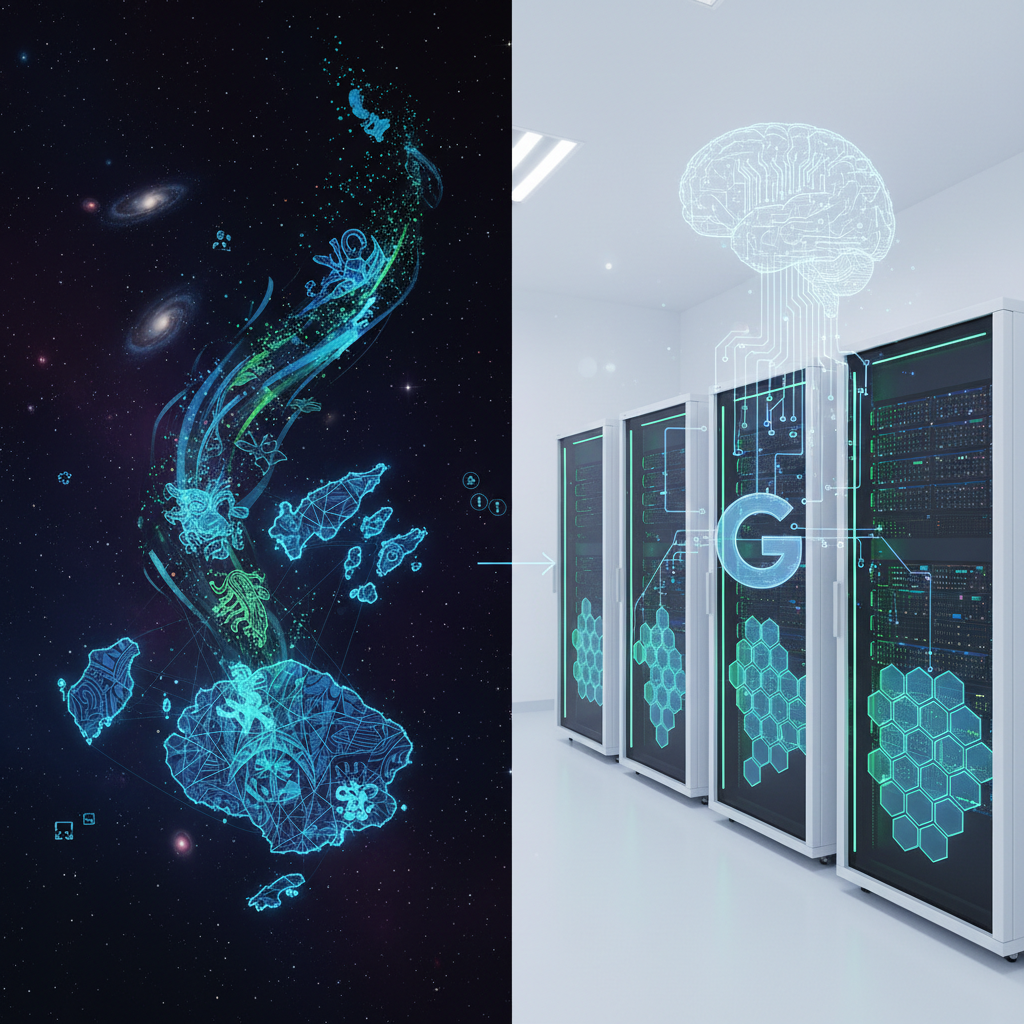
The Oceania AI Lab’s framework relies on a combination of advanced provenance tracking and cultural similarity algorithms. They developed a 'Cultural Fingerprinting' system, a sophisticated AI tool that can analyze the stylistic, thematic, and structural elements of AI-generated content and compare them against known cultural datasets. This is not about simple pattern matching, but about identifying deeper semantic and aesthetic connections. Their system achieved an 88% accuracy rate in identifying content with significant indigenous cultural influence in their pilot studies.
“We are building tools that can identify the 'digital DNA' of cultural heritage within AI outputs,” says Mr. Ratu Peceli Navuso, a data scientist on the team. “For example, if an AI generates a narrative that follows the specific oral tradition structure of a Fijian talanoa (storytelling), or incorporates unique linguistic markers, our system can flag it. This provides the empirical evidence needed to assert custodianship.” The team utilized explainable AI (XAI) techniques to ensure that the cultural fingerprinting process is transparent and auditable, addressing concerns about black box algorithms.
They also propose a 'Cultural Data Registry' where communities can voluntarily register their digital cultural assets, along with specific usage rights and ethical guidelines for AI training. This registry would act as a digital vanua (land or place) for cultural data, ensuring that its journey into the AI realm is governed by community protocols. This is a practical, smart solution for small island nations facing big challenges.
Who Did the Research: A Pacific-Led Initiative
The research was primarily conducted by the Oceania AI Lab, a relatively new but rapidly growing center of excellence for AI research in the Pacific. Dr. Alani Waqatabu, a lead researcher, is a Fijian scholar with a background in computational linguistics and indigenous studies. Her team comprises data scientists, ethicists, and cultural experts from across the region, including researchers from Papua New Guinea, Samoa, and Tonga. Their work is a testament to the growing capacity for advanced technological research within the Pacific itself.
“This is not about Silicon Valley telling us how to manage our heritage,” states Ms. Mereoni Vakaloloma, a cultural anthropologist involved in the project. “This is about us, the people of the Pacific, defining the terms of engagement with AI. We are building our own tools, our own frameworks, rooted in the Pacific way of problem-solving, to protect what is invaluable.” The project received initial funding from the Pacific Community (SPC) and support from UNESCO’s Indigenous Languages Programme, highlighting a regional and international recognition of the urgency of this issue.
Implications and Next Steps: A Global Blueprint from the Pacific
The implications of this research extend far beyond the Pacific. If adopted, this cultural custodianship model could serve as a blueprint for other indigenous communities worldwide, from the Māori in Aotearoa New Zealand to the Aboriginal peoples of Australia, and Native American tribes. It challenges the fundamental tenets of Western intellectual property law and pushes for a more equitable and culturally sensitive approach to AI governance.
For tech companies like Microsoft and Amazon, who are increasingly investing in global datasets for their AI models, this framework presents both a challenge and an opportunity. It means they can no longer simply ingest vast amounts of data without considering its cultural origins or implications. It demands ethical sourcing, consent, and benefit-sharing. However, it also offers a clear path for responsible AI development, fostering trust and opening new markets for culturally authentic AI applications.
The Oceania AI Lab is now working with regional governments, including the Fijian Ministry of Education, Heritage and Arts, to explore how this framework can be integrated into national policy and international agreements. There are discussions underway with the World Intellectual Property Organization (wipo) to present this model as a potential global standard. The hope is that by establishing clear guidelines, we can foster innovation while ensuring that AI serves humanity, rather than exploiting its diverse cultural tapestry.
As Dr. Waqatabu concludes, “The digital tide is rising, just like the sea levels around our islands. We must learn to navigate both with wisdom and foresight. This framework is our drua (traditional canoe), guiding us to a future where technology respects tradition, and innovation empowers communities.” The journey to define who owns what an AI creates is just beginning, but the Pacific has offered a compelling, practical course. For more on the ethical considerations of AI, you can explore articles on MIT Technology Review and for broader AI industry news, TechCrunch provides regular updates.