
The clang of hammers, the whir of machinery, the dust rising from construction sites across Accra and beyond. These are the sounds of progress, the tangible evidence of a nation building its future. Now, imagine artificial intelligence stepping into this symphony, promising to orchestrate it with unprecedented precision. AI in construction, they say, will optimize building designs, enhance safety monitoring, and streamline project management. It sounds like a dream, a true okyekye or beautiful structure, but I confess, a shiver of apprehension runs down my spine when I hear these promises.
From my desk here in Ghana, working for DataGlobal Hub, I see the world through a particular lens. It is a lens shaped by our history, our struggles, and our deep-seated desire for genuine equity. When I hear about AI transforming an industry as fundamental as construction, my first thought is not about speed or profit margins for multinational corporations. My thought is about who truly benefits, who is left behind, and whether this new wave of technology will truly serve the people, or merely entrench existing power imbalances. This affects every single one of us, whether we are laying bricks in Kumasi or designing skyscrapers in London.
Proponents of AI in construction often highlight its potential to revolutionize efficiency. Companies like Autodesk and Bentley Systems are already integrating AI algorithms into their design software, allowing architects to generate optimized structural layouts, predict material performance, and even simulate environmental impacts with remarkable accuracy. Imagine a future where AI can analyze local climate data, traditional building practices, and available resources to suggest designs that are not only structurally sound but also culturally resonant and environmentally sustainable. That is a powerful vision, one that could truly empower local architects and engineers to build structures that speak to our identity and needs, not just imported aesthetics.
Then there is safety. Construction is inherently dangerous, particularly in regions where regulations might be less stringent or resources scarce. AI powered cameras and sensors can monitor sites in real time, identifying potential hazards, tracking worker movements, and even predicting equipment failures before they occur. Companies like SmartVid.io, for instance, use computer vision to analyze jobsite photos and videos, flagging unsafe practices. This could drastically reduce accidents and save lives, a truly commendable application. Project management, too, stands to gain. AI can analyze vast datasets of past projects, predict delays, optimize resource allocation, and even manage supply chains more effectively. This means fewer cost overruns, faster completion times, and potentially more affordable housing or infrastructure.
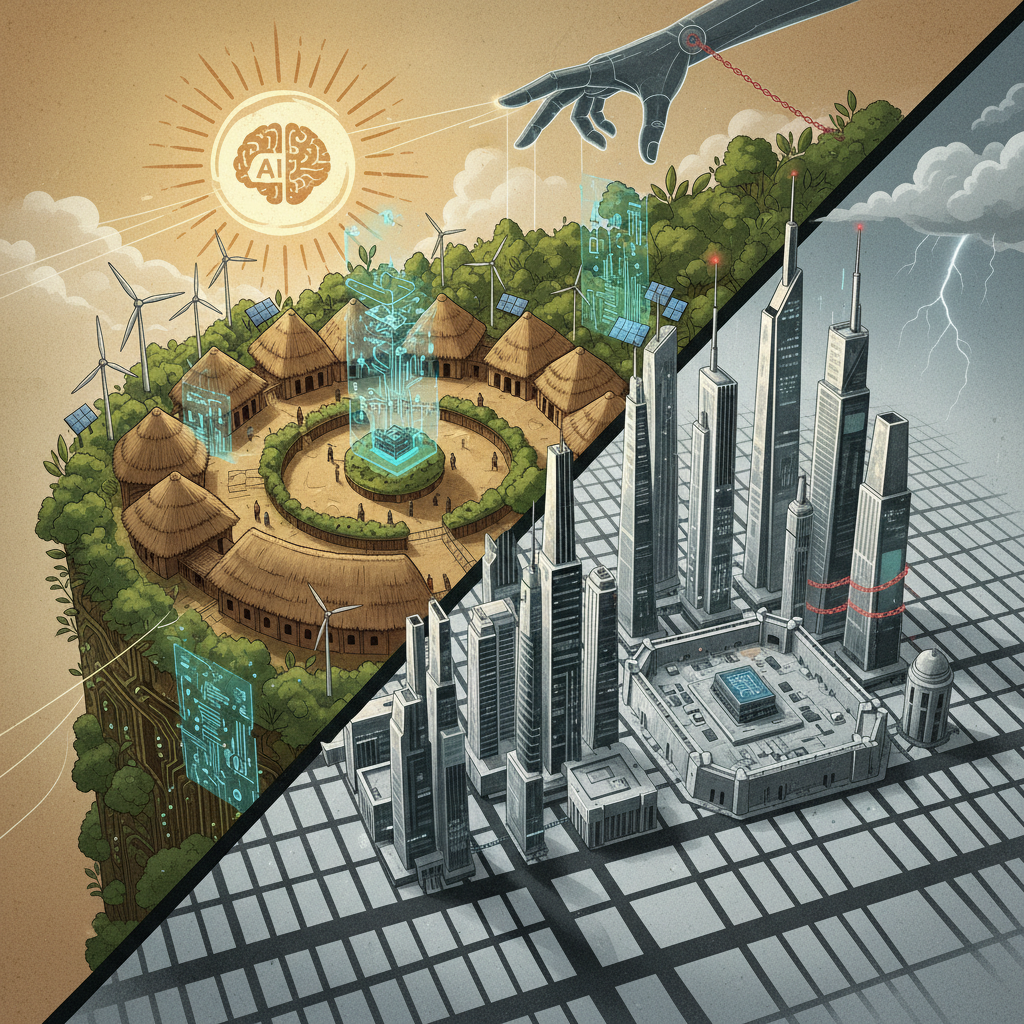
However, my concern is not with the technology itself, but with its deployment and accessibility. The Adinkra symbol Sankofa teaches us to look to the past to inform the future. Our past, particularly in Africa, is replete with instances where groundbreaking technologies or innovations, while promising universal benefit, ultimately served to deepen divides. Who owns these AI platforms? Who has access to the sophisticated training data required to make these algorithms truly effective for our unique contexts? Will these tools be prohibitively expensive, accessible only to large foreign firms, or will they be democratized, allowing local Ghanaian contractors and engineers to leverage them for their communities?
Consider the data. AI models are only as good as the data they are trained on. If these models are predominantly trained on data from Western construction practices, materials, and environmental conditions, how relevant or effective will they be in the diverse, often challenging, environments of Ghana or other African nations? Will an AI trained on European building codes understand the nuances of building with laterite or the structural demands of a region prone to seismic activity, as parts of Ghana are? We risk creating intelligent systems that are culturally blind, perpetuating a one-size-fits-all approach that has historically failed us.
I anticipate the counterargument: that these technologies will eventually become cheaper and more accessible, that market forces will ensure their diffusion. Some might say, Akosùa, you are being overly pessimistic, progress always finds a way. But I have seen this play out too many times. The digital divide is not just about internet access, it is about access to the tools that shape our world. If the foundational AI models for construction are developed and controlled by a handful of tech giants like Google, Microsoft, or NVIDIA, what leverage do local communities have in shaping these tools to their specific needs? Will the algorithms prioritize profit for these giants over the well-being and cultural heritage of the communities they are meant to serve? The very idea that such powerful tools could be developed without direct, equitable input from the communities they impact is a grave concern.
Furthermore, the issue of job displacement looms large. While AI can enhance safety and efficiency, it can also automate tasks traditionally performed by human labor. What happens to the masons, the carpenters, the manual laborers whose livelihoods depend on these tasks? While some argue that AI will create new jobs, the transition is rarely smooth or equitable. Are we preparing our workforce for this shift? Are our technical training institutions, like Accra Technical University or Kwame Nkrumah University of Science and Technology, being equipped to teach the skills needed to work alongside AI, or will our youth be left behind, unable to compete in an increasingly automated construction landscape?
My rebuttal is simple: silence is complicity. We cannot afford to be passive observers. We must demand that the development and deployment of AI in construction be guided by principles of justice and equity. This means investing in local AI research and development, fostering collaborations between Ghanaian universities, local construction firms, and international tech companies to ensure that these tools are built with us, not just for us. It means creating open-source AI models that can be adapted and customized to local contexts, reducing reliance on proprietary, expensive foreign solutions.
We must also prioritize education and skills training. The government, through agencies like the Council for Scientific and Industrial Research, and private sector players must work together to reskill and upskill our workforce, transforming them from laborers who might be displaced into technicians who can operate, maintain, and even develop AI-powered construction tools. This is not just about technical skills, but about critical thinking and problem-solving, ensuring that humans remain at the center of the decision-making process, guiding the AI, not being subservient to it.
Consider the example of the African Union's Digital Transformation Strategy for Africa, which emphasizes leveraging technology for inclusive growth. This strategy must extend to how we integrate AI into critical sectors like construction. We need policies that incentivize local innovation, protect local jobs, and ensure that the benefits of AI are widely distributed. We need to look at how companies like Buildots, which uses AI to track construction progress, can be adapted and made accessible to small and medium-sized enterprises in Ghana, not just the mega-projects.
The promise of AI in construction is immense. It offers the potential to build safer, more sustainable, and more efficient infrastructure. But for us in Ghana, and indeed across the Global South, the question is not just what AI can build, but for whom and how. We have a moral imperative to ensure that this powerful technology does not become another tool for exploitation or exclusion. We must actively shape its trajectory, ensuring it contributes to an okyekye for all, a truly beautiful and equitable future. Otherwise, we risk building magnificent structures on a foundation of injustice, and that is a future none of us should accept. For more on the global implications of AI, you can often find insightful analysis on MIT Technology Review or Wired. The conversation about ethical AI development is happening globally, and we must ensure our voices are heard, as highlighted by discussions on TechCrunch's AI section.