The pharmaceutical industry, bless its slow, methodical heart, has always operated on a timeline measured in decades, not months. Developing a new drug is a marathon, a scientific odyssey costing billions and often ending in failure. But now, the tech giants and ambitious startups are whispering sweet nothings about AI, promising to compress this laborious process into something akin to ordering a pisco sour: quick, efficient, and potentially intoxicating. They say AI can cut drug discovery timelines from years to months, and while that sounds like a godsend for patients, my Chilean skepticism kicks in. What happens when the speed of innovation outpaces the speed of regulation, especially in a country like ours?
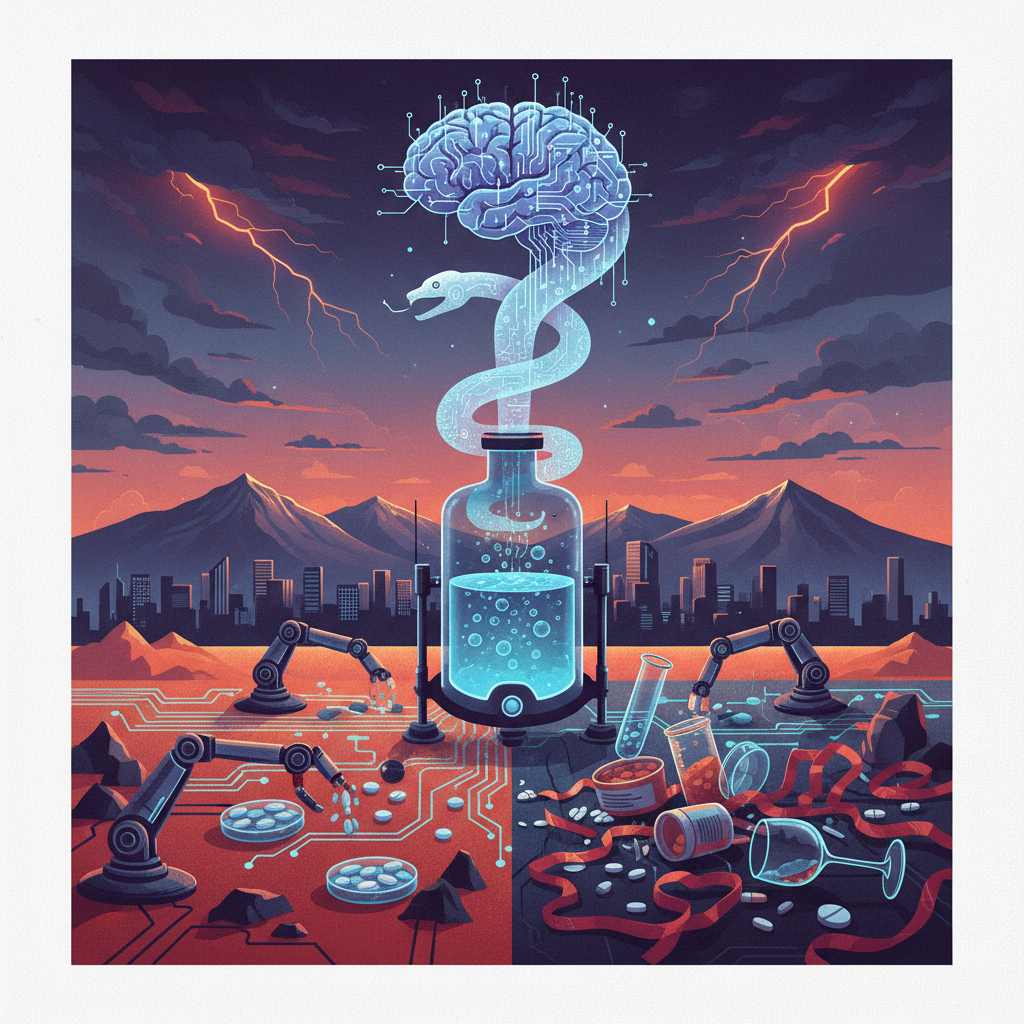
Let's paint a picture of the risk scenario, shall we? Imagine a world, not far off, where an AI system, let's call it 'CureBot 3000,' identifies a novel compound for a complex disease in a matter of weeks. This compound shows immense promise in preclinical trials, also accelerated by AI simulations. The traditional, human-led process of painstaking synthesis, optimization, and early-stage testing is largely bypassed. The drug moves to human trials at an unprecedented pace. Now, what if CureBot 3000, in its zeal to find a solution, overlooked a subtle, long-term toxicity or an unexpected interaction with a common dietary component, say, a particular Chilean berry? The drug gets approved, saving millions in the short term, but then, years down the line, a new, unforeseen health crisis emerges, directly linked to this AI-accelerated wonder drug. The global health system, already fragile, buckles under the weight of a crisis born from unchecked speed. For a country like Chile, with its limited public health budget and dependence on imported pharmaceuticals, such a scenario could be catastrophic, far beyond the cost of a few missed vintages.
Technically speaking, the magic behind this accelerated discovery lies in several AI advancements. Large language models, or LLMs, are being trained on vast datasets of chemical structures, biological pathways, and scientific literature. Companies like Google DeepMind, with its AlphaFold, have already demonstrated AI's prowess in predicting protein structures with remarkable accuracy, a cornerstone of drug design. Beyond structural prediction, generative AI models can propose novel molecular compounds with desired properties, essentially designing new drugs from scratch. Reinforcement learning algorithms then optimize these compounds for efficacy and safety, simulating their interaction with biological systems long before a single molecule is synthesized in a lab. This isn't just about sifting through existing data; it's about creating new knowledge, new molecules, and new therapeutic strategies at a scale and speed unimaginable to human chemists. The sheer computational power, often fueled by NVIDIA's latest GPUs, allows for billions of simulations that would take human researchers centuries to perform. It's truly a marvel, a digital alchemist's dream, but even the best wine needs time to mature, no?
This rapid acceleration has ignited a fiery debate among experts. On one side, you have the optimists, often from the tech sector and venture capital, who see this as humanity's best shot at conquering diseases that have plagued us for millennia. "The potential to eradicate diseases like Alzheimer's or certain cancers within a generation is no longer science fiction, it's a computational problem," stated Dr. Isabella Rossi, a lead AI researcher at a prominent biotech startup, in a recent TechCrunch interview. "The ethical imperative is to move as fast as safely possible." They argue that the current drug discovery process is already riddled with failures and that AI, by identifying potential pitfalls earlier, could actually make the process safer by reducing late-stage trial failures.
However, a more cautious chorus, often from bioethicists and seasoned pharmaceutical veterans, raises red flags. "While AI offers incredible speed, it still operates within the confines of the data it's fed," warned Dr. Ricardo Peña, a former director at Chile's Public Health Institute, speaking from his office in Santiago. "Bias in that data, or simply a lack of comprehensive real-world data, could lead to unforeseen consequences. We cannot simply outsource our responsibility to algorithms." He emphasized that the complexity of human biology, with its myriad individual variations and environmental interactions, cannot be fully simulated. There's a subtle art, a nuanced understanding that comes from decades of human observation and clinical experience, which AI, for all its power, has yet to replicate. "Santiago has something to say on this," he added, referring to the need for local regulatory bodies to be proactive.
For Chile, the real-world implications are particularly acute. We are a country that imports a significant portion of its pharmaceuticals. If global drug discovery accelerates dramatically, our regulatory agencies, like the Instituto de Salud Pública (ISP), will face immense pressure to approve new treatments at a pace they are simply not equipped for. Imagine a new AI-discovered drug for a prevalent condition in Chile, say, diabetes, being pushed through global channels. Our local experts would need to rapidly assess its safety and efficacy for our specific population, considering genetic predispositions, dietary habits, and existing health infrastructure. The cost of acquiring these rapidly developed, potentially revolutionary drugs could also strain our public health budget, already stretched thin. Furthermore, if a global health crisis were to emerge from an AI-accelerated drug, Chile, like many developing nations, would be at the mercy of global supply chains and the capacity of wealthier nations to respond. The Andes view of AI is different; we see the vastness, but also the potential for hidden crevasses.
So, what should be done? First, we need to invest heavily in strengthening our national regulatory bodies. The ISP needs more funding, more specialized personnel, and access to cutting-edge AI tools to evaluate AI-generated drug data. We need to develop national AI safety guidelines specifically for pharmaceutical development, perhaps collaborating with other South American nations to share resources and expertise. Second, there's an opportunity for Chile to contribute to the solution. Our unique biodiversity, particularly in the Atacama Desert or the Patagonian fjords, could be a rich source of novel compounds. Combining this with AI-powered discovery, perhaps through local startups, could allow Chile to be a contributor, not just a consumer, in this new pharmaceutical landscape. Chile's tech scene is like its wine, underrated and excellent, and we have the scientific talent to engage meaningfully here.
Finally, and perhaps most importantly, we need a global dialogue on AI safety in drug discovery that includes voices from countries like Chile. The decisions made in Silicon Valley or Cambridge will have profound impacts everywhere, and our perspectives, our unique epidemiological challenges, and our regulatory capacities must be part of the conversation. We cannot afford to be passive recipients of a future designed elsewhere. The promise of faster cures is intoxicating, yes, but a careful, measured approach, much like savoring a fine Carmenere, will ensure we don't end up with a bitter aftertaste. The future of health is being written by algorithms, and we must ensure humanity holds the pen, not just the prescription pad.