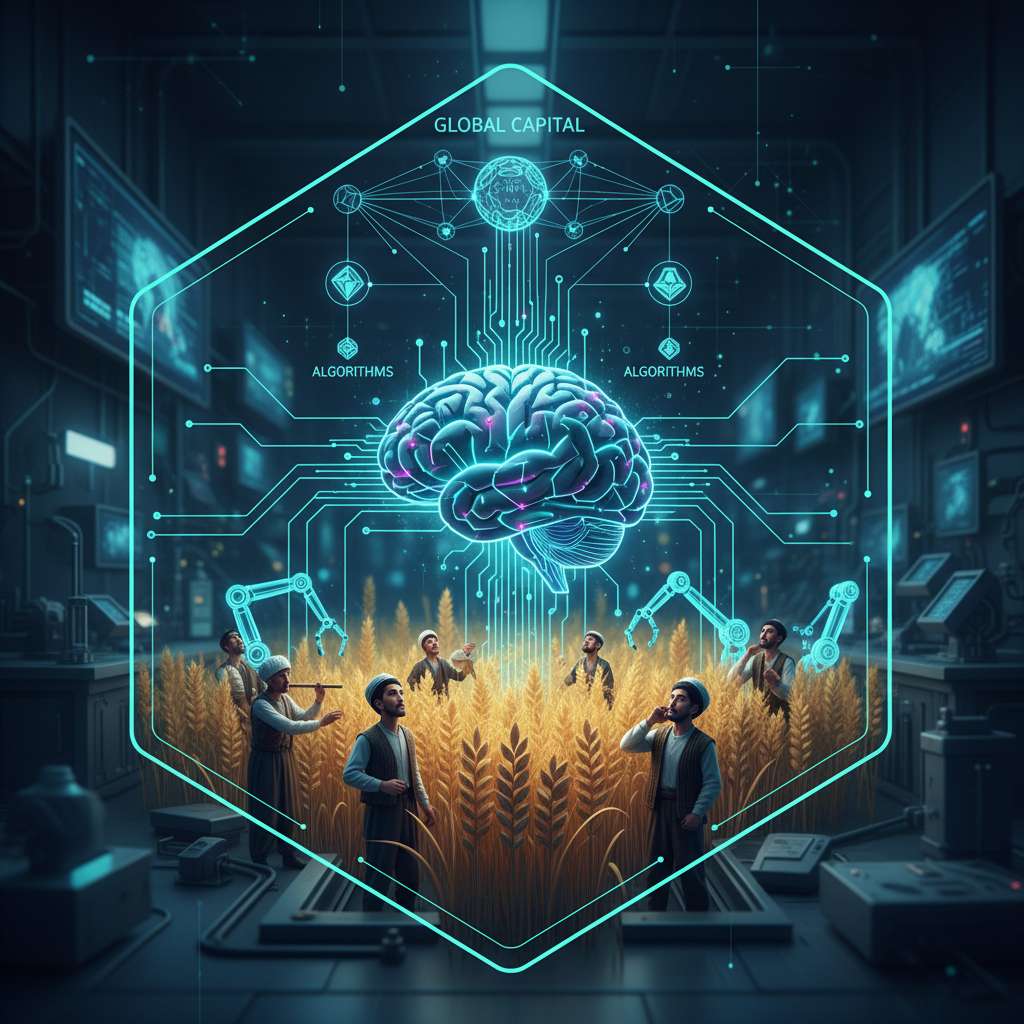

The rhythmic thud of the khirman, the threshing floor where grain is separated from chaff, is a sound deeply embedded in the agricultural heartland of Tajikistan. It signifies labor, community, and the sustenance derived from the earth. Today, however, a different kind of separation is occurring, one driven not by manual effort but by algorithms: the separation of workers from their traditional roles through AI driven automation. While Silicon Valley champions efficiency, the reality in Central Asia is different from the headlines, and the implications for our workforce are profound.
For years, the narrative around artificial intelligence has been largely one of boundless potential, promising unprecedented productivity gains and economic growth. Yet, beneath this glittering surface, a growing unease has taken root among the global workforce. This apprehension is particularly acute in regions where labor markets are often less formalized and social safety nets are nascent. A recent study, conducted by researchers at the Massachusetts Institute of Technology, sheds critical light on how labor unions and worker movements are responding to this existential challenge, offering a blueprint for resistance and adaptation that resonates deeply with our own context.
The Breakthrough in Plain Language: Organizing Against the Algorithm
The MIT study, led by Professor Thomas Kochan and Dr. Robert McKersie, did not unveil a new AI algorithm, but rather a sophisticated analysis of human response to algorithmic disruption. Their research, published in the Industrial and Labor Relations Review, meticulously documented how various labor organizations, from established unions in Western economies to emerging worker collectives in the Global South, are developing strategies to counter the displacement and deskilling effects of AI. The core finding is clear: passive acceptance is not the only path. Workers are actively seeking to shape the deployment of AI, demanding a seat at the table to negotiate its terms and conditions.
This is not merely about stopping progress, which is often the simplistic accusation leveled against labor movements. Instead, it is about ensuring that technological advancement serves humanity, rather than subjugating it. The researchers identified three primary strategies: proactive engagement in technology design, collective bargaining for 'just transition' provisions, and the formation of new alliances across sectors. This shift from reactive protest to proactive policy advocacy marks a significant evolution in labor's approach to automation.
Why It Matters: A Tajik Perspective on Global Trends
For Tajikistan, a nation heavily reliant on agriculture and a burgeoning, albeit small, industrial sector, these findings are not academic abstractions. They are urgent considerations. Our economy, while growing, remains vulnerable to external shocks and rapid technological shifts. The prospect of AI automating tasks in cotton processing, mineral extraction, or even administrative services carries significant weight. We cannot afford to be caught unprepared.
Consider the agricultural sector, the backbone of our rural economy. While advanced AI systems might optimize irrigation or crop yield in more developed nations, here, the introduction of automated machinery without careful planning could displace thousands of seasonal workers. The social fabric, already strained by migration and economic pressures, could unravel further. As Dr. Parvina Saidova, an economist at the Tajik National University, often states, “Tajikistan's challenges require Tajik solutions, and those solutions must prioritize our people.” Her words underscore the need for a localized approach to AI integration, one that respects our unique socio economic landscape.
The Technical Details: A Framework for Engagement
The MIT research detailed a framework for labor engagement that moves beyond traditional strike action. It emphasizes what they term 'co-determination in technology adoption.' This involves unions and worker representatives actively participating in the procurement, design, and implementation phases of AI systems. For instance, in a case study involving a logistics company, union representatives negotiated for AI systems to augment human capabilities, rather than replace them entirely. This resulted in AI tools that assisted workers with route optimization and inventory management, freeing them for more complex problem solving and customer interaction, rather than simply automating their jobs away.
Another crucial aspect is the negotiation of 'just transition' clauses. These are agreements that ensure workers displaced by automation receive retraining, placement assistance, or severance packages. This proactive approach aims to mitigate the immediate economic hardship associated with job loss, providing a bridge to new opportunities. Finally, the study highlighted the power of cross sectoral alliances. For example, textile workers' unions collaborating with agricultural laborers' associations to share best practices and collectively lobby for national policies on AI and employment. This unity amplifies their voice and influence.
Who Did the Research: MIT's Industrial Relations Section
This seminal work emerged from the Industrial Relations Section of the MIT Sloan School of Management, a department with a long standing reputation for rigorous, policy relevant research on labor and employment issues. Professor Kochan, a veteran in the field of industrial relations, and his team leveraged a combination of qualitative case studies, quantitative surveys, and policy analysis to construct their findings. Their methodology ensured a comprehensive view, encompassing both the lived experiences of workers and the broader economic implications of AI adoption. The findings offer a stark contrast to the often utopian visions presented by some technology companies, grounding the discussion in the practical realities of labor markets. You can explore more of their work on labor and technology at MIT Technology Review.
Implications and Next Steps: Building a Resilient Future
The implications for Tajikistan are clear. We must not view AI as an inevitable, unchangeable force. Instead, we must actively shape its trajectory within our borders. This requires a multi pronged approach:
- Policy Development: The government, in conjunction with labor organizations and industry, needs to develop clear policies regarding AI's impact on employment. This could include incentives for companies to adopt AI in ways that create new roles or enhance existing ones, rather than simply eliminating jobs.
- Education and Retraining: Significant investment is needed in vocational training and higher education to equip our workforce with the skills necessary for an AI augmented economy. This means focusing on digital literacy, critical thinking, and skills that complement AI, such as creativity and complex problem solving. The Ministry of Labor and Social Protection should lead this charge, perhaps in partnership with international development agencies.
- Strengthening Worker Representation: Whether through traditional unions or new forms of worker collectives, empowering employees to negotiate the terms of AI adoption is paramount. This ensures that the benefits of automation are shared more equitably and that the human element remains central to our economic development. Let's talk about what actually works: direct engagement and negotiation.
- Regional Collaboration: Central Asian nations face similar challenges. Sharing experiences and coordinating strategies for managing AI's impact on labor could yield stronger outcomes for all. Forums like the Eurasian Economic Union could serve as platforms for such discussions.
As we look towards the future, the lessons from MIT's research provide a crucial compass. The khirman may evolve, perhaps incorporating new technologies for efficiency, but the human hands that tend it, and the communities it sustains, must remain at the heart of our progress. Ignoring the human cost of automation is not an option, especially in a society where social cohesion is as vital as economic growth. We must ensure that as the algorithms advance, our people are not left behind, but rather empowered to thrive in a new era of work. This requires foresight, collaboration, and a steadfast commitment to our collective well being. For more insights into global AI trends and their societal impact, consider visiting Wired.