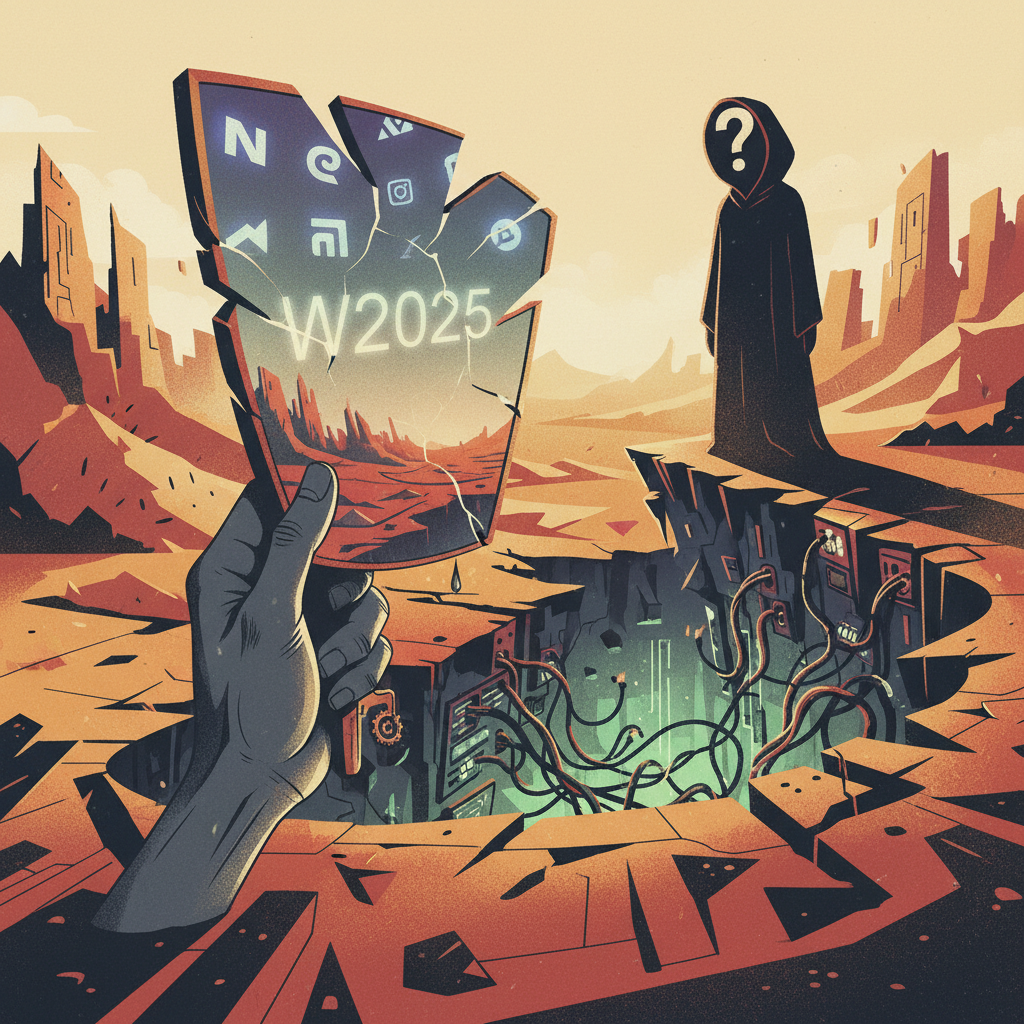

The news cycles are awash with the usual Silicon Valley fanfare. Y Combinator's W2025 batch, they say, is breaking records. Startups emerging from that hallowed program are reportedly snatching up Series A funding faster than you can say 'seed round.' Everyone is cheering, analysts are predicting exponential growth, and the venture capitalists are patting themselves on the back. From my vantage point here in Caracas, however, I cannot help but feel a familiar skepticism creeping in. This breathless excitement, this singular focus on a handful of well-funded, often homogenous, ventures, misses the bigger, more complex, and frankly, more interesting story of global innovation. It is an unpopular opinion from Caracas, but I believe this narrative is a mirage, not a miracle.
Let us be clear: I am not dismissing the talent within Y Combinator. They select bright minds, no doubt. But the ecosystem surrounding them, the narrative spun by the tech press and the investment community, often overlooks the profound challenges and creative solutions emerging from corners of the world less privileged, less connected to the established money pipelines. When I see headlines about AI startups from the W2025 cohort raising tens of millions for what often boils down to incremental improvements on existing models, I think of the Venezuelan engineers, the doctors, the entrepreneurs who, despite unimaginable obstacles, are building solutions that genuinely transform lives. They are not just optimizing ad spend or creating another chatbot; they are often solving problems that Silicon Valley cannot even conceive of, because those problems do not exist in their gilded bubble.
Take, for instance, the sheer audacity of building a tech company in a country like Venezuela. Imagine the daily hurdles: unreliable internet, constant power outages, hyperinflation, and a scarcity of basic resources. Yet, Venezuela's tech diaspora is reshaping AI globally. Our people, forced by circumstance to innovate or perish, have developed a resilience and ingenuity that is unparalleled. They are not just surviving; they are thriving in hostile environments, often with a fraction of the capital that a typical YC startup receives. They are building decentralized networks, creating peer to peer payment systems that circumvent failing state infrastructure, and developing AI tools for agriculture that adapt to extreme climate variations. These are not just business ventures; they are acts of survival and defiance.
I recall a conversation with a young developer, Maria, who left Maracaibo for Medellín. She told me about her startup, building an AI powered platform to help small farmers in Latin America predict crop yields using satellite data and local weather patterns. She started with a borrowed laptop and a dream, not a million dollar seed round. Her Series A, when it comes, will not be a testament to market hype, but to genuine impact and relentless grit. This is where the real innovation lies, in the trenches, where every line of code is a fight against adversity. The crisis created something unexpected, a crucible for true ingenuity.
Now, I hear the counterarguments already forming in the minds of the Silicon Valley faithful. They will say, "But Sebastiàn, Y Combinator provides structure, mentorship, access to capital, and a network that is invaluable." And yes, those things are valuable. But they are not the only path to innovation, nor are they necessarily the best path for truly disruptive ideas. Sometimes, too much structure stifles creativity. Too much capital too early can lead to complacency or a focus on easily monetizable, rather than deeply impactful, solutions. The YC model, for all its success, often prioritizes speed and scalability within a pre-defined market, rather than fundamental problem solving in uncharted territory.
Consider the words of Dr. Ricardo Hausmann, the former Venezuelan Minister of Planning, who has often spoken about the importance of productive capabilities and how nations develop through complex knowledge. He might argue that true innovation is not just about funding flashy startups, but about building an ecosystem that fosters deep, sustained problem solving, often from the ground up. This is a sentiment echoed by many who have witnessed the boom and bust cycles of venture capital. It is not always about who gets the most money first; it is about who solves the hardest problems with the most enduring solutions.
The rapid Series A raises for these W2025 startups are often driven by Fomo, fear of missing out, among venture capitalists. Everyone wants to be in on the next big thing, and YC has a proven track record. But this herd mentality can lead to inflated valuations and a focus on trends rather than substance. How many of these quickly funded ventures will genuinely transform industries, and how many will simply become footnotes in the annals of overhyped tech? I suspect many will fall into the latter category. The pressure to grow at all costs, to achieve unicorn status, can overshadow the initial mission and lead to unsustainable business models.
My point is this: while the world fixates on the latest crop of Silicon Valley darlings, we are missing the profound, often quiet, revolution happening elsewhere. The resilience tech, the decentralized solutions, the AI applications for public health and environmental sustainability being built by those who have faced true hardship, these are the innovations that truly matter. These are the ventures that will define the next era, not just another app that helps you order coffee faster. The Y Combinator W2025 batch is a testament to Silicon Valley's enduring ability to generate wealth, but it is not the sole, nor necessarily the most important, indicator of global technological progress. We need to broaden our gaze, look beyond the familiar narratives, and recognize that brilliance, grit, and world changing ideas can emerge from anywhere, especially from places where the stakes are highest. The future of AI is not just being coded in Mountain View; it is being forged in the barrios of Caracas, the bustling streets of Lagos, and the quiet labs of Bangalore. It is time we paid attention to all of it. For a different perspective on AI's impact on global markets, you might consider reading about Samsung's AI Ambitions and the Unseen Army: How Data Labeling Firms Like Scale AI Fuel the Future of Korean Tech [blocked].