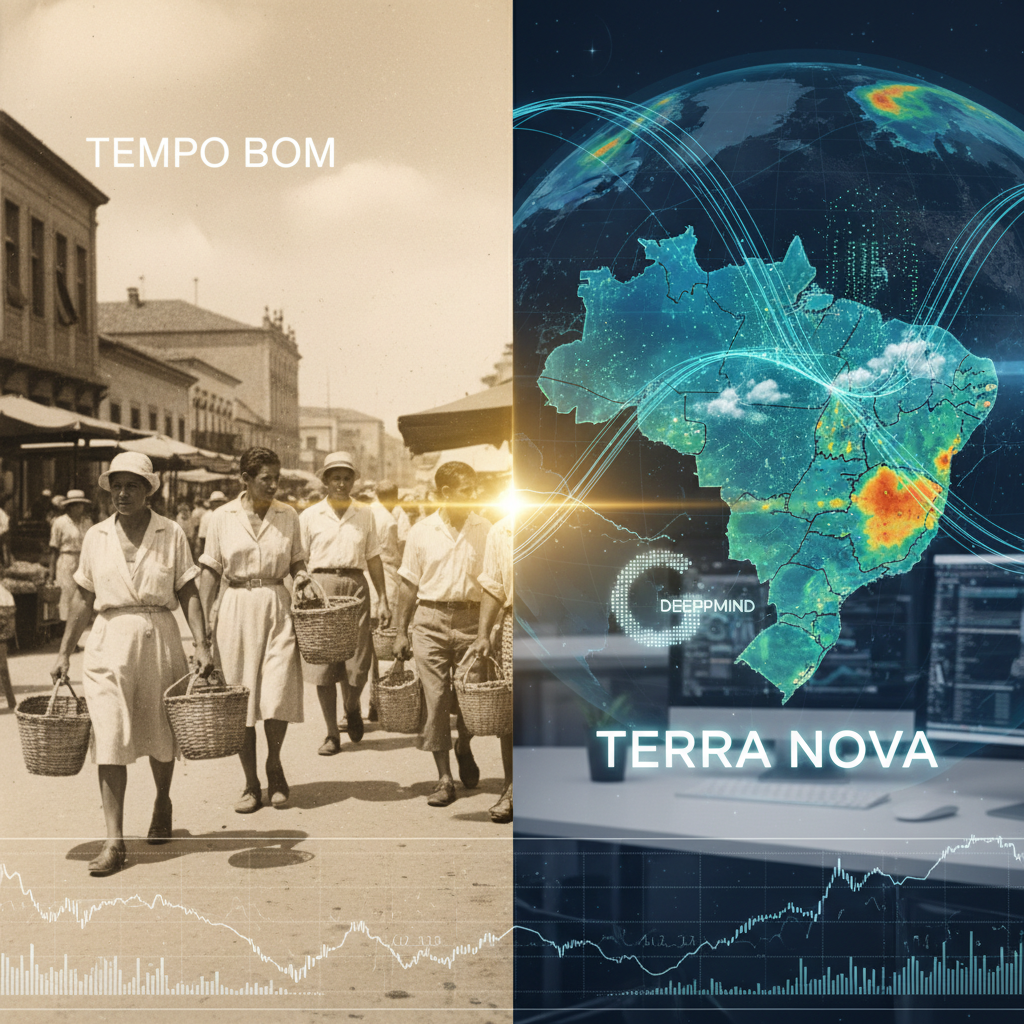
Imagine, if you will, the construction of a magnificent new city. It is a city that promises incredible advancements, solving problems we never thought possible, and opening doors to unimaginable progress. Everyone agrees this city must be built, and built quickly, because the potential rewards are immense. But here is the catch: every nation, every major corporation, and even every influential research lab, is building their own section of this city with their own blueprints, their own materials, and their own safety codes. Some are building skyscrapers with strict regulations, others are erecting sprawling, unregulated favelas of code, and a few are even laying down foundations in secret. This, my friends, is the global AI governance gap we face today, and it is a situation ripe for both innovation and profound disaster.
From my perspective here in Brazil, watching the global conversation unfold, it feels like we are witnessing a digital Tower of Babel. Everyone speaks about AI, but often in different regulatory languages, with different priorities and different fears. The big picture is clear: AI is transformative, and its power demands oversight. But whose oversight, and how? That is the question that divides the world.
The Big Picture: A Regulatory Patchwork Quilt
At its core, AI governance aims to ensure that the development and deployment of artificial intelligence systems are safe, ethical, transparent, and accountable. It is about preventing harm, fostering trust, and ensuring that AI benefits humanity, not just a select few. But the challenge is immense because AI is not a static technology, it is a rapidly evolving, cross-border phenomenon. A model trained in California can be deployed in São Paulo in an instant, affecting lives and economies globally. The code tells the real story, and that code does not respect national borders.
We see major players like the European Union leading with comprehensive, rights-based legislation, exemplified by their groundbreaking AI Act. Then there is the United States, taking a more sector-specific, risk-based approach, often driven by executive orders and industry self-regulation. China, on the other hand, prioritizes state control and national security, implementing rules that govern specific applications like generative AI and deepfakes, all while fostering domestic technological leadership. And then, there is the Global South, including Brazil, trying to find its voice and carve its own path, often caught between these giants.
The Building Blocks: Different Philosophies, Different Tools
Let me explain the architecture of this global governance challenge. We are not just talking about one set of rules, but a collection of approaches, each with its own preferred tools and philosophies:
- Legislation and Regulation: This is the most direct approach, like the EU AI Act. It involves creating laws that define what AI systems can and cannot do, setting standards for data quality, transparency, human oversight, and risk assessment. It is a top-down, prescriptive method.
- Standards and Certifications: Think of these as quality seals, like the Inmetro certification we have for products here in Brazil. Organizations like the International Organization for Standardization (ISO) are developing technical standards for AI management systems, trustworthiness, and bias. These are often voluntary but can become de facto requirements.
- Ethical Guidelines and Principles: Many governments, international bodies like Unesco, and even individual companies have published high-level ethical principles for AI. These are aspirational, guiding values like fairness, privacy, and accountability, but they lack direct legal enforceability.
- International Cooperation and Dialogues: Forums like the G7, G20, and the UN are hosting discussions, attempting to build consensus, and share best practices. Initiatives like the Hiroshima AI Process or the Bletchley Park AI Safety Summit are examples of these efforts.
- Industry Self-Regulation: Major tech companies, recognizing the need for trust, are developing their own internal policies, codes of conduct, and responsible AI frameworks. Google, Microsoft, and OpenAI all have dedicated teams working on AI ethics and safety.
Step by Step: How Governance (or its Absence) Plays Out
Let us trace a hypothetical AI system, say a diagnostic tool for healthcare, from its development to deployment, and see how this fragmented governance impacts it:
- Step 1: Development (California, USA): A startup in Silicon Valley develops an AI model for early disease detection. In the US, they largely follow internal ethical guidelines and perhaps some industry best practices. There is no overarching federal law dictating how this AI must be built or tested, beyond existing medical device regulations.
- Step 2: Testing and Validation (Europe): The company wants to sell its tool in the European Union. Suddenly, they face the EU AI Act. They must classify their system as high-risk, undergo rigorous conformity assessments, ensure human oversight, implement robust data governance, and meet strict transparency requirements. This often means re-engineering parts of their system.
- Step 3: Deployment (Brazil): Now, they look to Latin America. In Brazil, we are still debating our own comprehensive AI regulatory framework. While we have strong data protection laws like the Lgpd, specific AI regulations are emerging but not yet fully consolidated. The company might find a less prescriptive environment than the EU, but still needs to navigate local consumer protection laws and cultural nuances regarding data privacy and algorithmic fairness.
- Step 4: Global Impact and Harmonization: The same AI system, built once, now operates under three different regulatory regimes. If a problem arises, say a biased diagnosis, the legal recourse, liability, and even the definition of 'bias' might differ significantly across these jurisdictions. This creates a headache for developers, a potential risk for users, and a massive challenge for international cooperation.
A Worked Example: Generative AI and Deepfakes
Consider generative AI, like OpenAI's GPT models or Meta's Llama. These models can create incredibly realistic text, images, and even videos. The potential for deepfakes and misinformation is a global concern. In China, strict regulations are already in place, requiring clear labeling of AI-generated content and holding platforms accountable for disseminating harmful deepfakes. The EU AI Act also addresses this, mandating transparency for AI-generated content. In the US, efforts are more piecemeal, focusing on specific applications like election interference, but without a broad federal law.
Here in Brazil, we are acutely aware of this. During election cycles, the spread of misinformation, often amplified by AI-generated content, becomes a significant threat to our democracy. Our electoral court, the TSE, has been proactive in trying to curb this, but without a dedicated AI law, their tools are limited. The challenge is immense, and the lack of a unified global approach means that what is illegal in one country might be permissible, or simply unregulated, in another, creating safe havens for malicious actors.
Why it Sometimes Fails: Limitations and Edge Cases
The current fragmented approach has several inherent flaws:
- Regulatory Arbitrage: Companies might choose to develop or deploy AI in jurisdictions with weaker regulations, creating a 'race to the bottom' in terms of safety and ethics.
- Innovation Bottleneck: Overly complex or conflicting regulations can stifle innovation, particularly for smaller startups that lack the resources to navigate a global patchwork of laws. Brazil's developer community is massive and talented, but they need clarity, not confusion.
- Enforcement Challenges: How do you enforce a national AI law against a global tech giant operating across borders? The internet makes this incredibly difficult.
- Ethical Divergence: What one culture considers ethical, another might not. For example, facial recognition technology is viewed very differently in China compared to many Western democracies or even here in Brazil, where privacy concerns are paramount but public security needs are also pressing.
- Lack of Global Consensus: Despite numerous dialogues, fundamental disagreements persist on issues like data sovereignty, the definition of 'high-risk' AI, and the role of human oversight. According to a recent report by Reuters, achieving a unified global framework remains a distant goal.
Where This is Heading: Cooperation or Fragmentation?
The path forward is uncertain. Will we see greater international cooperation, perhaps through a UN-backed body or a global treaty, akin to climate agreements? Or will fragmentation continue, leading to distinct AI blocs, each with its own digital ecosystem and regulatory walls? Many experts, including those at MIT Technology Review, suggest that a complete global harmonization is unlikely in the short term due to geopolitical realities and differing values.
For Brazil and the broader Global South, the strategy must be one of informed engagement and strategic autonomy. We need to participate actively in international discussions, advocating for principles that reflect our values and development needs. At the same time, we must continue to build our own robust, context-specific AI governance frameworks, learning from global best practices but adapting them to our unique social, economic, and cultural realities. This means investing in local AI research, fostering ethical AI development, and ensuring that our regulations protect our citizens without stifling our burgeoning tech sector. The future of AI, and indeed our digital sovereignty, depends on how well we navigate this complex, fragmented landscape.