Let's be real. Every few months, Elon Musk rolls out another grand vision, another promise of a technological utopia. This time, it's Tesla's AI Day announcements, featuring the much-hyped Dojo supercomputer. The headlines are screaming about unprecedented processing power, the future of autonomous driving, and how Tesla is going to leave everyone else in the dust. My question, as always, is: whose dust are we talking about?
From where I sit in the USA, watching these tech titans flex their computational muscles, it all feels a little too familiar. It's the same old song and dance. Build bigger, faster, more powerful machines, then tell us they're for the good of humanity. But when you peel back the layers, you often find a different story, one where the benefits are concentrated in a few hands, and the risks are distributed unevenly, often falling on communities that already bear the brunt of technological disruption.
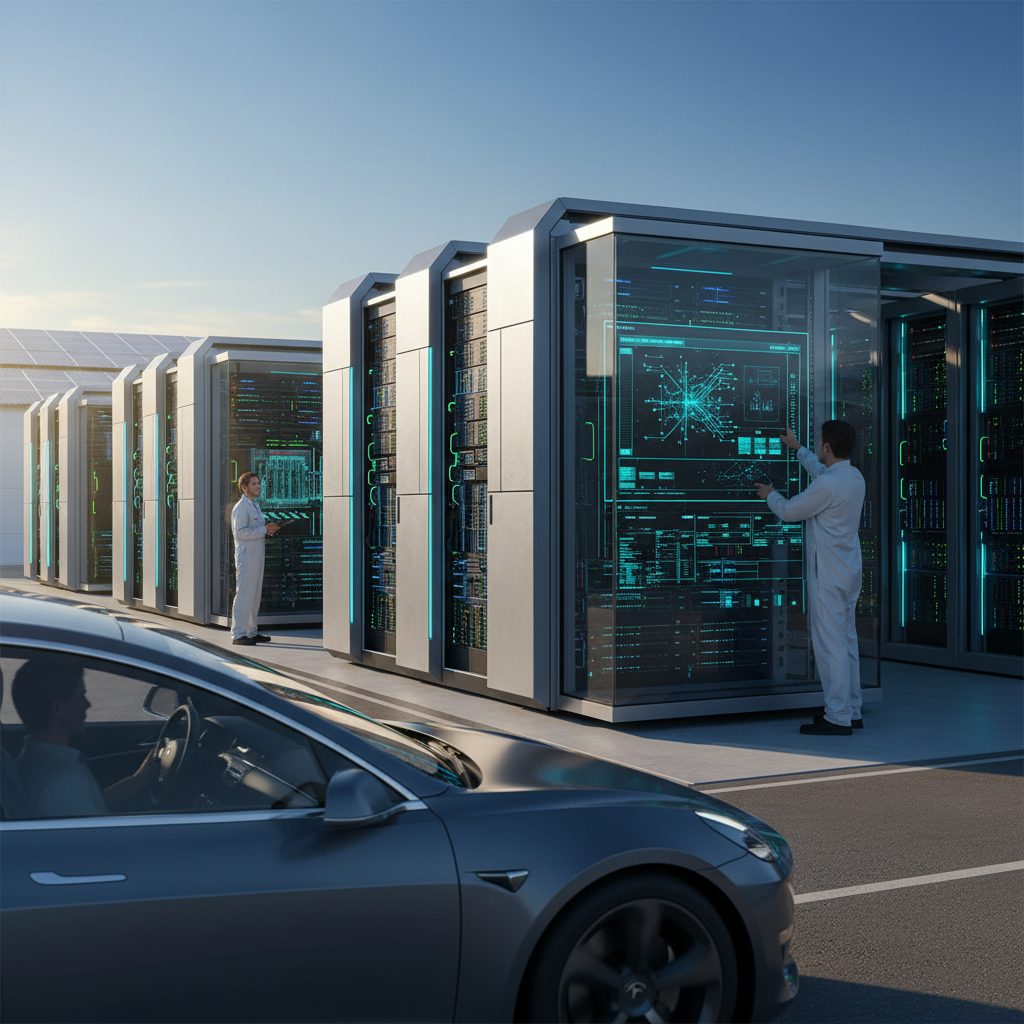
Tesla's pitch for Dojo is clear: it's the engine that will train their self-driving AI models at an unprecedented scale, accelerating the path to full autonomy. They're talking about petaflops and exaflops, custom chips designed for neural network training, and a vision where cars navigate our chaotic streets without human intervention. Sounds great on paper, right? No more traffic jams, fewer accidents, more free time. But here's what the tech bros don't want to talk about: the human cost, the ethical tightropes, and the very real possibility that this hyper-advanced tech could exacerbate existing inequalities.
Think about it. Who owns these autonomous vehicles? Who has access to them? In a country like ours, where public transportation infrastructure is often crumbling and car ownership is a necessity for many, especially in sprawling urban centers and rural areas, are we really building a future for everyone, or just for those who can afford the latest Tesla? It's not just about the cost of the car, it's about the entire ecosystem. Charging stations, maintenance, software updates, all of it points to a system that could further entrench a digital divide.
“The narrative around AI, especially from companies like Tesla, often focuses solely on technological achievement and market dominance, ignoring the broader societal implications,” says Dr. Imani Washington, a leading ethicist at Howard University’s Center for AI and Society. “We need to ask critical questions about data provenance, algorithmic bias, and equitable access. If the data used to train Dojo is primarily from affluent, well-maintained roadways, how will these systems perform in historically marginalized neighborhoods with different infrastructure, road conditions, and driving patterns?”
That's an uncomfortable truth time. Silicon Valley has a blind spot the size of Texas when it comes to understanding how their innovations impact communities outside their bubble. They design for their world, often assuming everyone else lives in it too. The data sets, the training environments, the very assumptions baked into the algorithms, they all reflect a particular worldview. If Dojo is trained on data predominantly from suburban California, how will it navigate the pothole-ridden streets of Detroit or the unique traffic dynamics of downtown Atlanta? The consequences of biased AI in self-driving cars could be catastrophic, not just inconvenient.
And let's not forget the jobs. The promise of autonomous vehicles often comes with the unspoken threat of massive job displacement for truck drivers, taxi drivers, delivery personnel, and more. While some argue that new jobs will emerge, history shows that transitions are rarely smooth or equitable. We've seen this play out with automation in manufacturing, and AI is poised to accelerate that trend across many sectors. Are we preparing for that societal shift, or are we just cheering on the next technological marvel?
“We’re looking at an estimated 3.5 million truck drivers in the U.S. alone,” stated Marcus Chen, President of the American Transportation Workers Union. “If even a fraction of those jobs are replaced by autonomous vehicles, the economic ripple effect on families and communities, especially in states reliant on logistics and transportation, will be devastating. We need a comprehensive plan for retraining and social safety nets, not just promises of efficiency.”
The sheer scale of Dojo is impressive, no doubt. Tesla claims it’s capable of processing exabytes of video data, learning from every mile driven by their fleet. This kind of computational power is usually reserved for national labs or massive cloud providers like Google with their TPUs or NVIDIA with their cutting-edge GPUs. Tesla building this in-house signals their commitment to vertical integration, controlling every aspect of their AI stack. It’s a power move, designed to give them an edge in the AI arms race. For more on the broader AI industry landscape, you can check out TechCrunch's AI coverage.
But this concentration of power, both computational and economic, should give us pause. Who controls these powerful systems? What happens if they fail? What are the mechanisms for accountability when an algorithm makes a mistake, or worse, makes a biased decision with real-world consequences? These aren't abstract philosophical questions. They are urgent, practical concerns that need to be addressed before these systems are fully unleashed on our roads and in our lives.
Consider the regulatory landscape. While the European Union is pushing forward with its EU AI Act [blocked], the U.S. approach to AI regulation remains fragmented and often reactive. We're still grappling with basic questions of data privacy and algorithmic transparency, let alone the complexities of fully autonomous systems. This regulatory vacuum allows companies like Tesla to innovate at breakneck speed, but it also creates a Wild West scenario where the public bears the risk.
“The U.S. needs a proactive, comprehensive federal strategy for AI governance, not just a patchwork of state laws and industry guidelines,” argues Senator Evelyn Reed from California, a vocal advocate for AI ethics legislation. “We cannot allow innovation to outpace our ability to ensure safety, fairness, and accountability. The public trust is at stake.”
So, while the tech world gushes over Dojo's teraflops and Tesla's ambition, I'm over here asking about the people. The people who will lose their jobs, the people whose neighborhoods might be overlooked by biased algorithms, the people who will be subject to the decisions of machines designed in a vacuum. The future of AI isn't just about faster chips and fancier algorithms. It's about building a just and equitable society, and right now, I'm not convinced Tesla, or many of their Silicon Valley counterparts, are truly prioritizing that. We need to demand more than just technological marvels; we need to demand responsible innovation that serves all of us, not just a select few. For deeper analysis on the societal impact of AI, MIT Technology Review often provides insightful perspectives. The stakes are too high for us to just sit back and watch the show.