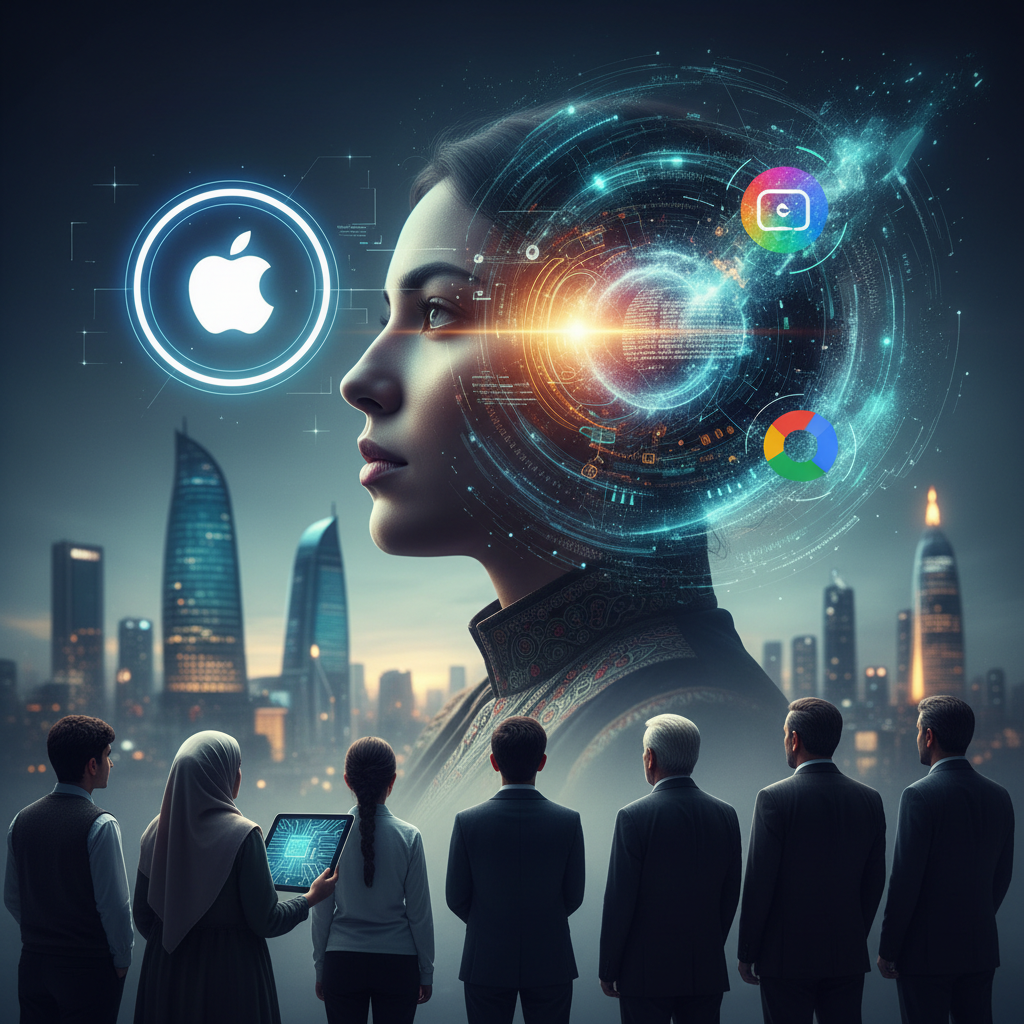

Imagine this: you are walking through the bustling streets of Baku, maybe near the Flame Towers, and you want to know the best place for qutab that is open late. You pull out your iPhone, but instead of a clunky, often unhelpful Siri, a truly intelligent assistant understands your nuanced request, checks real-time restaurant data, cross-references reviews, and even suggests a route that avoids the evening traffic. It is not just about finding food, it is about a seamless, almost prescient interaction that feels less like a command and more like a conversation with a very knowledgeable friend. This is the future Apple is promising with its massive Siri overhaul, a future where the digital assistant finally steps into the ring with the heavyweights like OpenAI's ChatGPT and Google Assistant.
For years, we have seen Siri as a bit of a digital underdog, a reliable but often frustrating companion. While Google Assistant and ChatGPT have been wowing us with their contextual understanding and generative capabilities, Siri has felt a step behind, especially when it comes to complex, multi-turn conversations or understanding local nuances. But Apple, ever the master of the grand reveal, is not just playing catch-up; they are aiming to redefine the on-device AI experience. The whispers from Cupertino suggest a deep integration of large language model capabilities directly into the operating system, promising a level of personalization and responsiveness we have only dreamed of.
But as we embrace this new era of hyper-intelligent personal AI, what does it mean for our minds, for our very way of thinking and interacting with the world, particularly here in Azerbaijan? We are a nation that values connection, conversation, and the rich tapestry of human interaction. Will a smarter Siri enhance these connections or subtly erode them?
Let us start with the good, the truly exciting possibilities. A more capable Siri could become an incredible cognitive offloader. Think about all the small mental tasks we perform daily: remembering appointments, searching for information, drafting quick messages. If Siri can handle these with greater efficiency and accuracy, it frees up our cognitive load, allowing us to focus on more complex, creative, or emotionally engaging tasks. Dr. Elchin Guliyev, a prominent cognitive psychologist at Baku State University, shared his optimism with me. “A truly intelligent assistant can be a powerful tool for cognitive augmentation,” he explained. “It can act as an external memory, a research assistant, or even a language tutor, helping individuals expand their intellectual horizons. For students and professionals, this could be transformative.”
Indeed, for a country like Azerbaijan, which is rapidly digitizing and investing heavily in its tech future, this could be a significant boost. Our digital government initiatives, like Asan Xidmət, have already shown how technology can streamline daily life. A super-smart Siri could extend that efficiency to our personal spheres, making everything from managing finances to navigating public transport in Baku or Ganja effortlessly simple. This is just the beginning, and I can tell you, Azerbaijan is writing its own tech story with every innovation we embrace.
However, there is another side to this coin, one that requires careful consideration. The more we rely on AI to think for us, to remember for us, to even anticipate our needs, the more our own cognitive muscles might atrophy. This is not a new concern, of course. Socrates worried about writing eroding memory, and we have seen similar debates with calculators and GPS. But a truly generative, conversational AI assistant takes this to a new level. If Siri can summarize complex articles, draft emails, and even brainstorm ideas, will we lose the impetus to perform these tasks ourselves? Will our critical thinking skills, our ability to synthesize information independently, begin to wane?
Research on the cognitive effects of digital reliance is already sounding some alarms. Studies have shown that over-reliance on search engines can lead to a phenomenon known as the ‘Google effect,’ where individuals remember where to find information rather than the information itself. A super-Siri, constantly at our beck and call, could amplify this. Professor Leyla Aliyeva, a social scientist specializing in technology's impact on society at Khazar University, voiced her concerns. “We risk outsourcing too much of our internal cognitive processes,” she noted. “While convenience is appealing, we must be mindful of the long-term impact on our capacity for deep thought, problem-solving, and even self-reflection. The Caucasus is having a moment in tech, but we must ensure it is a thoughtful one.”
Consider the impact on our decision-making. If Siri becomes adept at predicting our preferences and making recommendations, will we become less adept at making choices independently? Will the algorithm subtly nudge us towards certain products, services, or even opinions, without us fully realizing it? The personalized bubble, already a concern with social media algorithms, could become even more pervasive, tailored not just to our browsing history but to our every spoken word and implicit desire.
Then there is the psychological comfort. A truly empathetic, understanding AI could be incredibly comforting, especially for those feeling isolated or overwhelmed. It could provide companionship, answer questions without judgment, and even offer emotional support. But what happens when that comfort becomes a substitute for human connection? Will we inadvertently create a generation more comfortable confiding in their digital assistant than in their friends, family, or community? This is a particularly poignant question in a culture like ours, where family and community ties are paramount.
For readers in Azerbaijan and beyond, navigating this new landscape requires a proactive approach. Here is some practical advice:
- Be Mindful of Your AI Diet: Just as you manage your screen time, manage your AI interaction. Do not let Siri do everything for you. Challenge yourself to solve problems, remember information, and draft thoughts independently before turning to your AI assistant.
- Cultivate Critical Thinking: Always question the information and recommendations provided by AI. Understand that AI is a tool, not an oracle. Cross-reference facts, consider different perspectives, and form your own conclusions.
- Prioritize Human Connection: Make a conscious effort to engage in face-to-face conversations, participate in community activities, and nurture your relationships. AI can augment, but it cannot replace the richness of human interaction.
- Understand the 'Why': When Siri makes a suggestion, ask yourself why. What data is it using? What biases might be embedded in its algorithms? This critical awareness helps you maintain agency.
- Embrace AI as a Learning Tool: Use Siri to learn new languages, explore complex topics, or even practice public speaking. Leverage its capabilities to expand your knowledge and skills, rather than just offload tasks. For instance, you could use it to learn more about the latest developments in AI ethics, as discussed on MIT Technology Review.
Apple's push to make Siri a truly intelligent companion is undeniably exciting. The potential for enhanced productivity, accessibility, and personalized assistance is immense. As Tim Cook and his team unveil these advancements, perhaps at the next Wwdc, we will be watching closely. But as we welcome these powerful new tools into our lives, especially here in Azerbaijan, we must do so with open minds and a healthy dose of critical awareness. The future of our cognitive landscape depends on it. The conversation around AI's psychological impact is only just beginning, and you can always find the latest developments on platforms like TechCrunch or The Verge. We have a unique opportunity to shape how this technology integrates into our lives, ensuring it truly serves humanity, rather than subtly reshaping it in unforeseen ways.