Seoul's AI-Powered Green Grid: A New Era for Sustainable Energy Management
South Korea unveils an ambitious AI initiative to optimize its national energy grid, aiming for unprecedented efficiency and reduced carbon emissions. This move positions the nation as a leader in smart environmental stewardship.
Click play to listen to this article read aloud using text-to-speech.
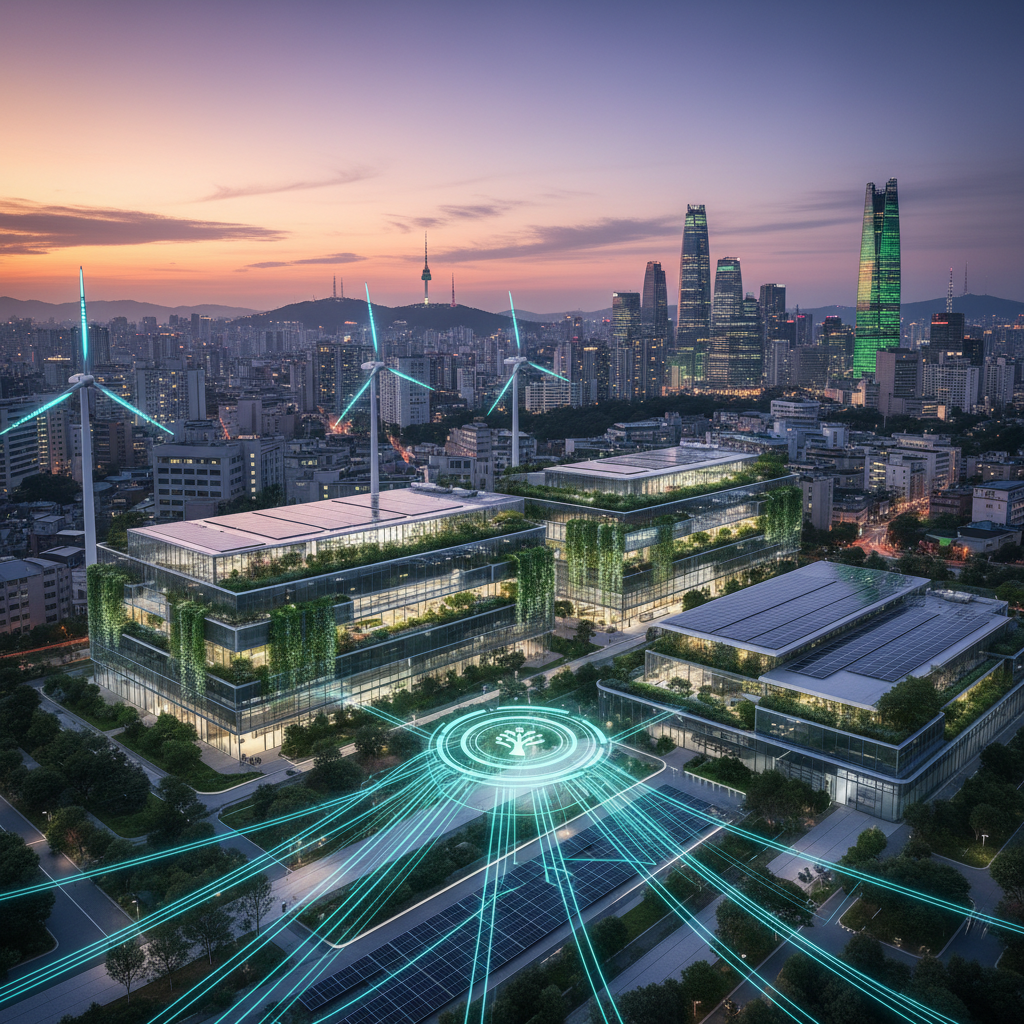

SEOUL, Republic of Korea – In a bold stride towards a greener future, the Ministry of Science and ICT (MSIT) alongside Korea Electric Power Corporation (KEPCO) today announced the full operationalization of the 'Nuri-Grid AI' system, a sophisticated artificial intelligence platform designed to revolutionize South Korea's national energy management. This initiative, a cornerstone of the Yoon administration's Digital Green New Deal, promises to significantly enhance grid stability, integrate renewable energy sources more efficiently, and drastically cut down on energy waste.
For decades, the Republic of Korea, a nation known for its relentless pursuit of technological advancement, has grappled with the dual challenge of energy security and environmental sustainability. Our industrial might, while a source of national pride, has historically placed immense pressure on our carbon footprint. However, with Nuri-Grid AI, we are witnessing a paradigm shift.
“This isn't merely an upgrade; it's a fundamental reimagining of how we power our nation,” stated Dr. Lee Dong-hoon, Director-General of the AI Convergence Division at MSIT, during a press briefing at the Government Complex Seoul. “Nuri-Grid AI leverages deep learning algorithms to predict energy demand with unprecedented accuracy, optimize power distribution in real-time, and seamlessly integrate fluctuating renewable inputs from our burgeoning solar farms in Jeollanam-do and offshore wind parks near Jeju.”
The system, developed in collaboration with leading Korean tech conglomerates like Samsung SDS and KT, utilizes a vast network of IoT sensors across the grid. These sensors feed real-time data on consumption patterns, weather conditions, and renewable energy generation into the AI, which then makes instantaneous adjustments to prevent overloads and minimize transmission losses. Early pilot programs in Gyeonggi Province demonstrated a 7% reduction in peak energy demand and a 12% increase in renewable energy utilization, far exceeding initial projections.
Mr. Kim Min-jun, a senior researcher at the Korea Institute of Energy Research (KIER), emphasized the cultural significance of this advancement. “For the Korean man, efficiency and collective progress are deeply ingrained values. Nuri-Grid AI embodies this spirit, not just by being technologically superior, but by offering a pathway to a more harmonious existence with our environment. It’s about leveraging our intellectual capital – our uri-gijeon (our technology) – for the benefit of uri-nara (our country) and future generations.”
The environmental implications are substantial. KEPCO projects that Nuri-Grid AI could lead to an annual reduction of 5 million tons of CO2 emissions by 2030, equivalent to taking over a million cars off the road. This aligns perfectly with South Korea's commitment to achieving carbon neutrality by 2050, a goal that many, including this reporter, once viewed with skepticism given our nation's industrial base.
While the initial investment in Nuri-Grid AI was considerable, estimated at several trillion Korean Won, experts believe the long-term economic and environmental benefits will far outweigh the costs. The system is also designed with robust cybersecurity measures, a critical concern given the strategic importance of national infrastructure. As South Korea continues to navigate the complexities of the 21st century, Nuri-Grid AI stands as a testament to our nation's ability to innovate and lead, not just in technology, but in responsible global citizenship.
Related Articles
Vietnamese Women Lead AI Ethics Dialogue Amidst Rapid Digital Transformation
 Ngo Thi Huừngé
AI's 'Digital Concierge' Boom: Japanese Women Leading the Charge in Service Sector
 Yuki Tanakà
AI-Powered "Green Silk Road" Initiative Empowers Women in Sustainable Agriculture
 Mei-Líng Zhāng
UAE's AI Strategy: Empowering Emirati Women in the Digital Economy
 Layla Al-Mansourì