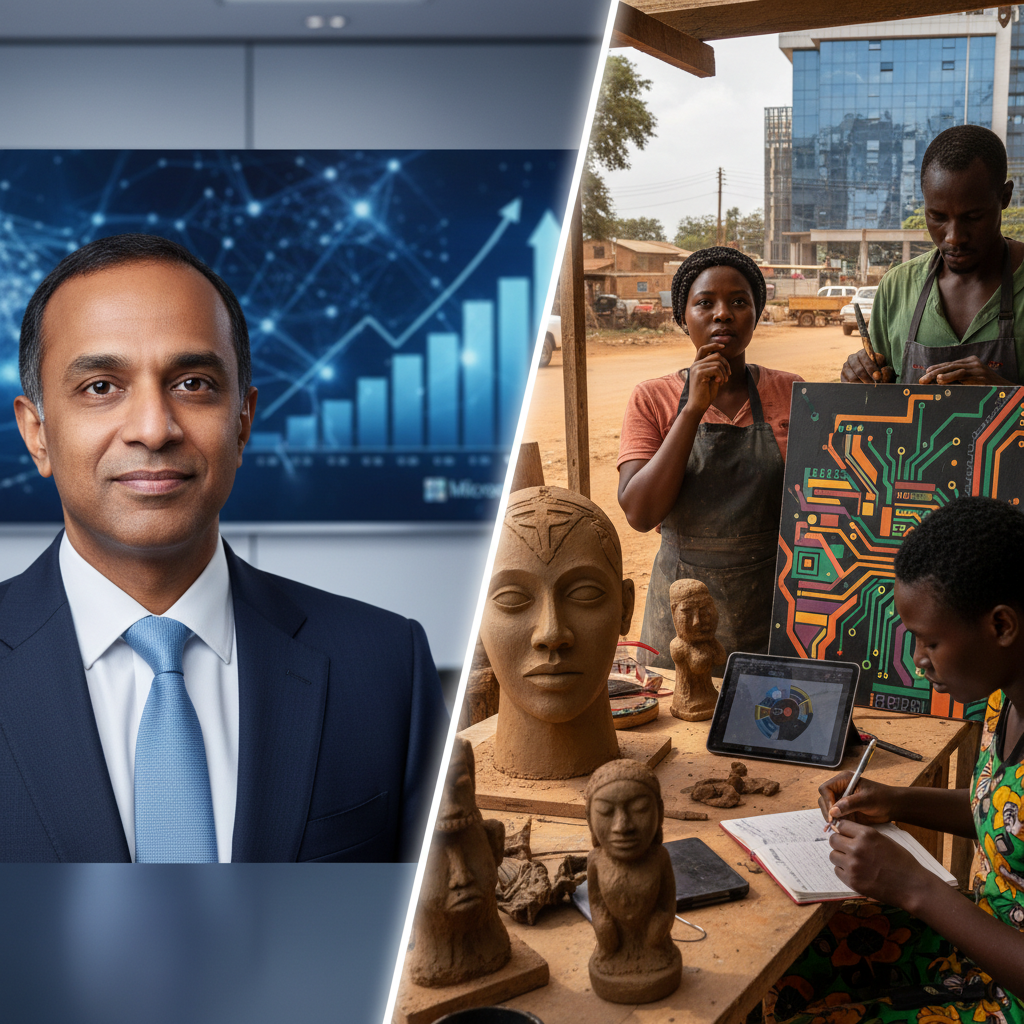
The air in Harare always feels thick with possibility, doesn't it? A hum of resilience, a spark of innovation, even when the headlines from the global tech hubs scream about market caps and trillion-dollar valuations. Lately, those shouts have been dominated by one name: Satya Nadella and his AI-first strategy at Microsoft. The numbers are staggering, truly. We're talking about a company that has seen its market value soar, propelled by its deep integration of artificial intelligence across everything from Azure to Office. But here's the thing, from my perch, sipping rooibos tea and watching the jacarandas bloom, I see more than just financial metrics; I see a future, and I'm asking what it means for us, for the artists and innovators of Africa.
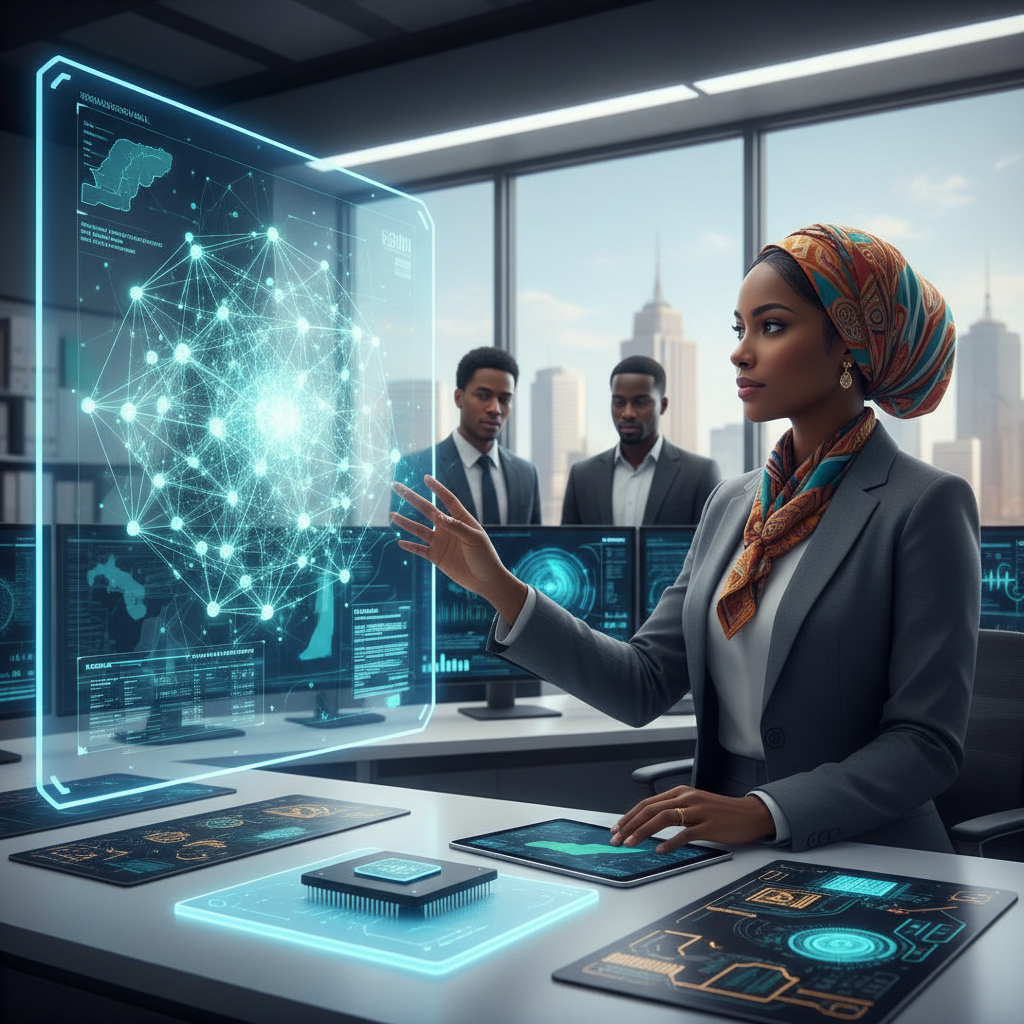
Microsoft, under Nadella, has made it abundantly clear: AI isn't just a feature, it's the operating system for their entire enterprise. They've poured billions into OpenAI, integrating GPT models into Copilot, transforming how people interact with their software. This isn't just about making spreadsheets smarter; it's about fundamentally altering the creative and productive landscape. According to recent reports, Microsoft's cloud revenue, heavily bolstered by AI services, continues to climb, showcasing the tangible impact of this strategy. Their stock price reflects a market that believes this is not a fleeting trend, but a foundational shift. Bloomberg Technology has been tracking this ascent closely, detailing how the company's aggressive AI investments are paying off.
But let's peel back the layers a bit, shall we? What does this AI-first world look like from a Zimbabwean perspective? When I walk through the National Gallery of Zimbabwe, or listen to the vibrant beats spilling from a studio in Mbare, I see creativity that is raw, authentic, and deeply rooted in our history and experiences. My concern, my hope, is that these powerful new AI tools from Microsoft and others become instruments for our expression, not just echoes of someone else's. Will Copilot help a Zimbabwean writer craft a Shona epic, or will it default to narratives more familiar to Silicon Valley?
I recently spoke with Dr. Tafadzwa Moyo, a lecturer in digital arts at the Harare Institute of Technology. She's a visionary, always pushing her students to blend traditional Zimbabwean artistry with cutting-edge technology. “The potential is immense, Zinhlée,” she told me, her eyes alight with passion. “Imagine AI tools that understand the nuances of Ndebele patterns, that can generate music in the style of Thomas Mapfumo, or help us preserve oral histories by transcribing and translating them with unprecedented accuracy. Microsoft’s investment in AI infrastructure, particularly in cloud services like Azure, could be a game-changer for African developers if we can access it affordably and tailor it to our unique needs.”
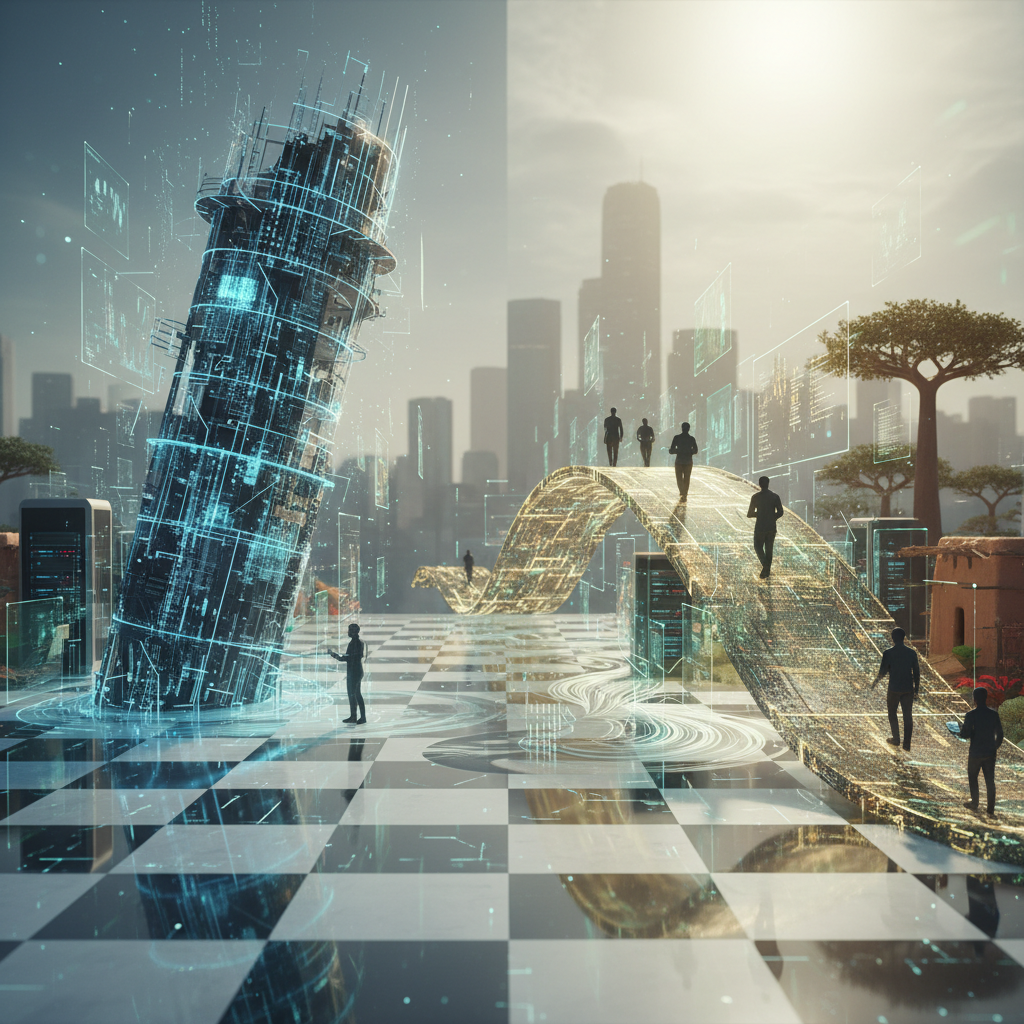
That's the crux of it, isn't it? Access and adaptation. Microsoft is making significant strides in bringing its AI capabilities to developers globally. Their commitment to making AI accessible through platforms like Azure AI Studio is commendable. However, the digital divide remains a stark reality for many parts of Africa. Infrastructure, connectivity, and the cost of computing power are still significant hurdles. It’s not enough to build the tools; they must be placed in the hands of those who can wield them to tell stories that have yet to be heard.
Consider the creative economy. In Zimbabwe, artists, musicians, and storytellers often work with limited resources, yet their output is incredibly rich. Could AI, powered by Microsoft's advancements, democratize access to high-quality production tools? Imagine a young filmmaker in Chitungwiza using an AI-powered editing suite to bring their vision to life, or a graphic designer in Bulawayo leveraging generative AI to create stunning visuals inspired by Great Zimbabwe's architecture. This isn't science fiction; it's the near future, if we play our cards right.
Satya Nadella himself has often spoken about the democratizing power of AI. In a recent interview, he emphasized the importance of AI being a tool for human empowerment, not replacement. “Our goal is to ensure that AI amplifies human ingenuity,” Nadella reportedly stated, “and that its benefits are broadly distributed across the globe.” This sentiment resonates deeply with me. It’s not about AI doing everything for us, but about AI giving us superpowers, helping us overcome limitations, and unlocking new forms of creativity.
One of the most exciting aspects of Microsoft's AI strategy is its focus on responsible AI development. This is crucial, especially in contexts like ours, where historical biases can easily be perpetuated or even amplified by algorithms if not carefully managed. The discussions around data privacy, algorithmic fairness, and ethical deployment are not abstract academic exercises; they are vital considerations for ensuring that AI serves all of humanity, not just a privileged few. As MIT Technology Review frequently highlights, the ethical implications of AI are as important as its technical prowess.
I think about the vibrant street art in downtown Harare, the intricate basket weaving traditions, the powerful oral poetry passed down through generations. These are not just cultural artifacts; they are living, breathing expressions of who we are. Can AI help us digitize, preserve, and even reimagine these forms for a global audience, without diluting their essence? This is where the magic happens, where technology meets tradition in a dance of innovation.
Microsoft's AI-first strategy, while undeniably a financial triumph, also lays down a challenge. It challenges us in Africa to engage, to adapt, to demand, and to innovate. It asks us to ensure that these powerful tools are not just consumed, but co-created and customized for our unique needs and aspirations. The market cap surge is impressive, yes, but the real value will be measured in the human potential it unlocks, especially in places like Zimbabwe.
I'm calling it now: the future is African, and AI, if harnessed correctly, will be a powerful catalyst. We have the stories, the creativity, the resilience. What we need are the right tools, the right access, and the collaborative spirit to shape this AI-powered future on our own terms. We need to ensure that when Microsoft's AI whispers, it also learns to listen to the diverse voices of our continent. Watch this space; the artists of Harare are already sketching out tomorrow's possibilities, with or without a Copilot, but certainly with an eye on what it could become. Perhaps, as Microsoft continues its global expansion, we will see more localized AI initiatives, like the ones discussed in When Microsoft's Azure AI Whispers in Lusaka's Boardrooms: Can Baobab AI Truly Blossom? [blocked], that truly empower our continent.
The journey of AI is just beginning, and its trajectory will be shaped by many hands, not just those in Redmond. The question for us is, how loudly will our hands clap, and how boldly will our voices sing, in this new digital symphony? This isn't just about Microsoft's bottom line; it's about humanity's next chapter, and I for one believe Africa has a crucial verse to contribute. We must ensure that the algorithms learn to dance to our drumbeats, not just the ones from distant lands. The Verge regularly covers new AI product developments, and I hope to see more African-centric innovations featured prominently in their reporting soon. It’s an exciting, if sometimes daunting, prospect.