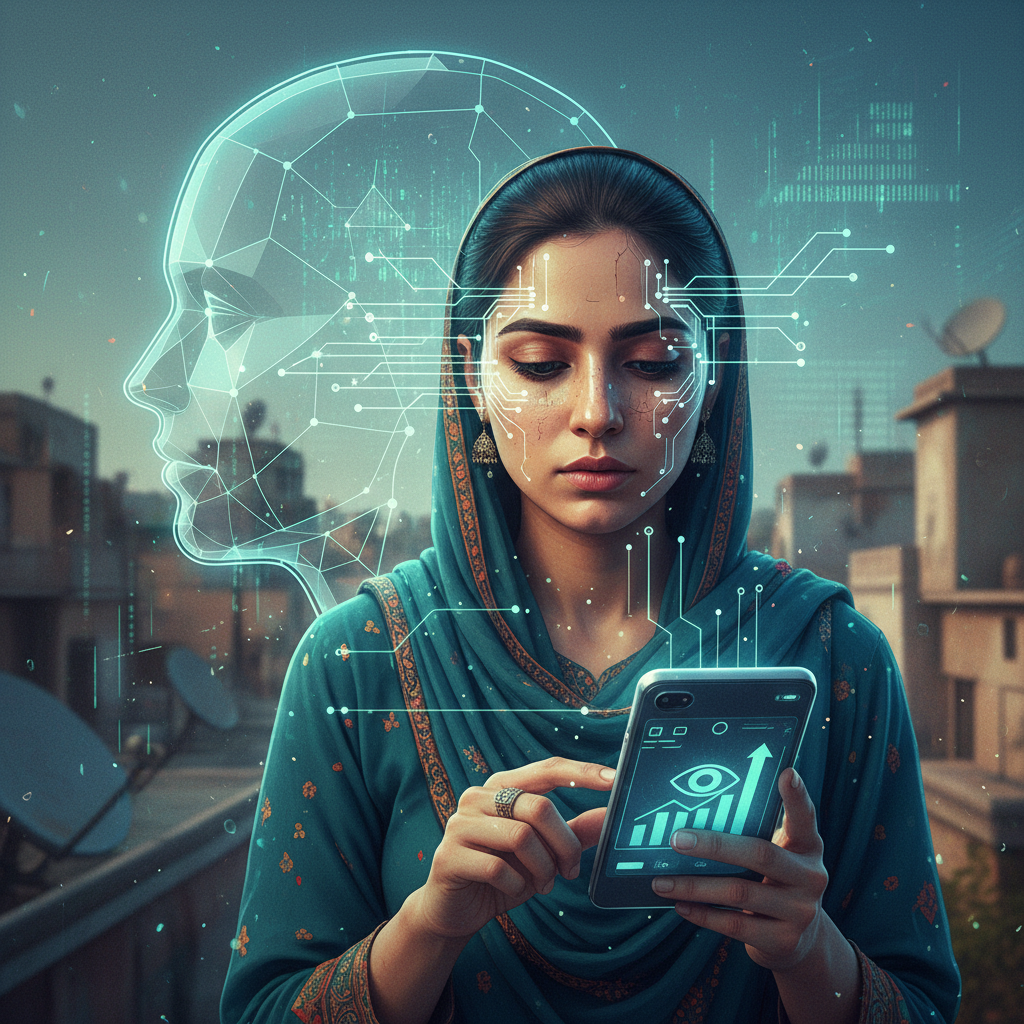

Let me tell you something, friends. While the West is still busy throwing petabytes of data and billions of dollars at ever-larger foundational models, a quiet revolution is brewing in Tokyo. It's not about bigger, it's about smarter, more efficient, and dare I say, more natural intelligence. I'm talking about Sakana AI, the startup co-founded by the brilliant David Ha, who previously led Google Brain's Magenta project, and Llion Jones, one of the 'Attention Is All You Need' paper authors. These aren't just clever academics; they are architects of a new AI paradigm.
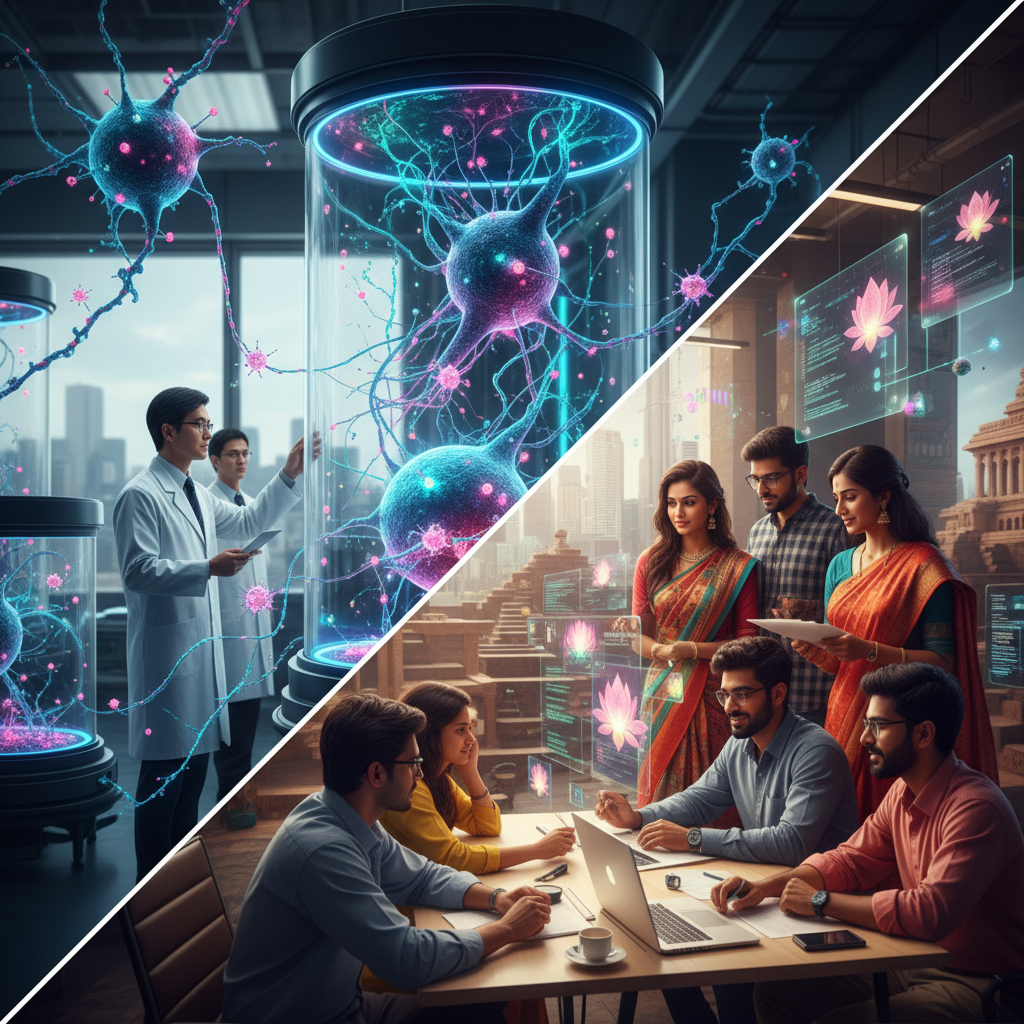
Sakana AI isn't chasing the same dragon as OpenAI or Anthropic. Their approach is fundamentally different. Instead of training one monolithic model, they are using evolutionary algorithms to breed multiple smaller, specialized AI models and then combine them. Think of it like a digital ecosystem, where different species of AI evolve and collaborate. This isn't just a technical curiosity; it’s a philosophical pivot that resonates deeply with India's burgeoning AI ambitions.
Why does this matter for us, for India, for Asia? Because the current arms race for larger, more expensive models is unsustainable, especially for nations that don't have infinite compute or data. It creates a bottleneck, a dependency on a few dominant players. Sakana AI's method, often dubbed 'model merging' or 'evolutionary AI', offers a path to powerful, customized AI without needing a supercomputer the size of a small city. It's about leveraging diversity and specialized intelligence, much like our own diverse nation.
Imagine a future where you don't need to retrain a colossal foundation model from scratch for every new language or dialect. Sakana's approach allows for the creation of smaller, highly optimized models that can be merged or evolved to handle specific tasks, languages, or cultural nuances. For a country like India, with its hundreds of languages and dialects, this is nothing short of revolutionary. We don't need a single, universal AI that speaks English and then struggles with Tamil or Bengali; we need a federated intelligence, a mosaic of specialized AIs that understand the local context. This is the inflection point.
I’ve been speaking with folks in Hyderabad, Bengaluru, and even some of the emerging tech hubs in places like Pune. The sentiment is clear: the current model of AI development, dominated by a few American giants, isn't built for our reality. It’s too centralized, too resource-intensive. “We need AI that respects our linguistic diversity, our data sovereignty, and our economic realities,” a senior researcher at the Indian Institute of Science, Professor Anjali Sharma, told me recently. “Sakana AI’s evolutionary approach offers a blueprint for how we can build powerful, localized AI without being beholden to the compute behemoths.”
Sakana AI has already shown impressive results. Their early work demonstrated how combining smaller, specialized models could achieve performance comparable to much larger, single models, often with significantly less computational overhead. This isn't just theory; it's practical innovation. They are effectively democratizing high-performance AI by making it more accessible and adaptable. This is crucial for India, where innovation often thrives on resourcefulness and ingenuity.
Think about the implications for sectors like healthcare, agriculture, and education in India. Instead of waiting for a global model to be fine-tuned for our specific needs, we can cultivate our own. An AI model evolved specifically to identify crop diseases prevalent in the Deccan Plateau, or one merged to understand the nuances of Ayurvedic texts, becomes a tangible possibility. This is not just about technology; it's about self-reliance, about building our own digital destiny.
This evolutionary paradigm also touches on the concept of 'sovereign AI,' a term gaining traction globally, including in India. Nations want to control their AI infrastructure, their data, and their models. The ability to 'breed' and combine smaller, locally developed models, rather than relying solely on imported, black-box behemoths, gives countries like India greater autonomy. It's about owning the means of AI production, not just consuming its outputs. Reuters has reported extensively on this global push for sovereign AI, and Sakana's work fits right into that narrative.
David Ha, in a recent interview, spoke about the beauty of emergent intelligence. “We’re moving beyond just scaling up,” he said. “The biological world shows us that complexity and intelligence often arise from the interaction of many simpler, specialized agents. We’re applying that principle to AI.” This isn't just a technical statement; it's a profound insight into how we might build truly robust and adaptable AI systems. It’s a departure from the industrial, assembly-line approach to AI and a move towards something more organic.
The venture capital world is starting to take notice, too. While Sakana AI has been relatively quiet about its funding, the caliber of its founders and the uniqueness of its approach suggest significant backing. The smart money knows that the next wave of AI won't just be about who has the biggest GPU cluster; it will be about who has the smartest approach to intelligence itself. And right now, that smart approach looks a lot like evolution, not just brute force.
For India, this means an opportunity to leapfrog. While Silicon Valley grapples with the ethical and computational challenges of ever-larger models, we can focus on building specialized, efficient, and culturally attuned AI systems using these new paradigms. MIT Technology Review has highlighted the growing interest in alternative AI architectures, and Sakana AI is at the forefront of that movement.
Forget Silicon Valley, look at Hyderabad. Look at Bengaluru. Our engineers, our researchers, our entrepreneurs are perfectly positioned to embrace this evolutionary AI. We have the talent, the diverse data, and most importantly, the unique challenges that demand creative, efficient solutions. This isn't just about building AI; it's about building our AI, an AI that reflects the richness and complexity of India.
The next decade of AI will not be won by those who simply scale up existing models. It will be won by those who innovate at the foundational level, who rethink what intelligence means and how it can be created. Sakana AI is showing us one powerful path. India will own the next decade of AI, not by copying the West, but by embracing these new, more sustainable, and more adaptable approaches. The future of AI is not a monolith; it's a vibrant, evolving ecosystem, and India is ready to cultivate it. The seeds are being sown, not just in Tokyo, but in the minds of innovators across Asia. We are entering an era where intelligence is bred, not just built. And that, my friends, changes everything.