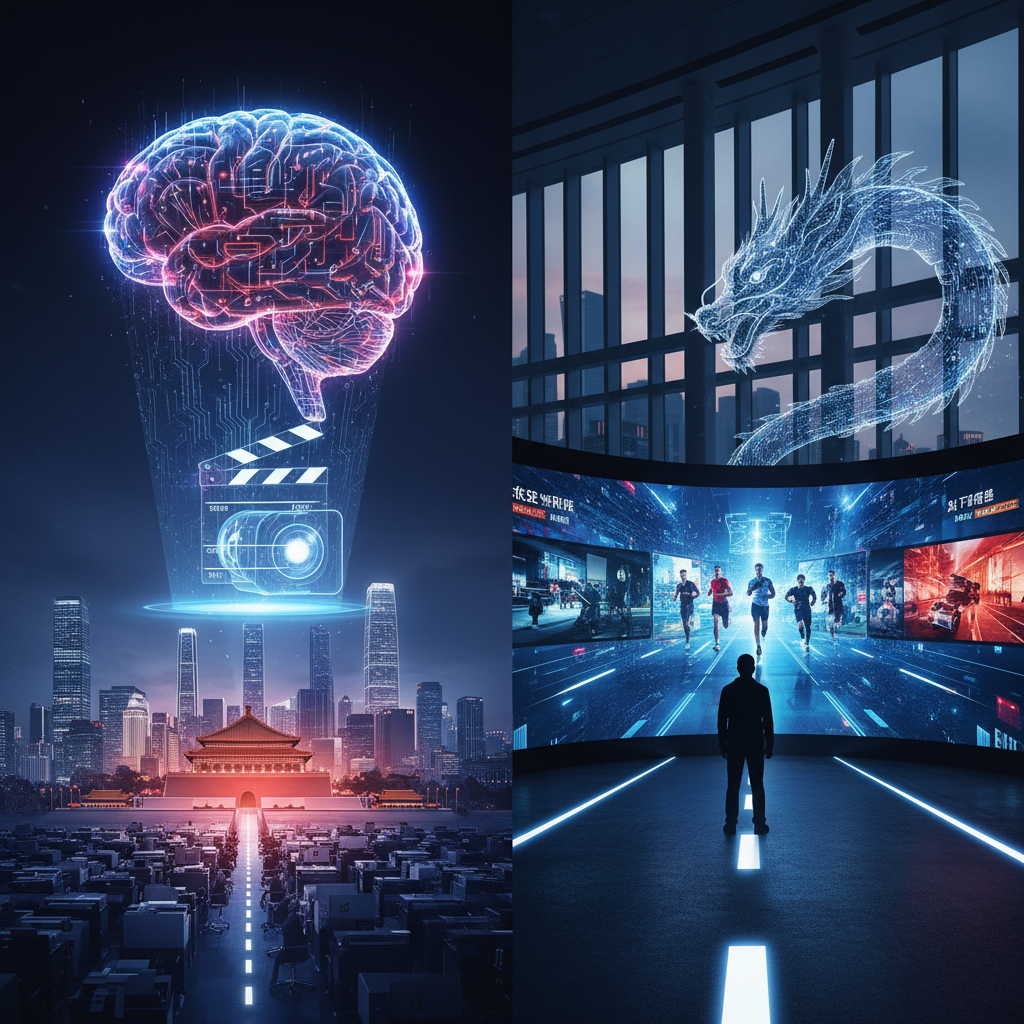

The flickering lights of a film set are no longer solely the domain of human hands and traditional cameras. Today, a new player, an invisible force, is directing the pixels, crafting scenes, and even generating entire worlds. That force is artificial intelligence, and at the forefront of this cinematic revolution stands Runway ML, a company that has transformed from a modest Brooklyn startup into Hollywood's indispensable AI video tool.
From its humble beginnings, Runway ML has consistently pushed the boundaries of what is possible in video generation. Their tools, like Gen-1 and Gen-2, allow filmmakers to transform existing footage with text or image prompts, or even create entirely new clips from scratch. This isn't just about special effects anymore; it is about fundamentally altering the creative process, democratizing high-end production, and drastically cutting costs and timelines. Major studios and independent creators alike are flocking to Runway, recognizing its potential to unlock unprecedented creative freedom. The company's recent partnerships and integrations with leading post-production houses underscore its deep entrenchment in the Western film industry, a trajectory that has not gone unnoticed in Beijing.
For years, China has been a powerhouse in film production, with a burgeoning domestic market and ambitions to rival Hollywood on the global stage. The rise of AI video tools like Runway ML presents both an opportunity and a challenge. On one hand, Chinese studios could leverage these technologies to enhance their own productions, making them more visually stunning and cost-effective. On the other hand, the dominance of a foreign company in such a critical creative technology raises questions of technological sovereignty and cultural influence. Beijing isn't saying this publicly, but the strategic implications are clear: whoever controls the tools of content creation holds significant power.
"The impact of generative AI on creative industries is profound, and video is arguably the most complex and impactful medium," explains Dr. Li Wei, a senior researcher at the Chinese Academy of Social Sciences, specializing in digital media. "Companies like Runway ML are setting the global standard. For China, the imperative is not just to adopt these tools, but to develop our own, tailored to our cultural narratives and technological infrastructure." Dr. Li's words echo a sentiment often heard in Chinese tech circles: the need for indigenous innovation, particularly in dual-use technologies that have both commercial and strategic applications. You can read more about the broader AI landscape and its implications for various industries on Reuters Technology.
The real story is in the supply chain, as it so often is. While Runway ML's software is the visible face of this revolution, the underlying hardware infrastructure, particularly high-performance GPUs from companies like NVIDIA, remains crucial. China's ongoing efforts to achieve semiconductor self-sufficiency are directly linked to its ability to compete in advanced AI applications, including generative video. Without access to cutting-edge chips, even the most brilliant algorithms developed domestically would struggle to perform at the level required for professional film production. This dependency is a constant source of concern for Chinese policymakers.
Chinese tech giants are not sitting idly by. Companies like Baidu, Tencent, and Alibaba have invested heavily in AI research and development, including generative models. While they may not have a direct competitor to Runway ML's specific offerings yet, their capabilities in areas like large language models, image generation, and cloud computing provide a strong foundation. ByteDance, the parent company of TikTok, with its immense data assets and expertise in short-form video, is particularly well-positioned to make significant strides in AI video generation. Their internal research labs are reportedly exploring similar technologies, aiming to integrate generative AI directly into their vast content ecosystem.
Consider the recent buzz around AI generated short films that premiered at festivals in Europe and North America. While many were experimental, their visual quality and creative ambition were undeniable. One such film, reportedly created with significant assistance from Runway ML's tools, garnered critical acclaim for its unique aesthetic and efficient production. This kind of success story is a powerful testament to the technology's maturity and its potential to disrupt traditional filmmaking models. The cost of entry into high-quality video production is plummeting, which means more voices, more stories, and potentially, more diverse content. However, it also means a greater need for discerning audiences and robust ethical guidelines.
"The speed at which these tools are evolving is breathtaking," noted Professor Chen Jing, a film studies expert at Peking University. "We are moving from AI as a post-production helper to AI as a co-creator, or even the primary creator. This raises fascinating questions about authorship, intellectual property, and the very definition of art. For Chinese filmmakers, understanding and adapting to this paradigm shift is not optional, it is essential for survival and innovation." Professor Chen's insights highlight the cultural and philosophical challenges alongside the technical ones.
The regulatory landscape is also a critical factor. China has been proactive in regulating AI, particularly concerning content generation and deepfakes. The "Provisions on the Administration of Deep Synthesis Internet Information Services," introduced by the Cyberspace Administration of China, are among the most comprehensive globally. These regulations require clear labeling of AI generated content and hold platforms responsible for managing deepfake risks. While these rules aim to prevent misuse, they also create a more complex environment for AI video companies, whether foreign or domestic, to operate within. This contrasts with the more fragmented regulatory approaches seen in some Western countries, though the European Union's AI Act is a notable exception.
For Chinese film producers, the choice is becoming clearer: embrace AI or risk being left behind. Several smaller studios and independent creators in China are already experimenting with generative AI, often using open source models or locally developed tools. While these may not yet match the sophistication of Runway ML, they represent a growing ecosystem of innovation. The ability to quickly prototype, visualize, and iterate on cinematic ideas without massive budgets is a game changer, particularly for a market that values speed and efficiency.
Connect the dots: the global race for AI supremacy is not just about chips or algorithms; it is also about the tools that shape culture and narrative. Runway ML's ascendancy in Hollywood is a stark reminder that technological leadership in creative AI can translate into significant cultural influence. For China, the challenge is to cultivate its own champions in this space, ensuring that its rich storytelling traditions can be amplified, not overshadowed, by the new wave of AI driven creativity. The stakes are higher than just box office receipts; they involve the very fabric of how stories are told and consumed in the digital age. For a deeper dive into the technical aspects of AI, consider exploring resources like MIT Technology Review.
The future of cinema, both in Hollywood and in China, will undoubtedly be shaped by AI. The question is not if, but how quickly and how effectively each nation can harness this transformative power, balancing innovation with ethical considerations and cultural preservation. The next few years will reveal whether China can bridge the gap and carve out its own dominant position in the global AI video landscape, or if companies like Runway ML will continue to define the cinematic frontier from afar. The competition is fierce, and the screen is set for a truly epic technological drama.