
Is the relentless march of artificial intelligence, powered by the colossal energy demands of data centers, a sustainable path forward, or are we hurtling towards a global power crisis that will leave developing nations in the dark? This isn't a theoretical question for academics in air-conditioned labs; it's a pressing concern for people like us, here in Myanmar, where every kilowatt hour is fought for, where blackouts are a daily reality, and where the promise of technology often feels like a cruel mirage.
For decades, the digital revolution was painted as a clean, ethereal force, a realm of pure information. We were told it would democratize access, connect the unconnected, and uplift the marginalized. But now, the true cost is becoming terrifyingly clear. The AI boom, driven by companies like OpenAI, Google, and Microsoft, and underpinned by the specialized chips from NVIDIA, is consuming electricity at an unprecedented, almost unbelievable rate. Reports suggest that by 2027, AI data centers could consume as much electricity as entire countries like Argentina or Sweden. Some projections even put it higher, nearing the consumption of India or Japan within the next decade.
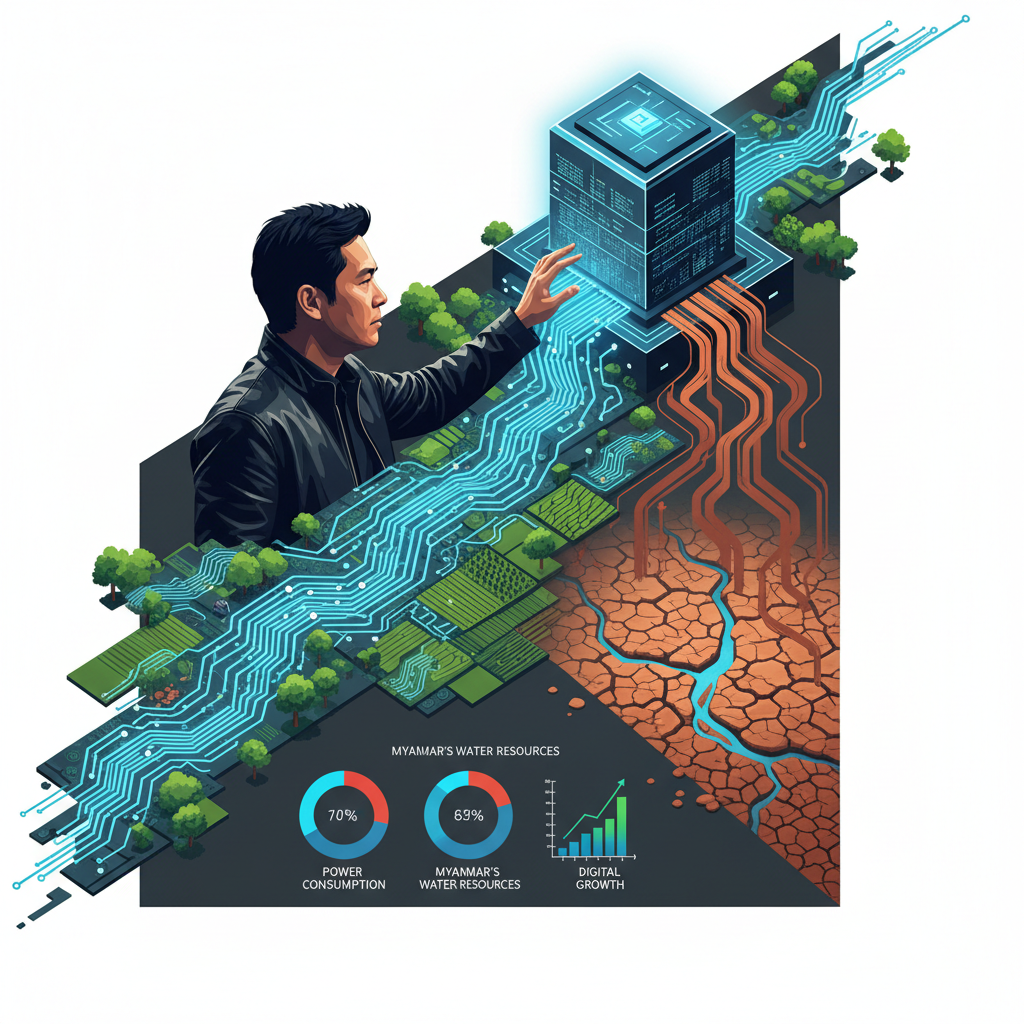
This isn't just about abstract numbers; it's about the physical infrastructure, the power plants, the transmission lines, and the very resources that generate that energy. Here in Myanmar, the stakes are different. We don't have a surplus of power. Our grid is fragile, often sabotaged, and perpetually insufficient for the needs of our people. The idea that vast swathes of global energy could be diverted to train the next iteration of a large language model, while our villages struggle with basic lighting, feels like a profound injustice.
Historically, energy consumption has always been tied to technological advancement. The Industrial Revolution ran on coal and steam. The information age thrived on silicon and increasingly efficient computing. But the scale and speed of AI's energy appetite are unlike anything we have seen before. Training a single large AI model, like OpenAI's GPT-4, can consume as much electricity as hundreds of average American homes in a year. Imagine that scale multiplied by hundreds of models, constantly being refined and deployed globally. The sheer volume of computation required for deep learning, especially for generative AI, demands immense processing power, which in turn demands immense electricity.
Today, the picture is stark. Major tech companies are scrambling to secure power. Microsoft has reportedly signed massive deals for renewable energy, but even that isn't enough. Google and Amazon are building new data centers at a furious pace, often in regions with abundant, cheap electricity, but the environmental footprint of these operations, from water usage for cooling to the carbon emissions of fossil fuel backups, is staggering. Jensen Huang, NVIDIA's CEO, whose company's GPUs are the backbone of this AI explosion, recently acknowledged the challenge, stating, "We're going to need a lot more energy." That's an understatement of epic proportions.
I spoke with Dr. Hla Myint, an energy policy expert at the Yangon Institute of Technology. He painted a grim picture for countries like ours. "The global competition for energy resources is intensifying," he explained. "As wealthier nations and corporations pour resources into powering their AI ambitions, the cost of electricity will inevitably rise. For Myanmar, this means even greater challenges in providing reliable power to our citizens and industries. It exacerbates existing inequalities." His words echo a fear many of us harbor: that the digital divide will widen, not narrow, as AI becomes more central to global economies.
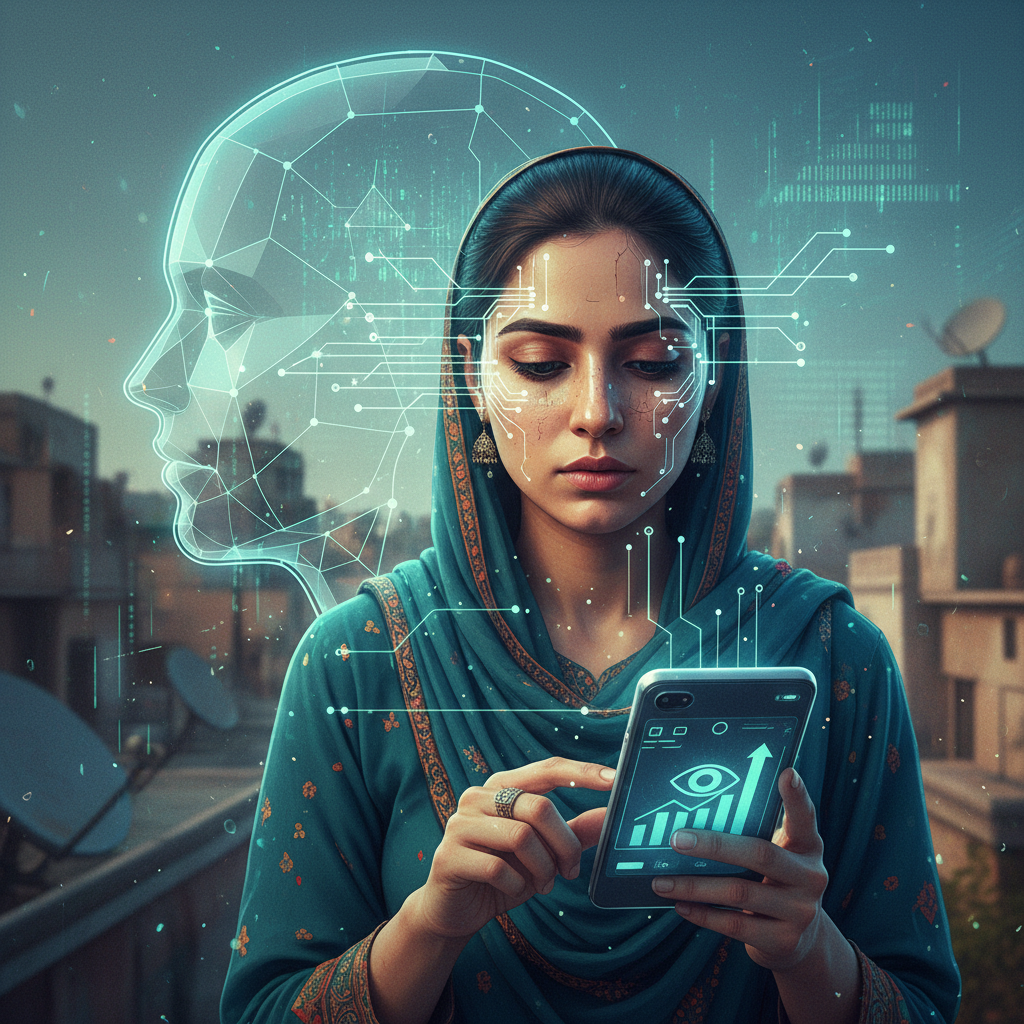
Daw Aye Aye Thant, who runs a small internet cafe in Mandalay, shared her daily struggles. "We already face hours of power cuts every day," she told me, her voice tinged with weariness. "How can we even dream of advanced AI when we can barely keep the lights on for our customers to check their emails? If the world's biggest companies are taking all the power, what is left for us? Technology can be a lifeline, but only if it's accessible and sustainable, not a luxury for the privileged few." Her perspective is vital, representing the millions whose daily lives are directly impacted by energy scarcity.
Some experts, however, believe this is a temporary hurdle. Dr. Chen Wei, a lead researcher at a prominent AI lab in Singapore, offered a more optimistic view. "We are seeing rapid innovations in energy efficiency for AI," he stated. "New chip architectures, more efficient algorithms, and the shift towards specialized hardware are all reducing the energy per computation. Furthermore, the push for green energy solutions will accelerate, driven by this very demand. This isn't a fad; it's a new normal, but one that will force unprecedented investment in sustainable energy." He pointed to advancements in neuromorphic computing and smaller, more efficient models as potential game-changers, citing research published in MIT Technology Review on these topics.
Yet, the question remains: will these innovations keep pace with the exponential growth of AI's capabilities and deployment? The trend of increasing model sizes and complexity shows no sign of slowing. From self-driving cars to personalized medicine, the applications of AI are expanding, each demanding more computational muscle. The Reuters technology section frequently reports on these expanding applications and their associated infrastructure demands.
My verdict, shaped by the realities of life in Myanmar, is that this AI energy crisis is far from a fad; it is the new, daunting normal. It is a challenge that demands not just technological solutions, but a profound re-evaluation of our global priorities. We cannot afford to build a future where advanced AI thrives in energy-rich enclaves while the rest of the world struggles with basic power access. This is about survival, not convenience. It's about ensuring that the benefits of AI are shared equitably, and that its development doesn't come at the cost of environmental devastation or deepened global inequality.
We must demand transparency from tech giants about their energy consumption and push for immediate, aggressive investment in truly sustainable, decentralized energy solutions that can benefit all, not just those who can afford the most powerful GPUs. The conversation needs to shift from simply 'how much power can we get?' to 'how can we develop AI responsibly and equitably, within the planet's limits?' Otherwise, the brilliant glow of AI will cast a long, dark shadow over much of the world, including my home.