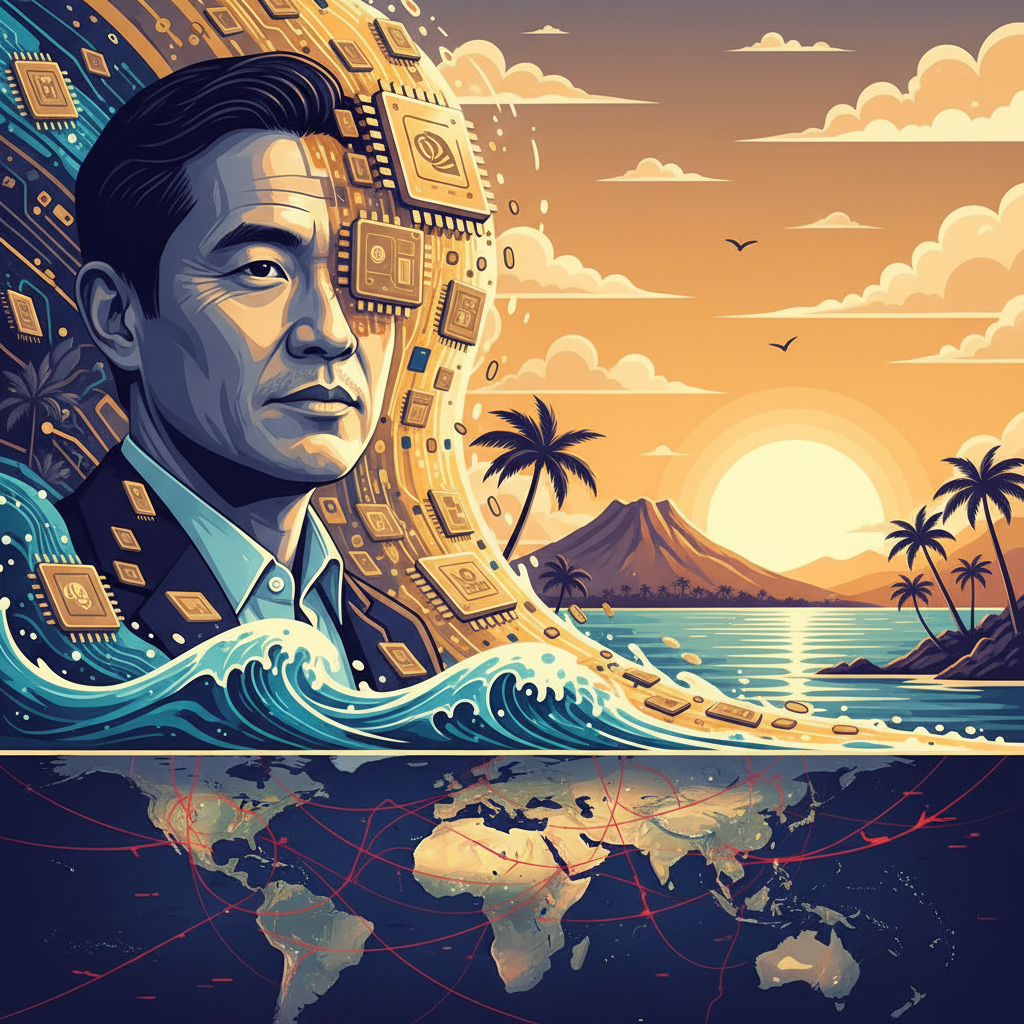
Let's be brutally honest: the AI chip shortage isn't some fleeting market anomaly, it's a foundational tremor shaking the very bedrock of our global future. From my perch here in Hawaiʻi, between the endless blue of the Pacific and the frenetic energy of Silicon Valley, I watch this unfold not as a distant economic blip, but as a direct challenge to the balance of power, a test of our collective resilience, and a stark reminder that the future is being built on volcanic rock, often literally.
We're talking about the brains of tomorrow's world, the GPUs from NVIDIA, the specialized processors from Intel and AMD, the custom silicon from Google and Apple. These aren't just components; they are the new oil, the digital gold, the very oxygen for the AI revolution. And right now, there isn't enough to go around. Jensen Huang, NVIDIA's visionary CEO, might speak of a 'golden age' for AI, but for many, it feels more like a gilded cage, locking out those without the keys to the chip factories.
My opinion is clear: this semiconductor bottleneck is not merely a logistical problem, it is a deliberate, strategic choke point being exploited for geopolitical advantage, and its implications for the Pacific region, and indeed the world, are far more profound than most analysts on the mainland care to admit. This isn't just about who gets the latest H100 GPU; it's about who gets to define the next decade of innovation, who controls the narrative, and who holds the reins of power in an AI-driven world.
The numbers are staggering. Demand for AI accelerators has skyrocketed, with some estimates suggesting a 400 percent increase year over year. Companies like OpenAI, Microsoft, and Google are reportedly spending billions, not millions, to secure their allocations. "The competition for these chips is unprecedented," says Dr. Leilani Kahele, a senior economist specializing in Pacific trade at the University of Hawaiʻi. "We're seeing lead times for advanced GPUs stretch to 18 months or more, and even then, orders are often partially filled. This isn't just a supply and demand issue; it's a national security concern for many nations, particularly those reliant on foreign technology."
The concentration of advanced manufacturing in places like Taiwan, with Tsmc at the forefront, creates a single point of failure that keeps me up at night. This isn't a new concern, but the AI boom has amplified its urgency a thousandfold. The geopolitical tensions surrounding Taiwan are not abstract concepts for us in the Pacific; they are a very real, very tangible threat to the global economy and technological progress. Imagine if that supply chain were truly disrupted. The ripple effect would be a tsunami, not just a wave.
Some might argue that this scarcity will spur innovation, forcing companies to optimize existing hardware or invest in alternative architectures. They might point to the rise of smaller, more efficient models, or the development of specialized AI chips by tech giants like Google with its TPUs, or Apple with its Neural Engine. "While internal chip development is certainly happening, it doesn't solve the fundamental problem of advanced manufacturing capacity," explains Keoni Pūlama, a former Intel engineer now advising local tech startups. "Even if every major tech company designs its own AI silicon, they still need Tsmc or Samsung to fabricate it at scale. That bottleneck remains, and it's a very expensive one to build your way out of."
And let's not forget the environmental cost. The fabrication of these chips is incredibly resource-intensive, requiring vast amounts of water and energy. As we push for more and more powerful AI, the ecological footprint of this digital gold rush grows larger. Here in Hawaiʻi, where the health of our āina, our land and sea, is paramount, we cannot ignore this aspect. The pursuit of technological advancement must be balanced with ike, with knowledge and respect for our planet.
So, what's the path forward? For me, aloha means more than hello because it's a framework for ethical AI, and it also needs to be a framework for ethical and sustainable chip production and distribution. We need a global conversation, not just a corporate scramble. This isn't about hoarding; it's about sharing the kuleana, the responsibility, for building a future that benefits everyone, not just a privileged few.
First, we need diversification of manufacturing. The US Chips Act and similar initiatives in Europe and Japan are steps in the right direction, but they are decades behind the curve. We need to accelerate investment in domestic and allied chip fabrication, not just for economic resilience, but for strategic independence. This isn't about isolation; it's about creating a more robust, distributed global supply chain that can withstand shocks.
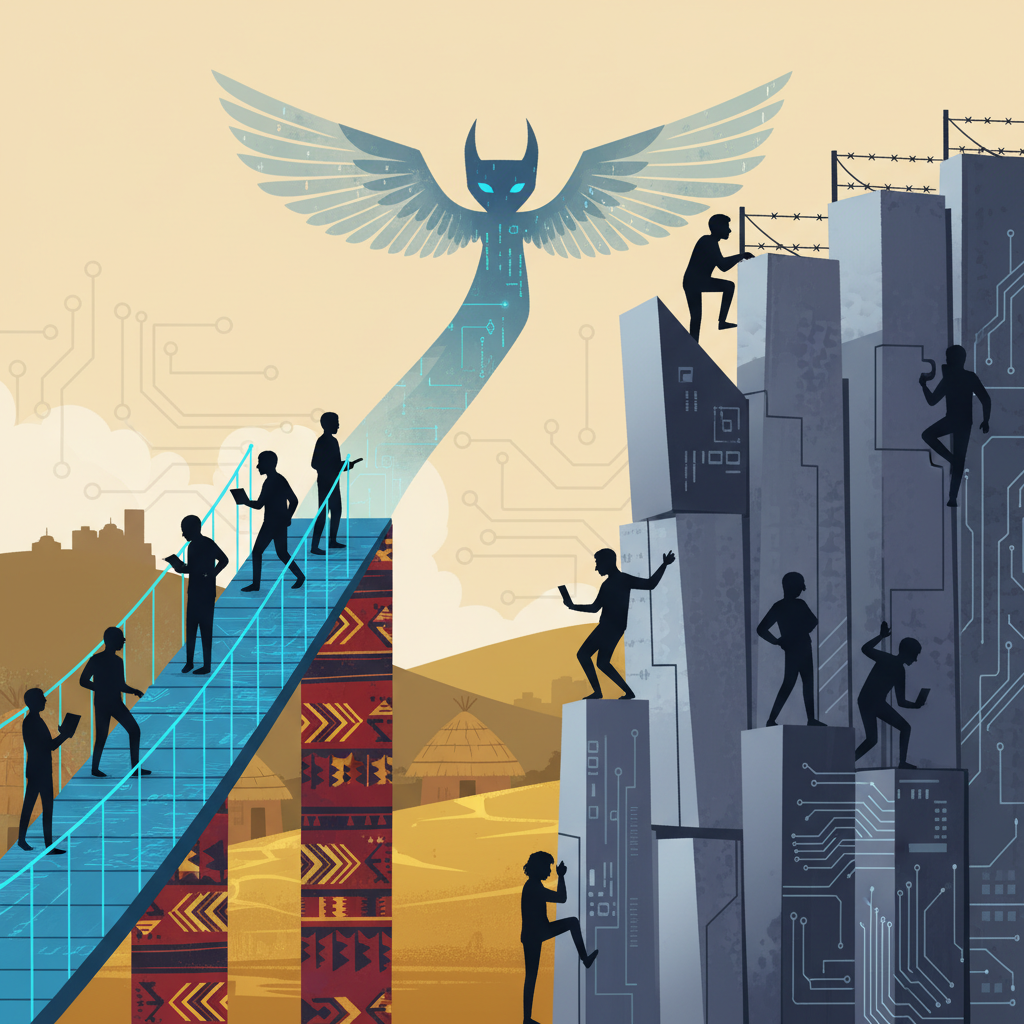
Second, we need greater transparency and collaboration. The current opaque allocation systems benefit the largest players and stifle innovation among smaller startups and research institutions. Imagine a global consortium, perhaps spearheaded by a neutral body, that could help prioritize access for critical research, humanitarian AI projects, or developing nations. "The current system favors those with the deepest pockets and the longest relationships," notes Dr. Kahele. "This creates a significant barrier for emerging economies and smaller innovators, exacerbating the digital divide."
Third, and perhaps most importantly from my perspective, we need to embed principles of sustainability and equitable access into the very foundation of this new AI economy. Hawaii sits at the crossroads of Pacific and Silicon Valley, and we see firsthand the disparities that unchecked technological advancement can create. The scarcity of chips today could easily translate into a scarcity of opportunity tomorrow for entire regions. We must advocate for policies that ensure AI's benefits are broadly distributed, not concentrated in a few tech hubs.
This isn't just about the current shortage; it's about building a resilient future. The semiconductor bottleneck is a harsh lesson in interdependence and the fragility of our global systems. If we don't learn from it, if we continue to allow geopolitical rivalries and corporate greed to dictate access to foundational technologies, we risk creating a future where the promise of AI is only realized by a select few, leaving the rest of the world behind. That, to me, would be the greatest tragedy of all. We must demand a future where the power of AI is accessible, sustainable, and guided by the spirit of aloha. For more on the global scramble, you can often find insightful analysis on Reuters Technology or The Verge AI sections. The stakes are too high to simply watch this play out from the sidelines.