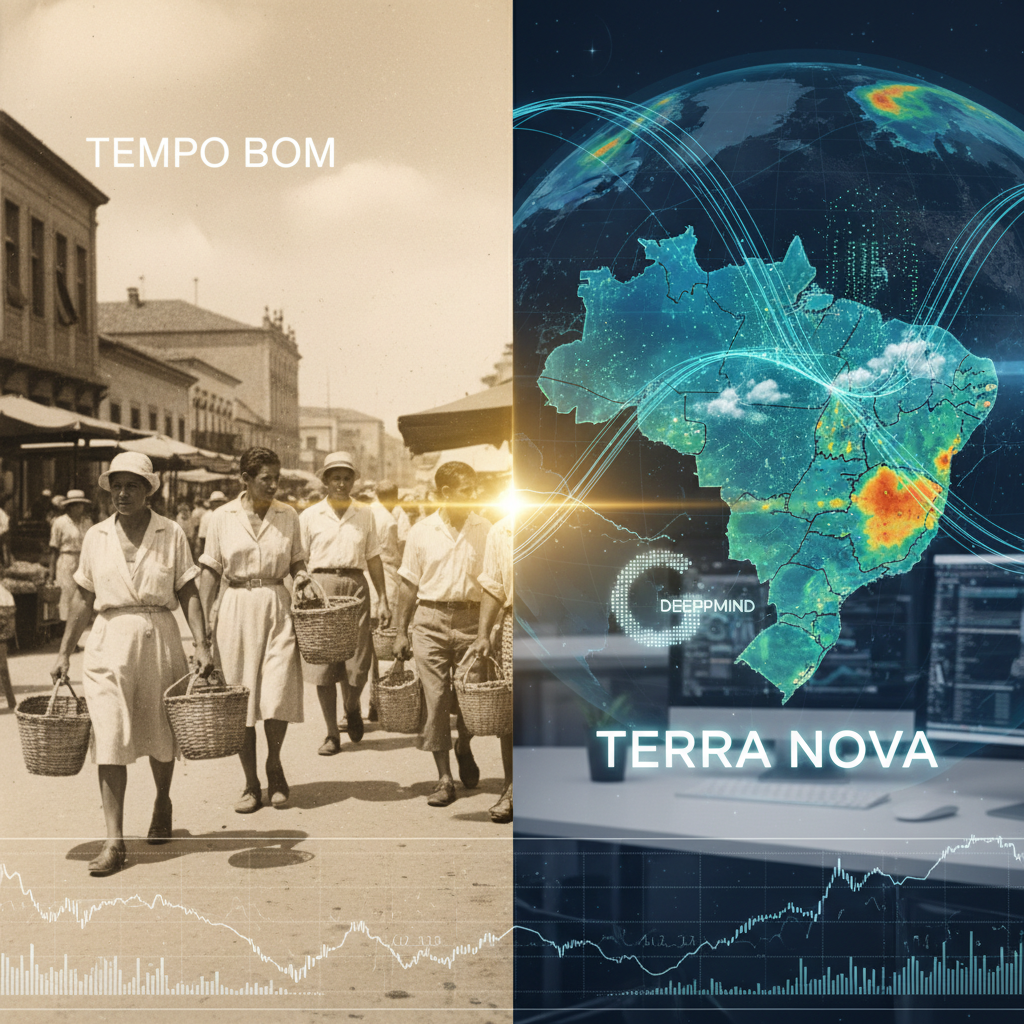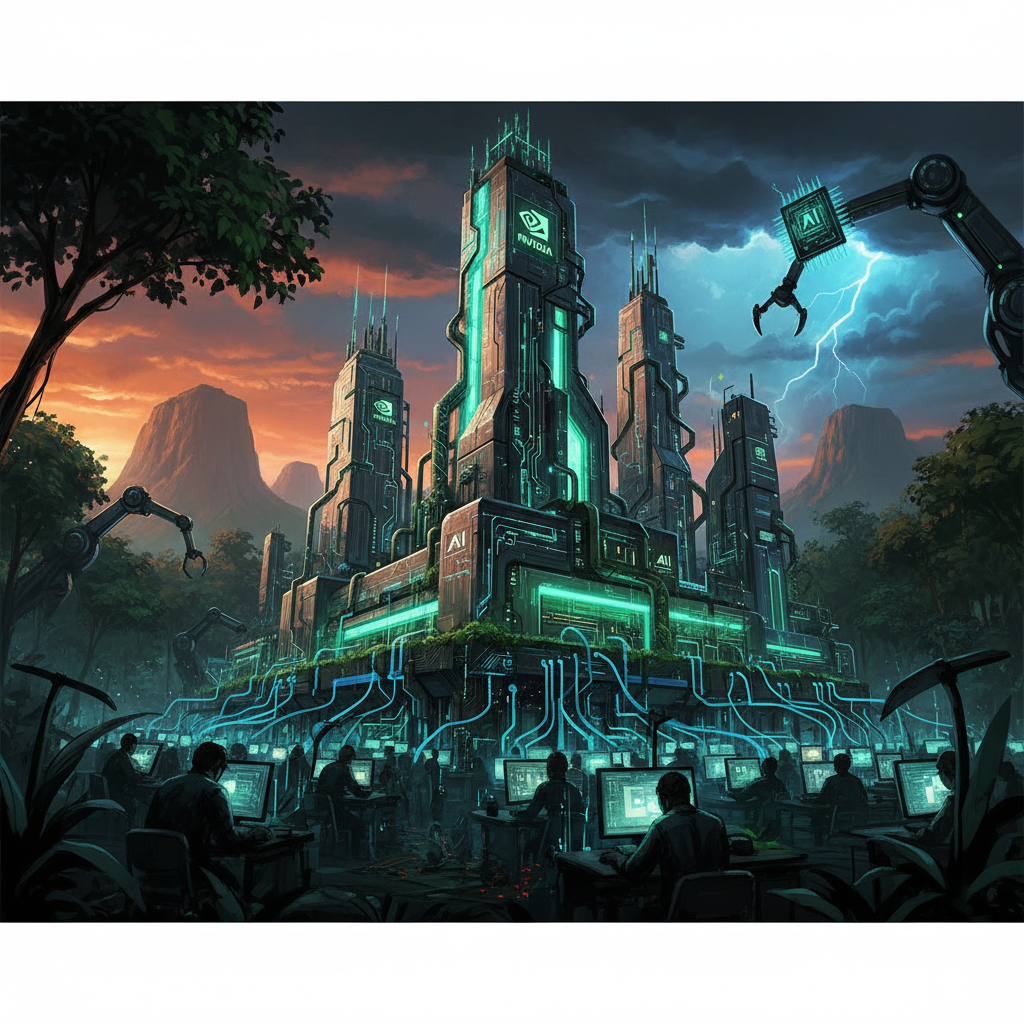

Caracas, April 2026. The global tech giants, particularly the chipmakers like NVIDIA, are pushing hard for a future where factories practically run themselves. Predictive maintenance, AI-driven quality control, smart logistics, it all sounds like a dream on paper. Efficiency, precision, fewer errors. But from my vantage point here in Venezuela, a country that has seen its share of grand promises and stark realities, I cannot help but wonder: whose dream is this, exactly? And what nightmare might it unleash for the working class in developing nations?
The narrative is always the same: AI will elevate us, free us from repetitive tasks, create new, higher-skilled jobs. But let us be honest, for countries like mine, the immediate reality is often different. We are not talking about Silicon Valley engineers retraining as AI ethicists. We are talking about factory workers, often with limited formal education, whose livelihoods depend on the very manual, repetitive tasks AI is designed to eliminate. The crisis created something unexpected for us, a resilience, a resourcefulness born of necessity. But this AI wave, it feels different, more insidious.
Consider the technical details for a moment. Predictive maintenance, for example, uses machine learning algorithms to analyze data from sensors on factory equipment. It can forecast when a machine part is likely to fail, allowing for proactive replacement and preventing costly downtime. This is brilliant, no doubt. Companies like Siemens and General Electric are already deploying these systems globally, claiming significant reductions in operational costs and increases in uptime. Quality control, another pillar of the smart factory, employs computer vision and AI to inspect products at speeds and accuracies far beyond human capability. Think of a NVIDIA GPU manufacturing plant, where microscopic defects could render a chip useless; AI can spot these in milliseconds. Smart factories integrate all these elements, creating a seamless, data-driven production ecosystem.
But here is the catch, and it is a big one for us. These systems require massive upfront investment, specialized technical expertise, and a stable, high-bandwidth digital infrastructure. Venezuela, still grappling with economic instability and infrastructure challenges, is not exactly prime real estate for bleeding-edge smart factory deployment on a broad scale. So, what happens? We become recipients of older, less sophisticated tech, or worse, our nascent industries are simply outcompeted by fully automated global players. The gap widens, not closes.
"The promise of AI in manufacturing is undeniable, but we must ensure it does not exacerbate existing inequalities," stated Dr. Elena Rojas, a Venezuelan economist and labor policy advisor currently based in Bogotá. "For countries with fragile economies, the risk of technological unemployment without adequate social safety nets or retraining programs is immense. We cannot simply import these technologies without a robust national strategy." Her words echo a growing concern among those who see beyond the glossy brochures of efficiency.
Then there is the question of data. These smart factories generate mountains of data: production metrics, quality logs, energy consumption, even worker performance. Who owns this data? Who controls it? In a globalized manufacturing chain, often the data flows back to the corporate headquarters in the US or Europe, not remaining in the country where the goods are produced. This creates a new form of digital colonialism, where our labor contributes to data assets that we do not control, and which can then be used to further optimize and automate us out of the picture. This is an unpopular opinion from Caracas, perhaps, but it is one we must confront.
"We are already seeing a brain drain, a tech diaspora, of our brightest minds," observed Miguel Ángel Soto, a software engineer who now works remotely for a US-based AI firm from his apartment in El Hatillo. "If the few manufacturing jobs that remain become hyper-automated and require skills that are not being taught here, what incentive is there for our youth to stay? Venezuela's tech diaspora is reshaping AI globally, yes, but often from afar, because the opportunities at home are limited." This is a critical point. Our talent is building the very systems that might displace our own people.
Expert debate on this issue is fierce. On one side, you have the optimists, often from the tech industry itself, who argue that the economic benefits of smart manufacturing will trickle down, creating wealth and new opportunities. Satya Nadella, Microsoft's CEO, often speaks of AI as an 'empowering force' that will augment human capabilities. And there is truth to that for some. For a highly skilled technician, AI tools can make their job more efficient and interesting. But what about the millions of others?
On the other side, labor advocates and development economists warn of a 'race to the bottom,' where countries compete on the cheapest labor, only to then have that labor replaced by machines. Dr. Anya Sharma, a researcher at the MIT Technology Review specializing in automation's impact on developing economies, highlighted this in a recent paper. "The narrative of job creation often masks the reality of job displacement, particularly in sectors that have historically provided stable employment for low-skilled workers. We need proactive policy, not reactive damage control." She advocates for universal basic income pilots and massive investment in digital literacy programs.
The real-world implications are stark. Imagine a scenario where a major international company decides to set up a highly automated factory in a free-trade zone near Puerto Cabello. It brings a few dozen high-tech jobs for engineers and supervisors, but hundreds of traditional assembly line roles are simply not created, or are phased out from existing operations. The local economy, which might have relied on those jobs, struggles to adapt. The promise of foreign investment becomes a hollow echo for the majority.
What should be done? First, we need transparency. Companies deploying AI in manufacturing must be mandated to disclose their employment impact assessments. Second, governments in developing nations, including Venezuela, need to invest heavily in future-proof education and vocational training. This is not about teaching everyone to code; it is about equipping people with adaptable skills, critical thinking, and digital literacy. Third, we need to explore new economic models that decouple livelihood from traditional employment. Perhaps a sovereign wealth fund, fueled by the efficiency gains of AI, could provide a social dividend to citizens.
Finally, and perhaps most controversially, we must consider regulation. Not to stifle innovation, but to guide it. Should there be a 'robot tax' to fund retraining programs? Should there be quotas for human employment in automated factories? These are difficult questions, but they are essential. We cannot allow the pursuit of efficiency to blind us to the human cost. The future of manufacturing, powered by AI, is coming. We in Venezuela, and across the Global South, must ensure it is a future that serves all of us, not just the algorithms and their corporate masters. The alternative is a new form of digital serfdom, and that is a future I refuse to accept. For more on the global impact of AI, you can always check out Reuters Technology. The conversations are happening, but are we listening to the right voices? And for those interested in the broader ethical implications, Wired's AI section offers diverse perspectives that are worth exploring.