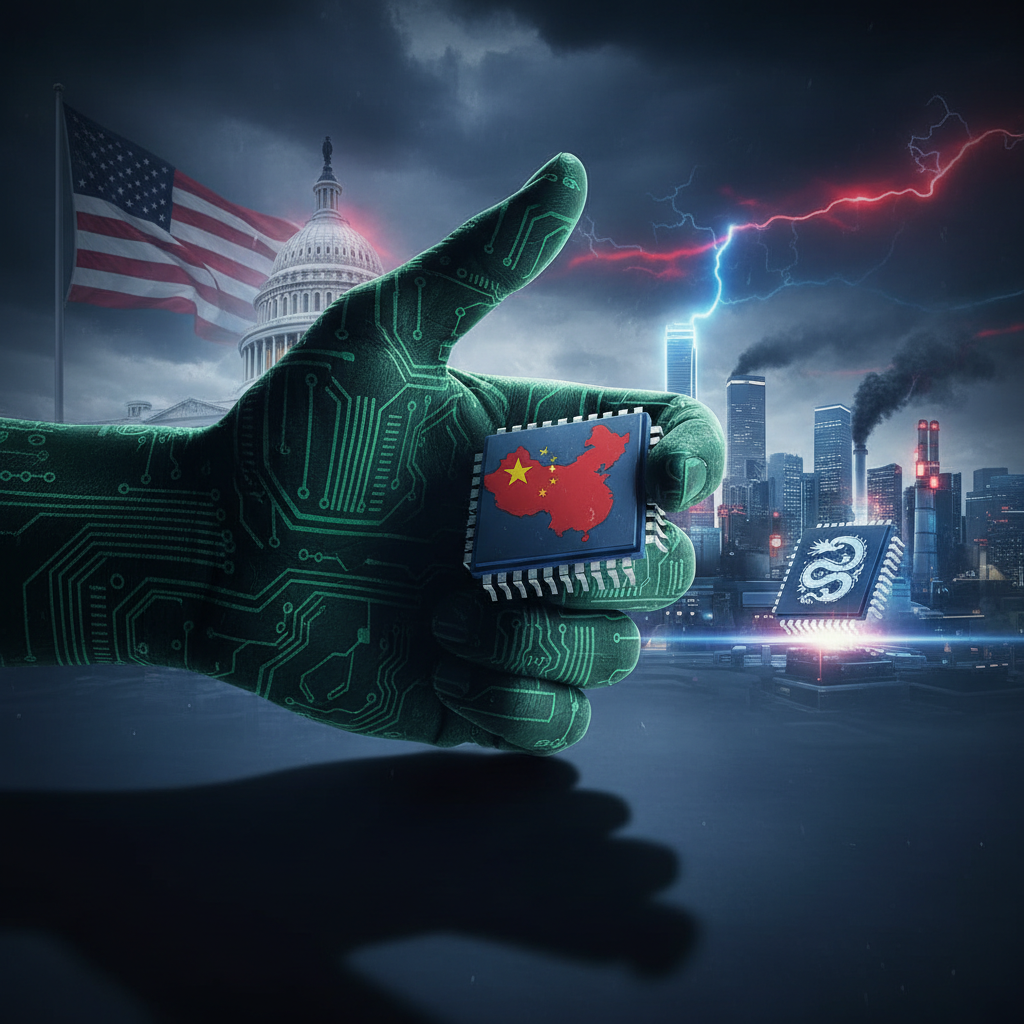

The air in Shenzhen, even in April, feels thick with anticipation, a kind of humid energy that hums beneath the surface of its gleaming skyscrapers. This city, the heart of China's technological ambition, is buzzing not just with new startups, but with a quiet, almost desperate resolve. The reason is simple: NVIDIA. Or, more accurately, the lack of NVIDIA's most advanced AI chips.
For years, Jensen Huang's NVIDIA has been the undisputed king of AI hardware, its GPUs the lifeblood of every serious AI research lab and data center around the world. But Washington's escalating export controls, aimed squarely at limiting China's access to cutting-edge AI capabilities, have thrown a wrench into this global machinery. The latest iterations of these restrictions, tightened just months ago, mean that chips like the A100 and H100, and even their slightly downgraded 'China-specific' variants like the H800 and A800, are now largely out of reach for Chinese companies. It’s a move designed to slow China down, to starve its AI ambitions, but the real story is in the supply chain, and what Beijing is doing in response.
“The United States believes that by cutting off access to these high-performance chips, they can maintain a significant lead in AI development,” explained Dr. Wang Jian, a senior researcher at the Chinese Academy of Sciences, speaking to me over a cup of Longjing tea. “But what they are actually doing is galvanizing our domestic industry. It’s a double-edged sword for them.” Dr. Wang's assessment echoes what I've heard from numerous sources, both official and unofficial, across the country.
Beijing isn't saying this publicly, but the directive is clear: self-sufficiency is paramount. This isn't a new concept in China, but the urgency has never been higher. Companies like Huawei, Alibaba, and Baidu, once eager customers of NVIDIA, are now pouring billions into developing their own AI accelerators. Huawei's Ascend series, particularly the Ascend 910B, is frequently cited as the most promising domestic alternative. While it may not yet match the raw power of NVIDIA's latest offerings, its performance is rapidly improving, and crucially, it is available.
Sources close to major Chinese tech firms, who spoke on condition of anonymity due to the sensitivity of the topic, confirmed that domestic chip orders are soaring. “We are prioritizing local solutions,” one executive from a large cloud provider told me. “Even if the initial performance isn’t identical, the long-term strategic value of a secure, domestic supply chain outweighs the short-term inconvenience.” This sentiment is becoming increasingly common. The geopolitical tensions have essentially created a captive market for Chinese chipmakers.
The scale of investment is staggering. The Chinese government, through various state-backed funds and initiatives, is reportedly channeling hundreds of billions of yuan into semiconductor research and manufacturing. This includes everything from advanced packaging technologies to foundational intellectual property for chip design. The goal is not just to replicate NVIDIA, but to innovate beyond it, to create a parallel ecosystem that is entirely independent.
This push for self-reliance is not without its challenges. Manufacturing advanced semiconductors requires highly specialized equipment, much of which is still controlled by Western companies, particularly from the Netherlands and Japan. Asml, the Dutch giant, holds a near monopoly on extreme ultraviolet, or EUV, lithography machines, which are essential for producing the most advanced chips. China currently lacks access to these machines, forcing its foundries to rely on older, deep ultraviolet, or DUV, technology.
However, even here, progress is being made. Chinese companies are reportedly making strides in improving DUV processes to achieve better yields and smaller nodes, pushing the limits of what was once thought possible without EUV. “It’s like running a marathon with ankle weights,” another industry insider remarked, “but we are getting stronger because of it. We are learning to optimize every step.”
The impact of these restrictions extends beyond just hardware. Software frameworks and AI models are also being tailored for domestic accelerators. Baidu's Ernie Bot, for instance, is increasingly optimized for its own Kunlun AI chips, and other Chinese large language models are following suit. This creates a divergence in the global AI landscape, where models trained on Western hardware and software may not perform optimally on Chinese systems, and vice versa. It’s a digital iron curtain, slowly descending.
“The global AI community is facing a fragmentation that could hinder universal progress,” stated Dr. Kai-Fu Lee, a prominent AI investor and author, in a recent interview. “While competition can spur innovation, a complete decoupling risks creating two separate, less efficient AI worlds.” His concerns are valid. The free flow of ideas and technology has historically been a powerful engine for scientific advancement. Now, national security concerns are taking precedence.
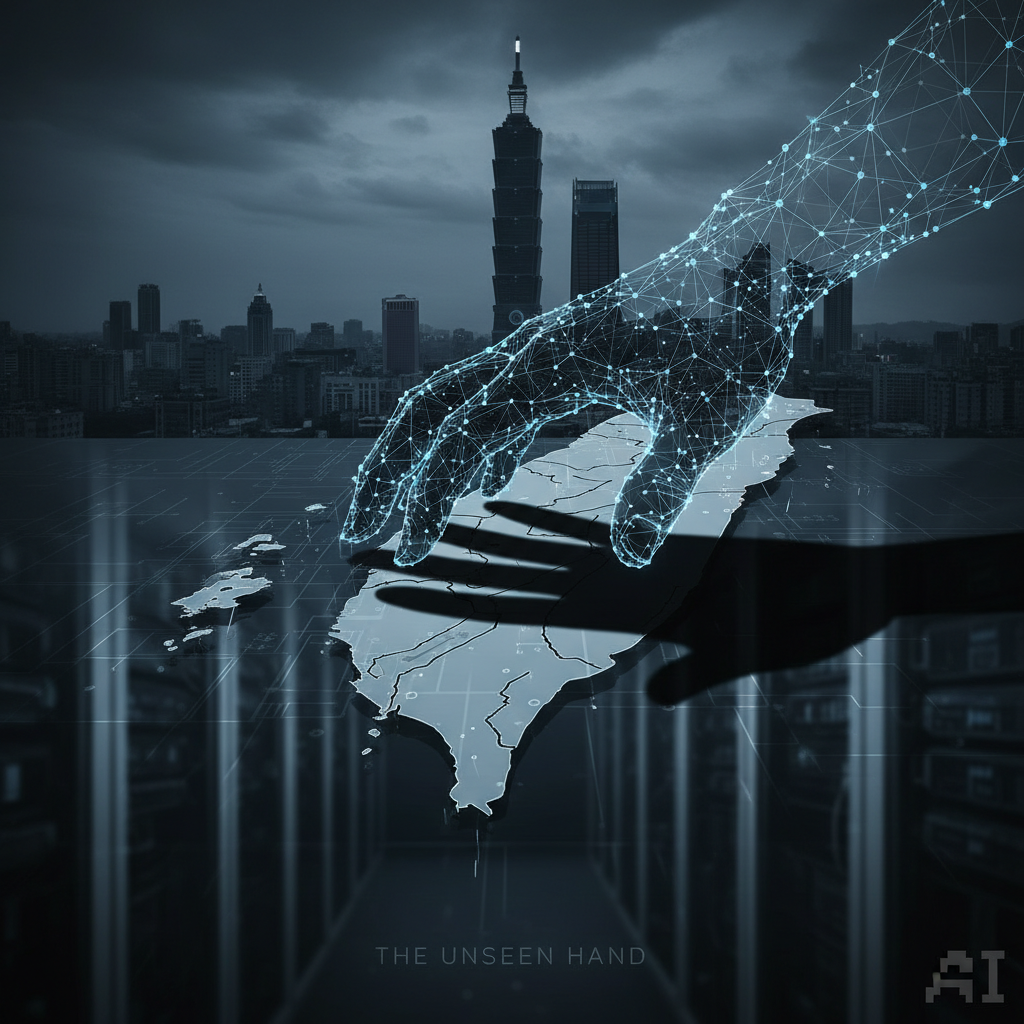
Connect the dots: the US wants to restrict China's AI growth, China responds by turbocharging its domestic chip industry. The result is a bifurcated global AI ecosystem, where geopolitical fault lines are etched into silicon and code. This isn't just about who builds the fastest AI; it's about who controls the underlying infrastructure, who sets the standards, and ultimately, who wields the most influence in the coming age of artificial intelligence. The stakes could not be higher. The race is on, and it’s being run on two very different tracks.
For more insights into the global tech landscape, you can explore reports on AI research and analysis or follow breaking news on AI startups and industry. The semiconductor industry's role in this geopolitical chess game is also frequently covered by outlets like Reuters Technology.
The implications of this technological decoupling are profound. From military applications to economic competitiveness, the ability to develop and deploy advanced AI is becoming a defining characteristic of national power. The current trajectory suggests a future where technological sovereignty, rather than global collaboration, will be the driving force behind AI innovation, at least for the foreseeable future. And here in China, the resolve to build that sovereign future is palpable. The challenge is immense, but the determination is even greater. What happens next will shape not just the tech world, but the global balance of power for decades to come.