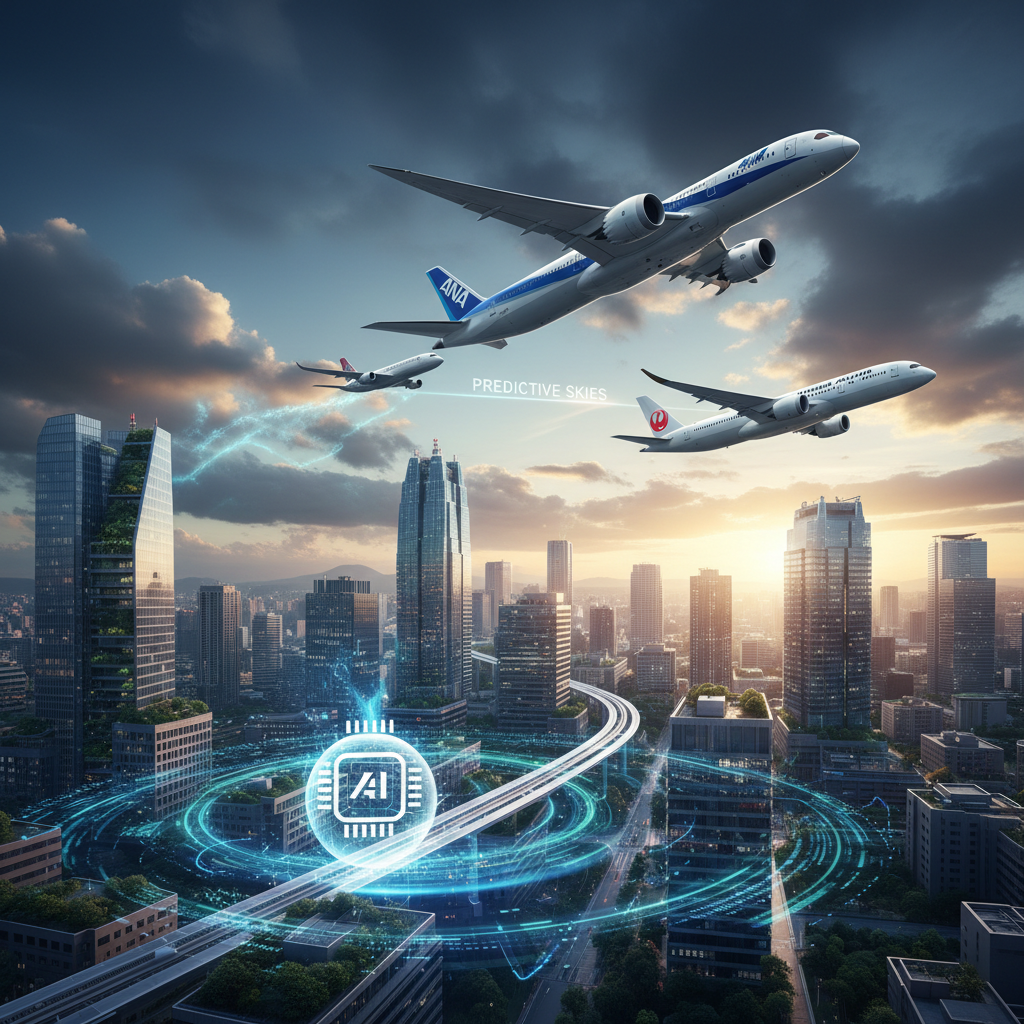

The rhythmic hum of a jet engine, a sound synonymous with global connectivity, is undergoing a silent transformation. Beneath the polished fuselage and within the intricate web of air traffic control, artificial intelligence is not merely a tool, it is becoming an indispensable co-pilot, an omnipresent mechanic, and an astute air traffic controller. While much of the global conversation around AI fixates on large language models and creative applications, Japan's aviation sector, with its characteristic emphasis on precision and safety, has been quietly building a future where AI ensures every flight is safer, greener, and more punctual.
Why Most People Are Ignoring It: The Invisible Revolution
For the average traveler, the mechanics of aviation remain largely opaque. We trust that our flights will depart on time, arrive safely, and that the aircraft we board is meticulously maintained. This trust is largely due to decades of rigorous engineering and human expertise. AI's integration into this highly regulated domain is often invisible to the public, operating behind the scenes in complex algorithms and data centers. It lacks the immediate, tangible flashiness of a generative art tool or a conversational chatbot. Consequently, the profound impact of AI in flight optimization, predictive maintenance, and air traffic control often goes unnoticed, overshadowed by more consumer-facing AI narratives. It is akin to the intricate, unseen clockwork of a grand Seiko timepiece; its precision is felt, not always seen.
How It Affects YOU: Beyond the Clouds
Consider your next journey from Tokyo to New York. Traditionally, flight paths are predetermined, often following established corridors. With AI, this is changing dramatically. Advanced algorithms analyze real-time weather patterns, air traffic density, and even volcanic ash forecasts to suggest optimal flight paths that minimize fuel consumption and reduce flight time. This is not a marginal improvement; it is a significant one. For instance, a system developed by Google DeepMind, in collaboration with major airlines, has demonstrated the potential to reduce fuel burn by up to 10 percent on certain routes, translating to millions of tons of carbon emissions saved annually. This means your ticket price might be more stable, your journey slightly shorter, and your carbon footprint marginally smaller, contributing to a healthier planet.
Beyond the flight itself, AI is revolutionizing aircraft maintenance. Imagine a scenario where a critical component, say a landing gear actuator, can predict its own failure weeks before it occurs. This is the promise of predictive maintenance. Sensors embedded throughout modern aircraft constantly stream data to AI systems, which analyze patterns indicative of wear and tear. This allows for proactive repairs during scheduled downtime, preventing costly delays and, more importantly, enhancing safety. For you, the passenger, this means a significantly reduced chance of unexpected delays due to mechanical issues and an even greater assurance that the aircraft has been maintained to the highest possible standard. The engineering is remarkable, transforming reactive fixes into predictive interventions.
The Bigger Picture: A Global Symphony of Precision
The implications extend far beyond individual flights. At a macro level, AI is poised to orchestrate a global symphony of air traffic. Air traffic control (ATC), a highly complex human endeavor, manages millions of flights annually. AI systems are now assisting controllers by predicting potential conflicts, optimizing sequencing for arrivals and departures, and managing airspace more dynamically. For a nation like Japan, with its dense urban centers and limited airspace, this is particularly critical. The Japan Civil Aviation Bureau (jcab) has been exploring AI solutions to enhance efficiency at hubs like Narita and Haneda, where every minute saved on the ground or in the air translates to substantial economic and environmental benefits. This enhanced efficiency is not just about speed; it is about safety, reducing controller workload, and mitigating the risks of human error in an increasingly crowded sky.
Economically, the stakes are immense. The global aviation industry is projected to reach over $1 trillion by 2027. AI's ability to cut fuel costs, minimize maintenance downtime, and optimize logistics could save airlines tens of billions of dollars annually. These savings can be reinvested into fleet modernization, sustainable aviation fuels, or even passed on to consumers. Environmentally, the impact is equally profound. As the world grapples with climate change, aviation's carbon footprint is under intense scrutiny. AI offers a powerful lever to reduce emissions, making air travel more sustainable without compromising its vital role in global trade and tourism.
What Experts Are Saying: Voices from the Forefront
“The integration of AI into aviation is not a luxury, it is a necessity for the future of air travel,” states Dr. Kenji Tanaka, Head of Aviation Systems Research at Mitsubishi Heavy Industries. “We are moving from a reactive model to a highly proactive, predictive one. Our simulations show that AI-driven flight path optimization alone could reduce global aviation emissions by 5-7 percent within the next decade, a truly transformative figure.”
Ms. Akiko Sato, Chief Technology Officer at All Nippon Airways (ANA), emphasizes the safety aspect. “For ANA, safety is paramount. Our collaboration with NVIDIA on advanced predictive maintenance models, leveraging their powerful GPUs, has allowed us to identify potential component failures with an accuracy rate exceeding 90 percent. This level of foresight was unimaginable just a few years ago. Precision matters when lives are at stake.”
From a regulatory perspective, Mr. Hiroshi Nakamura, Director of Airspace Management at Jcab, notes the careful balance required. “While the benefits are clear, the regulatory framework must evolve in parallel. We are working closely with international bodies like Icao to establish robust standards for AI integration, ensuring that these systems are transparent, auditable, and ultimately enhance, not compromise, human oversight. Japan has been quietly building these foundational guidelines for years.”
Professor Elena Petrova, an AI ethics expert from the University of Tokyo, offers a crucial perspective on the human element. “The challenge is not just technical, it is also psychological. How do we ensure human controllers and pilots maintain situational awareness and trust in AI recommendations without becoming overly reliant? This human-AI teaming interface is where much of our current research is focused, particularly in high-stakes environments like air traffic control.”
What You Can Do About It: Engaging with the Future
As citizens and consumers, understanding these developments is the first step. Support policies that encourage responsible AI development and deployment in critical infrastructure. When choosing airlines, consider those that openly discuss their investments in sustainable and safe technologies. For those in technical fields, the aviation sector offers a fertile ground for innovation, from data science to aerospace engineering. The demand for AI specialists within this domain is rapidly accelerating. Educate yourself through reputable sources like MIT Technology Review to grasp the nuances of these complex systems.
The Bottom Line: Why This Will Matter in 5 Years
In five years, the skies will be measurably different. AI will not just be assisting; it will be an integral, almost invisible, part of every flight. We will see a significant reduction in flight delays attributed to mechanical issues, a noticeable decrease in aviation's carbon footprint, and an air traffic management system that operates with unprecedented fluidity and safety. Airlines that embrace these technologies early will gain a significant competitive advantage, while those that lag risk obsolescence. For Japan, a nation deeply reliant on air travel for trade and tourism, the advancements in AI-driven aviation represent not just technological progress, but a strategic imperative. The quiet revolution happening above our heads today will become the standard operating procedure of tomorrow, shaping our world in ways we are only just beginning to fully comprehend. The future of flight is not just about faster planes; it is about smarter skies. For a deeper dive into how nations are securing their technological future, you might find our recent article on Japan's Quiet Pursuit of AI Self-Reliance [blocked] particularly insightful.