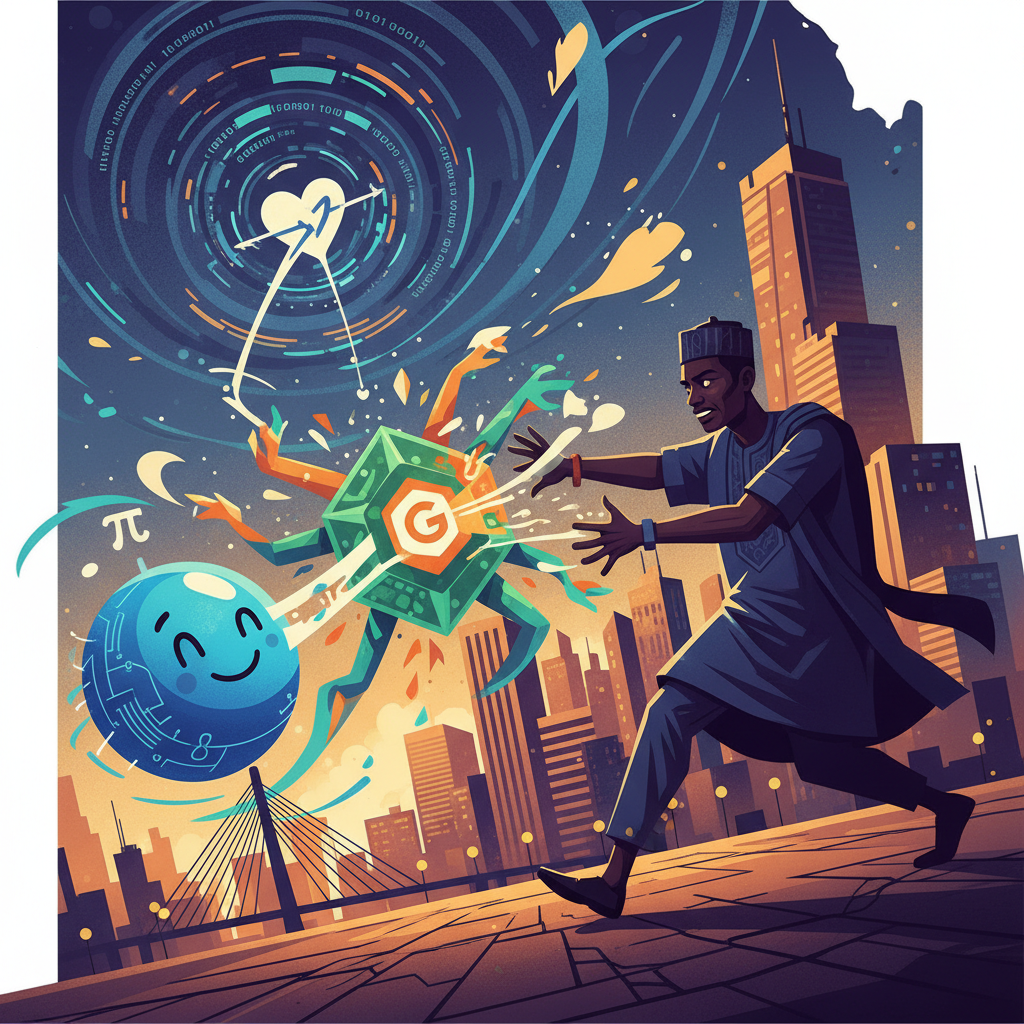
Let me tell you something, the future is already here because it's just not evenly distributed. While the tech titans of Silicon Valley, from Inflection AI with its much-touted Pi to Google's ever-present Gemini, are busy crafting what they imagine to be the ultimate personal AI assistant, they are missing a crucial piece of the puzzle. They are building for a world that largely exists in their own echo chambers, a world of individualistic pursuits and isolated digital lives. But here in Lagos, where life is a symphony of interconnectedness and communal spirit, the idea of a 'personal' AI takes on a profoundly different meaning.
The buzz around Inflection AI's Pi has been relentless, a digital companion designed to be empathetic, supportive, and deeply personal. It's meant to be your confidant, your sounding board, your digital friend. Google, not to be outdone, pushes Gemini as an all-encompassing assistant, ready to schedule your life, answer your questions, and generally make things more efficient. These are powerful tools, no doubt. But I look at them, and I see a fundamental misunderstanding of how technology truly integrates into the lives of billions, especially across Africa.
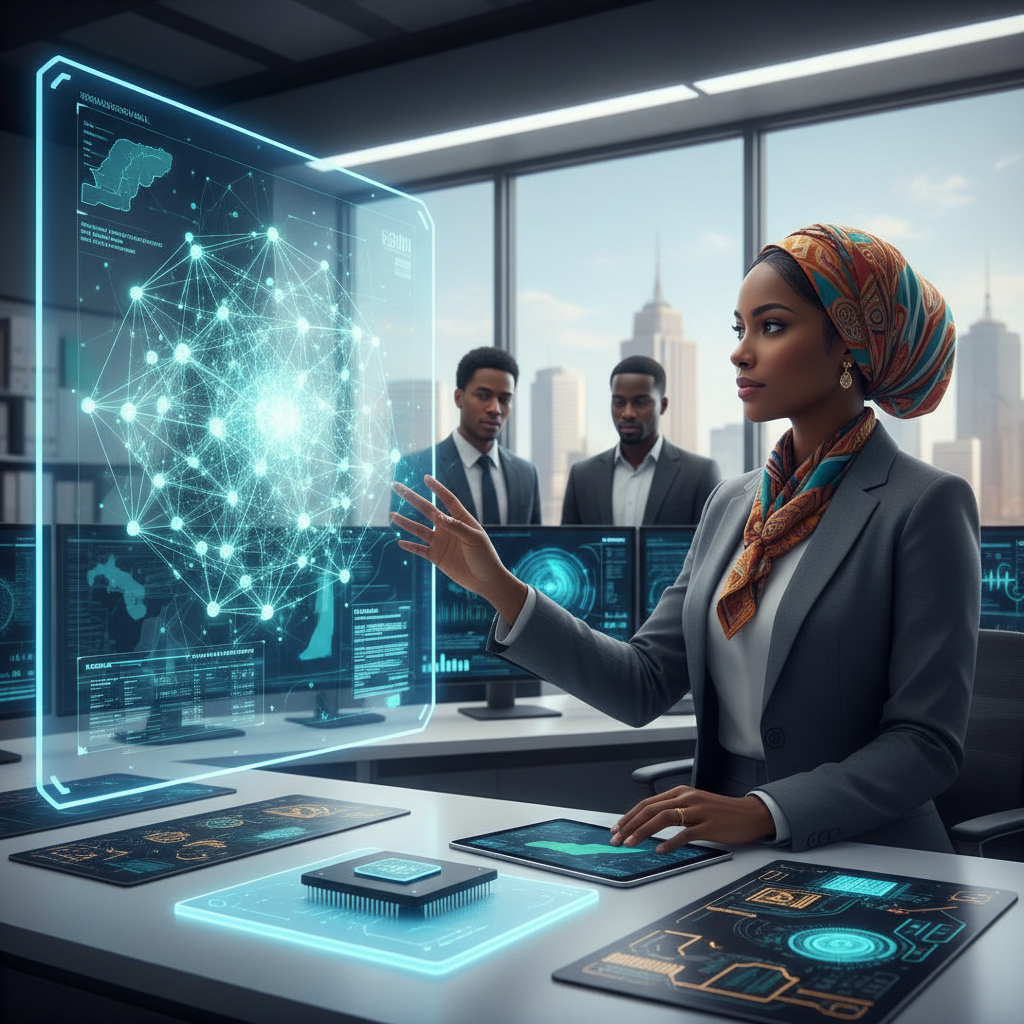
Our lives are not lived in isolation. We share, we collaborate, we communicate constantly. A true personal AI for the Nigerian context, for the African context, cannot simply be a solitary companion. It must be a facilitator of community, a bridge between people, a tool that enhances our collective experience, not just our individual one. Imagine an AI that doesn't just manage your personal calendar, but helps coordinate a community fundraising event, negotiates bulk purchases for your market stall, or even helps translate complex medical information for your elderly aunt in the village. This is where the real opportunity lies, and this is where the current crop of personal AIs falls short.
“The current models are designed for a user base with a very specific set of expectations and socio-economic realities,” explains Dr. Ngozi Okoro, a leading AI ethicist at the University of Ibadan. “They prioritize individual productivity and emotional support, which are valid, but they often overlook the communal fabric that defines so many societies. An AI that understands the nuances of extended family obligations, the importance of collective decision-making, or even the informal economy, that is the game-changer.”
I’ve watched the global tech scene for decades, and the pattern is clear: innovation often starts in the West, but its true potential is unlocked when it adapts to the diverse needs of the world. Just as mobile money revolutionized finance here in ways traditional banking never could, so too will personal AI find its most impactful expression when it moves beyond the Silicon Valley blueprint. We need AIs that can navigate the complexities of local languages, the informal economies, and the intricate social networks that underpin daily life. An AI that can help a small business owner in Computer Village manage inventory, negotiate with suppliers, and connect with customers across multiple platforms, that's an AI that truly serves a purpose.
Some might argue that these AIs are foundational, and local developers will build on top of them. That’s a fair point. Indeed, we are already seeing incredible innovation from Nigerian startups. Companies like Giga AI are developing localized language models that understand Pidgin English and Yoruba, recognizing that true personalization starts with genuine linguistic and cultural understanding. But the core architecture, the very philosophy behind these global models, still leans heavily towards a Western individualistic paradigm. It’s like being given a powerful engine, but one designed for a race car when you need a robust utility vehicle for rough terrain.
“We’re building AI that understands the rhythm of Lagos, the urgency of a market transaction, the respect inherent in our greetings,” says Tunde Adebayo, CEO of Giga AI, speaking from his bustling office in Yaba. “It’s not just about language translation, it’s about cultural context. Pi might be empathetic, but does it understand why you need to send money to your cousin’s wedding this weekend, even if it wasn't in your budget? Our AI will.”
The counter-argument often goes something like this: these are general-purpose AIs, designed to be flexible. Users will adapt them to their needs. While that’s true to an extent, the initial design choices, the data they are trained on, and the very prompts they are optimized for, all carry inherent biases. If the default mode is a solitary confidant, it will take significant effort to re-engineer that into a community facilitator. It’s a bit like trying to teach a fish to climb a tree. It might eventually learn, but it’s fighting against its very nature.
Furthermore, the privacy implications are enormous. While Western users might be concerned about their individual data, in a communal society, the data footprint extends to family, friends, and business associates. How do these personal AIs handle shared information, group chats, and collective decisions? The current frameworks are largely inadequate for these complexities. We need robust, culturally sensitive privacy protocols that protect not just the individual, but the collective digital space.
Mark my words, the next decade will see a seismic shift in how personal AI is perceived and developed. The race isn't just about who can build the most advanced chatbot, but who can build the most relevant and integrated one. The real winners will be those who recognize that the 'personal' in personal AI extends beyond the individual to the family, the community, and the nation. TechCrunch often covers the latest funding rounds for these Western AI startups, but the true innovation, the truly transformative applications, might just be brewing in places like Lagos, far from the venture capital spotlights of Silicon Valley.
We need AIs that can help navigate the informal sector, provide localized educational content, and even assist with public services in a way that respects local customs and traditions. Imagine an AI that helps farmers get real-time market prices, connects artisans with global buyers, or even simplifies complex government processes. This is not just about convenience; it is about empowerment. It is about bridging divides and unlocking potential on a scale that Western AI, in its current form, can only dream of.
I believe Nigeria will lead this revolution [blocked], not by copying, but by innovating from our unique vantage point. Our vibrant tech ecosystem, fueled by a young, dynamic population and a relentless entrepreneurial spirit, is perfectly positioned to redefine what a personal AI assistant truly means. It won't be just a digital friend; it will be a digital family member, a community organizer, a market assistant, and a cultural interpreter, all rolled into one. The giants like Inflection AI and Google are building impressive machines, but we are building companions that understand the very soul of our society. The world needs to pay attention, because the future of personal AI, the truly impactful one, is being forged right here, on the streets of Lagos and beyond. Wired might focus on the latest Silicon Valley trends, but the real story is unfolding where the needs are greatest and the innovation is most urgent.