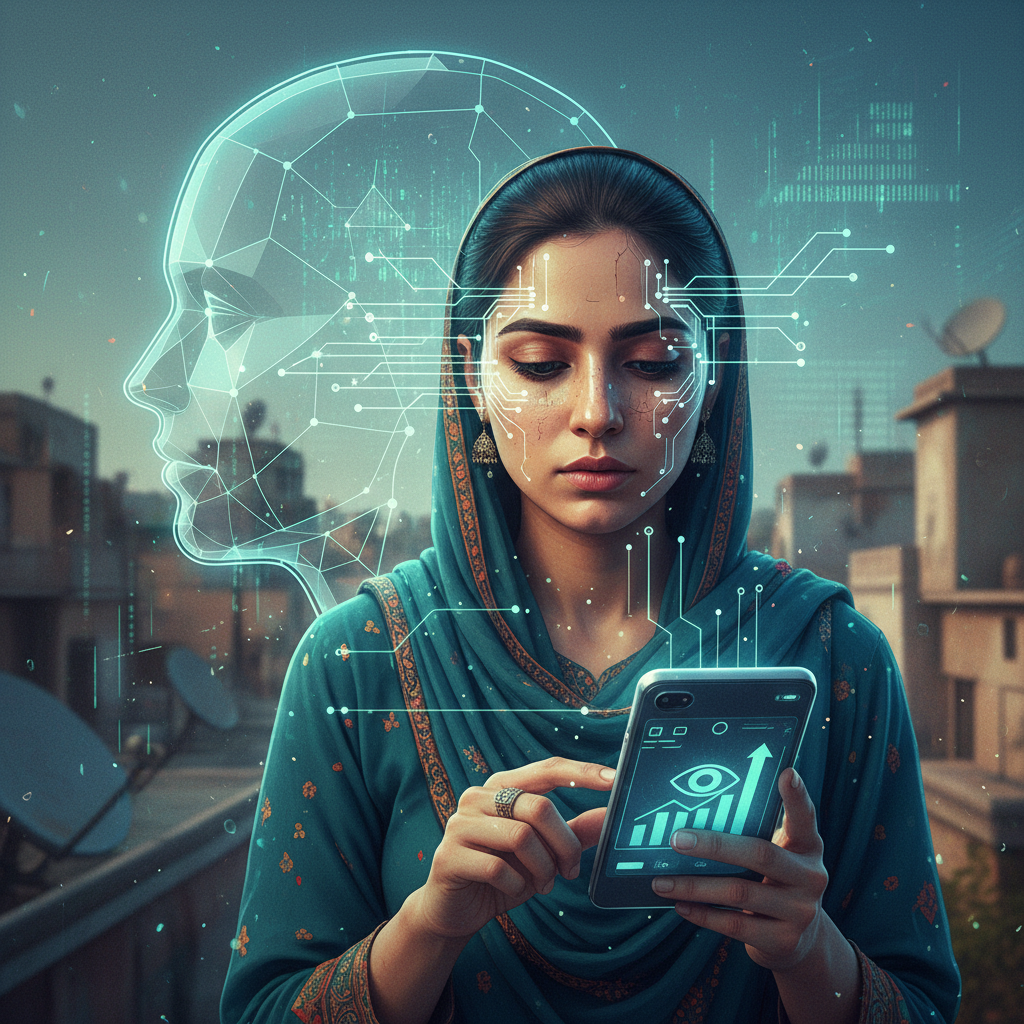
The air in Yangon often feels heavy these days, thick with the humidity of the monsoon season and the unspoken weight of a nation in turmoil. Yet, amidst the daily struggles, glimmers of innovation emerge, driven by an urgent need to heal. This is where Dr. Hnin Thandar, a former psychiatrist turned tech visionary, found her purpose. Her startup, Mind Weaver AI, is not just another tech company; it is a testament to the resilience of the human spirit, a digital balm for a society under immense stress.
Dr. Hnin Thandar’s journey began not in a gleaming Silicon Valley office, but in the chaotic, under-resourced mental health wards of a public hospital in Yangon. She witnessed firsthand the crushing burden of mental illness, exacerbated by conflict, poverty, and a deeply ingrained cultural stigma that often prevents people from seeking help. "We had a handful of psychiatrists for millions of people, it was a losing battle," she told me, her voice soft but resolute. "The waiting lists were endless, and many never even made it to a list. They suffered in silence. I saw too many lives crumble, too many young people lose hope." Her 'aha moment' wasn't a sudden flash of genius, but a slow, painful realization that traditional methods were simply not enough. "The sheer scale of suffering demanded a different approach, a scalable one," she explained. "Technology can be a lifeline, if we build it with empathy and understanding." This conviction led her to leave her medical practice in late 2022, a move many of her colleagues considered radical, to pursue a vision of digital mental health support.
The problem Mind Weaver AI addresses is stark. Myanmar faces a severe shortage of mental health professionals, with estimates suggesting fewer than 200 psychiatrists for a population of over 54 million. The ongoing political instability and economic hardship have only amplified anxiety, depression, and trauma. Access to care is further hampered by internet shutdowns, travel restrictions, and a deep-seated cultural reluctance to discuss mental health openly. Many fear judgment, or worse, repercussions for speaking about their struggles. Mind Weaver AI aims to bridge this chasm by providing anonymous, accessible, and culturally appropriate mental health support through AI-powered chatbots.
The technology behind Mind Weaver AI is a sophisticated blend of natural language processing (NLP) and cognitive behavioral therapy (CBT) principles, specifically adapted for the Myanmar context. Unlike generic Western therapy chatbots, Mind Weaver AI’s models are trained on vast datasets of local dialects, cultural nuances, and common expressions of distress unique to Myanmar. Dr. Hnin Thandar and her team, comprising linguists, psychologists, and AI engineers, spent over a year meticulously curating and annotating data, ensuring the AI understood not just the words, but the underlying emotions and cultural context. "We couldn't just import a model trained on English; it would be useless, even harmful here," said Ko Myo Min, Mind Weaver AI's lead AI engineer, a former Google DeepMind researcher who returned to Myanmar to join the startup. "Our AI speaks Burmese, but more importantly, it understands the Burmese way of expressing pain, the metaphors, the indirectness. It's designed to build trust, not just process text." The chatbot, named 'Thar Yar' (meaning 'peaceful' or 'calm' in Burmese), employs a tiered approach. It starts with empathetic listening and psychoeducation, then guides users through basic CBT exercises for stress management, anxiety, and low mood. For more severe cases, it is programmed to gently suggest seeking human intervention, providing a curated list of local, verified mental health resources where available. It operates primarily through popular messaging apps like Viber and Facebook Messenger, which are widely used even during internet slowdowns or partial shutdowns, offering a degree of resilience.
Mind Weaver AI's market opportunity is immense, yet profoundly challenging. The total addressable market for mental health services in Myanmar is estimated to be in the tens of millions, given the prevalence of mental health issues. A 2023 survey by a local NGO indicated that over 60% of urban residents and 75% of rural residents reported significant psychological distress. The startup currently operates on a freemium model, offering basic support for free and premium features, such as personalized therapy modules and direct access to a limited pool of human counselors for a small, affordable fee. This dual approach aims to maximize reach while generating revenue. Their initial user base, launched in late 2025, has already surpassed 150,000 active users, with a reported 70% satisfaction rate in early trials. "Our goal isn't to replace human therapists, but to augment them, to provide a first line of defense and support where none exists," Dr. Hnin Thandar emphasized. "This is about survival, not convenience, for so many people here."
The competitive landscape for AI and mental health is global and growing, with major players like Woebot, Wysa, and Replika dominating Western markets. Even tech giants like Google and Meta are exploring digital wellness initiatives. However, Mind Weaver AI's strength lies in its hyper-local focus and cultural specificity. "No foreign AI solution can truly understand the intricacies of our culture, the historical trauma, or the current political climate," said Dr. Aye Aye Mon, a clinical psychologist and advisor to Mind Weaver AI. "Their models are built for different realities. Mind Weaver AI is built from our reality, for our people." While global players have vast resources for R&D, they often lack the ground-level understanding and trust that a local startup can cultivate. Funding has been a hurdle, but Mind Weaver AI recently secured a seed round of $1.2 million from a consortium of impact investors and a regional venture capital fund, a significant achievement in Myanmar's challenging investment climate. This funding will be crucial for scaling their infrastructure, expanding their language models to include more ethnic minority languages, and developing more sophisticated features, including early detection algorithms for severe distress.
What's next for Mind Weaver AI? The team plans to expand Thar Yar's capabilities, integrating voice interaction and developing specialized modules for specific issues like post-traumatic stress and addiction, which are rampant in conflict-affected areas. They are also exploring partnerships with local NGOs and community leaders to disseminate their service more widely, particularly in remote regions where internet access is sporadic. Their long-term vision includes creating a decentralized network of AI-supported community mental health workers, empowering local individuals to provide basic support with AI guidance. "In Myanmar, the stakes are different," Dr. Hnin Thandar concluded, looking out at the bustling street below her humble office. "We are not just building an app; we are building a foundation for resilience, one conversation at a time. The future of our nation depends on the mental well-being of its people, and AI, when wielded with care and cultural sensitivity, can play a profound role in that." Her conviction is palpable, a quiet force against the odds. It is a reminder that true innovation often springs from the deepest wells of human need, and that technology, at its best, serves to uplift and heal. For more insights into how AI is being deployed in challenging environments, you can explore articles on TechCrunch's AI section or MIT Technology Review. The journey of Mind Weaver AI is a powerful example of how local solutions, born from lived experience, can offer hope where global technologies often fall short. It's a story that deserves to be heard, and a model that could inspire similar initiatives in other nations facing similar trials. Perhaps, one day, we will look back and see Thar Yar as not just a chatbot, but a symbol of Myanmar's quiet strength. For further reading on the ethical considerations of AI in mental health, Wired offers extensive coverage. You can also learn more about the broader landscape of consumer AI by checking out our article on Moscow's Digital Doppelgängers [blocked], which explores virtual influencers.