Ah, the world of artificial intelligence. It often feels like a whirlwind, doesn't it? One moment, everyone is talking about massive language models with billions of parameters, the next, it's all about agents that can do your bidding. But amidst all this rapid change, a small startup from Tokyo, Sakana AI, has caught my eye. They are not just building AI; they are, in a sense, breeding it. And for us here in Eswatini, a tiny kingdom with big ideas about technology, their approach offers a glimpse into a future that feels a little more... natural.
Sakana AI, founded by former Google Brain and Stability AI researchers David Ha, Ren Ito, and Karl Moritz Hermann, is taking a leaf from nature's book. Instead of meticulously designing every aspect of an AI model, they are using evolutionary algorithms. Imagine a process where many AI models are created, tested, and the 'fittest' ones, those that perform best on specific tasks, are selected to 'reproduce' or combine their best traits. It is a fascinating, almost organic, way to develop intelligence, moving away from the more traditional, top-down engineering approach.
When I first heard about this, my mind immediately went to our own rich biodiversity here in Eswatini. We understand the power of natural selection, of adapting and evolving to thrive in specific environments. It's a concept deeply ingrained in our understanding of life. So, when Sakana AI talks about 'breeding' AI models, it resonates. It suggests a future where AI isn't a monolithic, one-size-fits-all solution, but something that can be custom-grown, like a particular crop suited to our soil and climate.
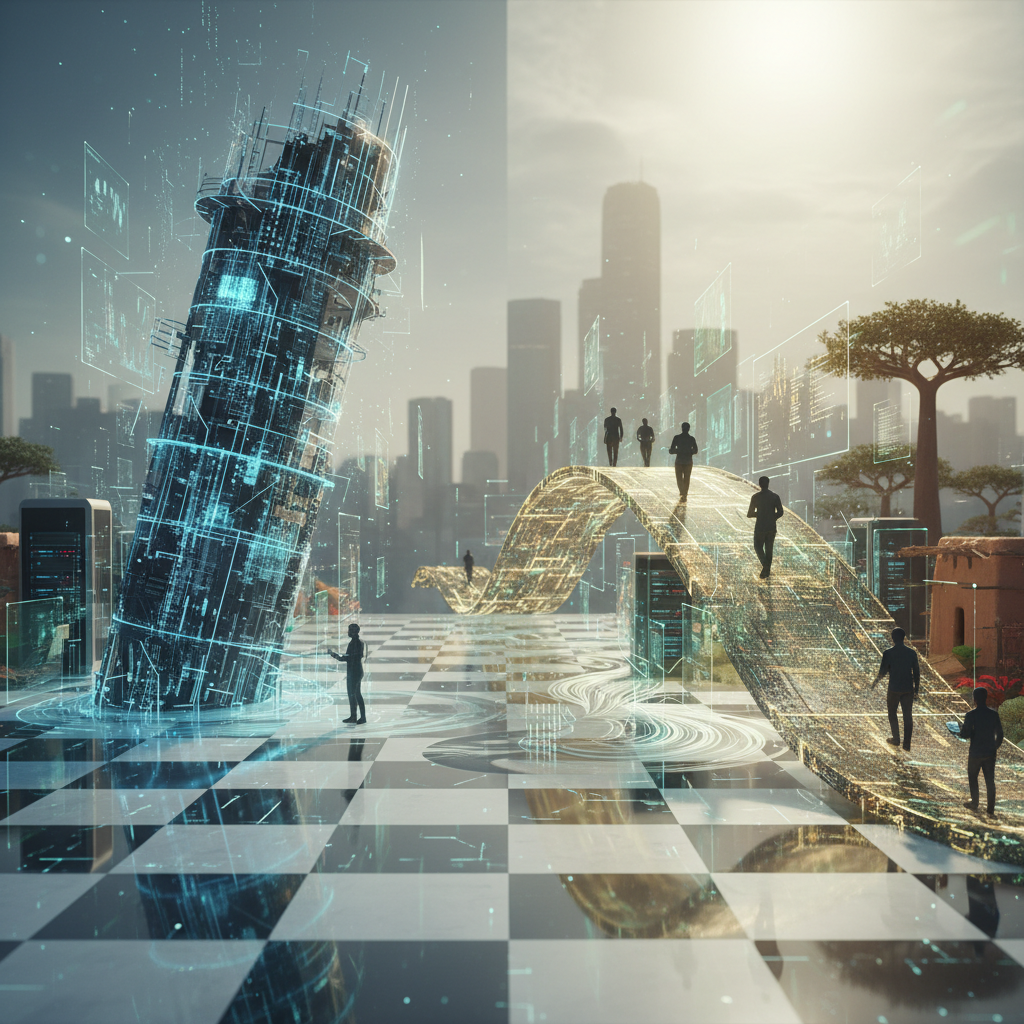
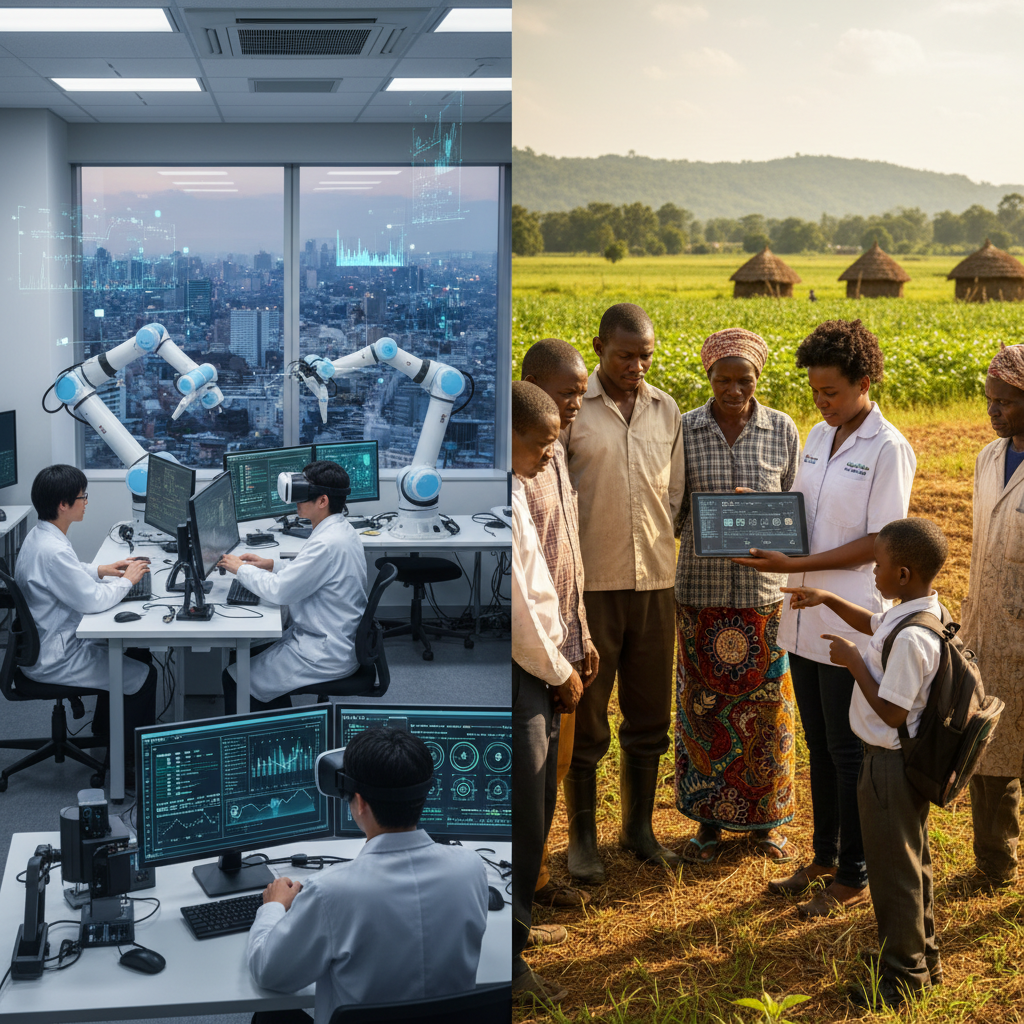
Why does this matter so much for a place like Eswatini? Well, for starters, the global AI race is often dominated by giants like OpenAI, Google, and Microsoft, with their vast computational resources and endless data streams. For smaller nations, trying to compete on that scale is like trying to empty the Indian Ocean with a teacup. But Sakana AI's method, by focusing on efficiency and targeted evolution, could democratize AI development. It suggests that you don't always need the biggest, most expensive model; sometimes, a highly specialized, 'evolved' model can do the job better and more affordably.
Consider our agricultural sector, the backbone of many livelihoods here. We face unique challenges, from unpredictable weather patterns to specific crop diseases. A general-purpose AI might struggle to offer truly actionable insights. But what if we could 'breed' an AI specifically for Eswatini's maize farms, one that understands our local soil composition, our traditional farming practices, and the specific pests that plague us? Such an AI could optimize planting schedules, predict yields with greater accuracy, and even advise on sustainable water usage, all without requiring a supercomputer to run it.
Dr. Ha, Sakana AI's CEO, has spoken about the potential for 'small but mighty' models. In a recent interview, he highlighted that their approach allows for the discovery of novel architectures and training methods that human engineers might not conceive. “We are essentially automating the process of scientific discovery in AI,” Dr. Ha reportedly stated. “This allows us to find highly efficient models for very specific tasks, which is crucial for deployment in diverse, resource-constrained environments.” This vision, of AI that is not just powerful but also purpose-built and efficient, feels like a breath of fresh air.
This is not just about efficiency, it is also about relevance. In Eswatini, we say 'umuntu ngumuntu ngabantu' which means 'a person is a person through other people.' AI should learn this lesson. It should be built with our communities in mind, reflecting our needs and values, not just those of Silicon Valley. Evolutionary AI, with its ability to adapt and specialize, offers a pathway to creating models that are truly 'ours.' Imagine an AI-powered educational tool, evolved to understand the nuances of siSwati, our local language, and tailored to the specific learning styles and curriculum needs of our children. This could bridge learning gaps and make education more accessible across our rural communities.
Of course, there are challenges. The computational cost of running evolutionary algorithms can still be significant, especially in the initial 'breeding' phases. And ensuring the 'fitness' functions accurately reflect real-world needs is a complex task. Bias, too, remains a concern. If the initial population of models or the evaluation criteria are biased, the 'evolved' models will simply amplify those biases. This is where human oversight and ethical considerations become paramount. We must ensure that as we 'breed' these intelligent systems, we are instilling in them the values of fairness and equity.
Yet, the promise is compelling. The idea that AI can be grown, rather than just engineered, opens up new avenues for innovation, particularly for regions that might otherwise be left behind in the AI race. It shifts the focus from brute-force computation to clever design and adaptive learning. This tiny kingdom has big ideas about technology, and we are always looking for approaches that empower us, rather than just consume us. Sakana AI's work offers a blueprint for how we might cultivate our own intelligent systems, systems that are deeply rooted in our context and serve our people directly.
As we look ahead to the coming years, the global conversation around AI will undoubtedly continue to revolve around large language models and generative AI. However, the quiet work being done by companies like Sakana AI reminds us that innovation comes in many forms. Sometimes the smallest countries have the biggest vision, and sometimes the most profound technological advancements come from rethinking fundamental approaches. Their evolutionary journey could very well inspire a new generation of AI developers in Africa, proving that intelligence, like life itself, can adapt and flourish in countless unique ways. For more insights into the broader AI landscape, you might find articles on TechCrunch to be quite informative.
The future of AI might not just be about who can build the biggest brain, but who can cultivate the smartest, most adaptable ones, perfectly suited to their environment. And that, my friends, is a story worth following. For further reading on the ethical considerations of AI, particularly in diverse contexts, MIT Technology Review often publishes excellent pieces. We must ensure that as we embrace these new technologies, we do so with wisdom and foresight, always keeping the human element at the very center of our progress.