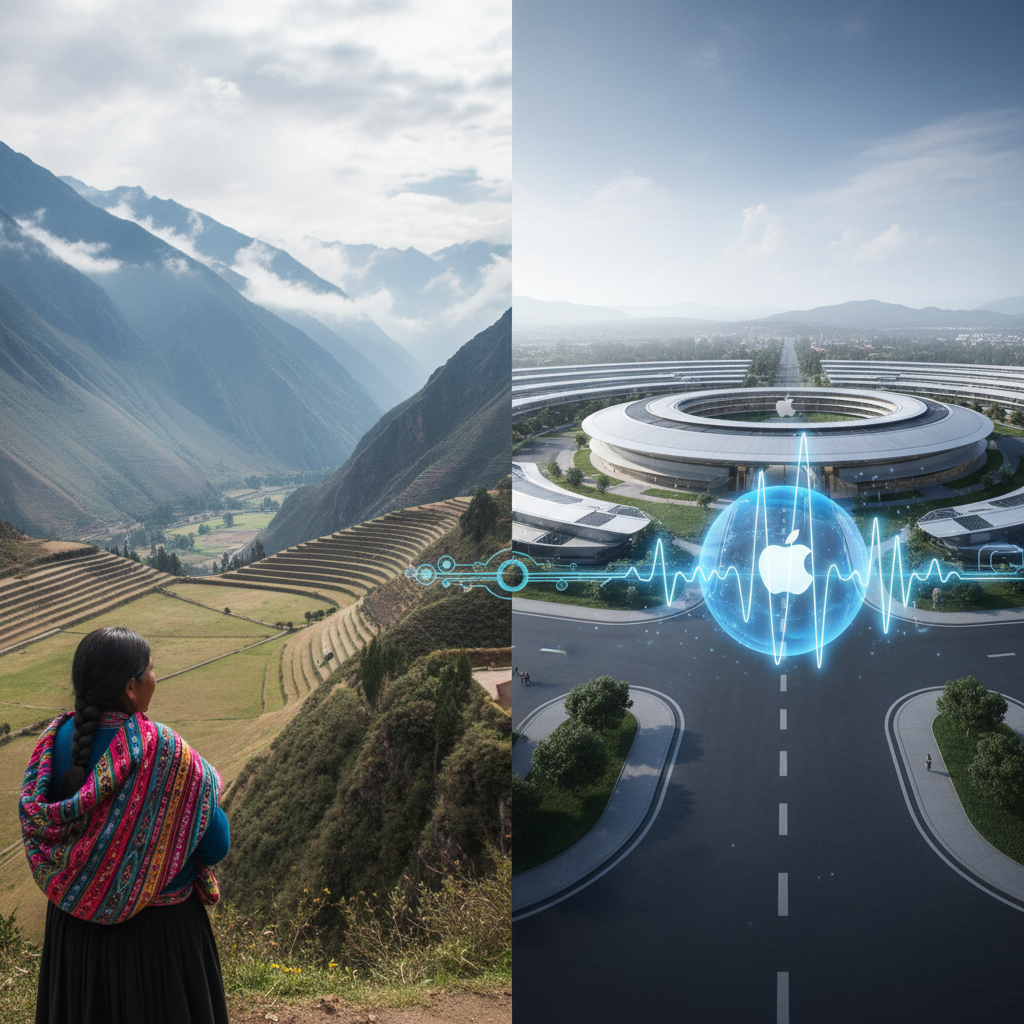
The news arrived with the usual Apple fanfare, a sleek presentation showcasing a Siri reborn. For years, we have watched as OpenAI's ChatGPT and Google's Gemini have captivated the world, their conversational prowess leaving Apple's once-pioneering digital assistant feeling, well, a little behind. Now, Tim Cook and his team in Cupertino are making their move, promising a Siri that is not just smarter, but deeply integrated into our lives, anticipating our needs and understanding context like never before. It is a bold play, a high-stakes gamble in the fiercely competitive world of artificial intelligence.
Why Most People Are Ignoring It: The Quiet Hum of a Distant Machine
Here in Peru, far from the gleaming campuses of Silicon Valley, the chatter about Siri's latest upgrade often feels like a distant hum. For many, a smartphone is a tool for connection, for commerce, for capturing the beauty of our landscapes, not a canvas for the latest AI wizardry. The daily rhythms of life, from the bustling markets of Cusco to the quiet fields of the Altiplano, are far removed from the tech-centric debates dominating headlines in New York or London. We are concerned with the price of potatoes, the next harvest, the stability of our internet connection, not whether our virtual assistant can write a sonnet or debug code. The average user here might use Siri for a quick weather check or to set a timer, but the deeper implications of a truly intelligent, pervasive AI assistant often get lost in translation, both literally and figuratively. It is easy to dismiss this as another tech toy for the privileged, another update that does not quite reach our shores in a meaningful way.
How It Affects YOU: More Than Just a Smarter Phone
But to ignore this shift would be a mistake, a misreading of the subtle currents that shape our digital future. Imagine a Siri that understands not just Spanish, but the nuances of Peruvian Spanish, the local idioms, the cultural context. Imagine it helping a small artisan in Arequipa connect with international buyers, translating product descriptions, and managing logistics. Or a farmer in the highlands of Peru, using voice commands to access real-time weather data, market prices for quinoa, or even agricultural advice tailored to their specific microclimate. This is not science fiction; this is the promise of advanced conversational AI. If Siri, or any AI assistant, can truly bridge language and cultural gaps, it could democratize access to information and opportunities in ways we have only dreamed of.
On the flip side, there are concerns. A more powerful AI means more data collection, more potential for surveillance, and more questions about privacy. Who owns the data generated by our interactions? How will Apple protect the unique cultural expressions it learns? Will it truly empower us, or simply create new dependencies on powerful tech companies? These are not abstract questions; they are deeply personal, touching on our digital sovereignty and the very fabric of our communities.
The Bigger Picture: A Battle for the Soul of Digital Interaction
This is a story about ancient wisdom meeting modern AI, a clash of paradigms that will define our relationship with technology for decades to come. The stakes in this AI race are immense. It is not just about who sells the most phones or subscriptions; it is about who controls the primary interface through which we interact with the digital world. If Apple, Google, or OpenAI can create an AI assistant that becomes indispensable, they gain immense power over information flow, commerce, and even cultural narratives. For countries like Peru, this means a critical juncture. Will these powerful AIs be designed with global diversity in mind, or will they continue to reflect a predominantly Western, English-speaking worldview?
Consider the economic impact. A truly intelligent assistant could streamline countless tasks, from customer service to education. This could boost productivity, but it also raises concerns about job displacement. What happens to the call center workers, the administrative assistants, the language tutors, if an AI can perform their tasks more efficiently? We must ensure that these advancements create new opportunities, not just new inequalities. The ability of these AIs to understand and process diverse languages, including indigenous languages, could be a powerful tool for cultural preservation, or, if neglected, another vector for cultural erosion.
What Experts Are Saying: Voices from the Digital Frontier
“Apple’s late entry into the generative AI assistant race means they have to leapfrog, not just catch up,” explains Dr. Elena Vargas, a computational linguist at the Pontificia Universidad Católica del Perú. “Their strength has always been user experience and privacy, and they must leverage that to differentiate. The real test will be how well Siri integrates into Apple’s ecosystem and understands complex, multi-turn conversations, especially in diverse linguistic contexts like ours.”
Ricardo Gómez, CEO of a Peruvian ed-tech startup focused on Quechua language learning, shared his perspective. “For us, the critical question is whether these global AI models will truly embrace linguistic diversity. We need AI that can support and revitalize indigenous languages, not just translate between dominant ones. Apple has the resources to make a real impact here, but it requires intentional design and investment in diverse datasets.” His hope is that these tools can become allies in cultural preservation, not just commercial ventures.
“The privacy implications are paramount,” stated Ana María Quispe, a digital rights advocate based in Lima. “A more powerful Siri means more access to our personal data, our habits, our preferences. Apple has a strong privacy reputation, but as these systems become more predictive and pervasive, the lines between convenience and surveillance can blur. We need robust regulations and transparency, not just corporate promises.” Her concern is that the convenience often overshadows the potential for misuse.
Finally, Dr. Miguel Alarcón, an economist specializing in technology adoption at the Universidad del Pacífico, offered a pragmatic view. “The economic benefits of enhanced AI assistants could be substantial for small and medium enterprises in Peru, improving efficiency and market access. However, the digital divide remains a significant barrier. Without equitable access to devices and high-speed internet, the benefits of a super-smart Siri will remain concentrated among the already privileged.” He emphasized that technology alone cannot solve systemic issues.
What You Can Do About It: Shaping Our Digital Destiny
So, what can we, as individuals and communities, do? Firstly, educate ourselves. Understand how these AI systems work, what data they collect, and what their capabilities are. Follow the developments, not just in the tech press, but through critical analyses from organizations focused on digital rights and ethical AI. Wired often provides excellent deep dives into the societal implications of these technologies.
Secondly, demand more from tech companies. Advocate for AI development that is inclusive, ethical, and respects cultural diversity. Support local initiatives that are building AI solutions tailored to our unique needs and languages. Participate in discussions about AI policy and regulation, ensuring that our voices are heard in shaping the future of these powerful tools. We must be active participants, not just passive consumers.
Lastly, be mindful of your own data. Review privacy settings on your devices, understand what information you are sharing, and make informed choices about the technologies you adopt. Our digital footprint is growing, and managing it responsibly is a personal responsibility.
The Bottom Line: Why This Will Matter in 5 Years
In five years, the distinction between a 'smart' assistant and a truly 'intelligent' companion will be stark. Siri, Gemini, and ChatGPT will likely be deeply embedded in every aspect of our lives, from our homes and cars to our workplaces and public spaces. They will be our primary interface for information, our personal concierges, and perhaps even our confidantes. The company that wins this battle for the AI assistant will wield unprecedented influence over global commerce, culture, and communication. If Apple succeeds in making Siri not just smart, but truly intuitive and culturally aware, it could redefine our relationship with technology, making it more personal, more helpful, and hopefully, more human. But if it fails to connect with the diverse needs and voices of the world, especially in places like Peru, it risks becoming another powerful tool that serves only a fraction of humanity. The future of digital interaction, and indeed, a piece of our cultural identity, hangs in the balance.