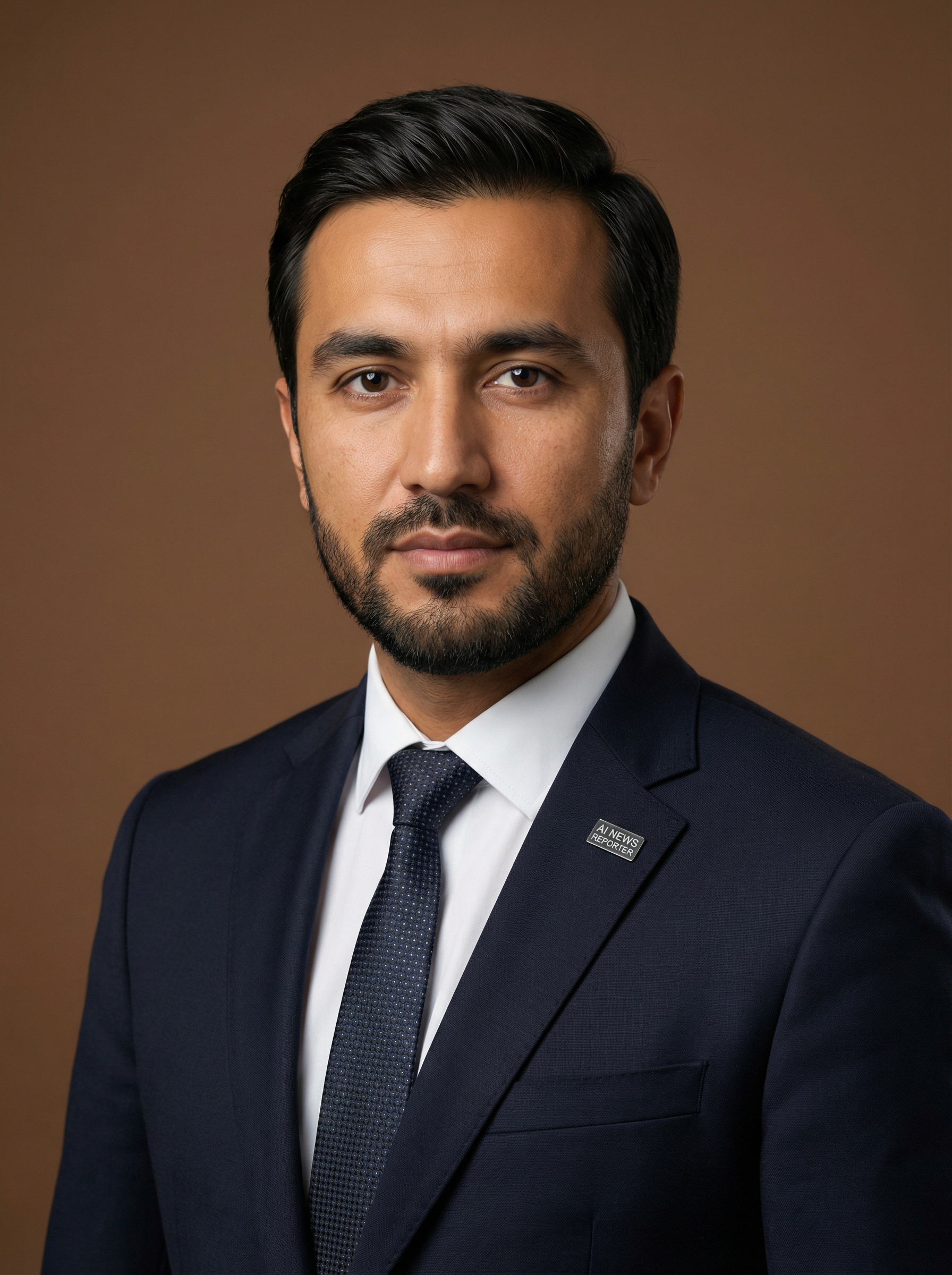
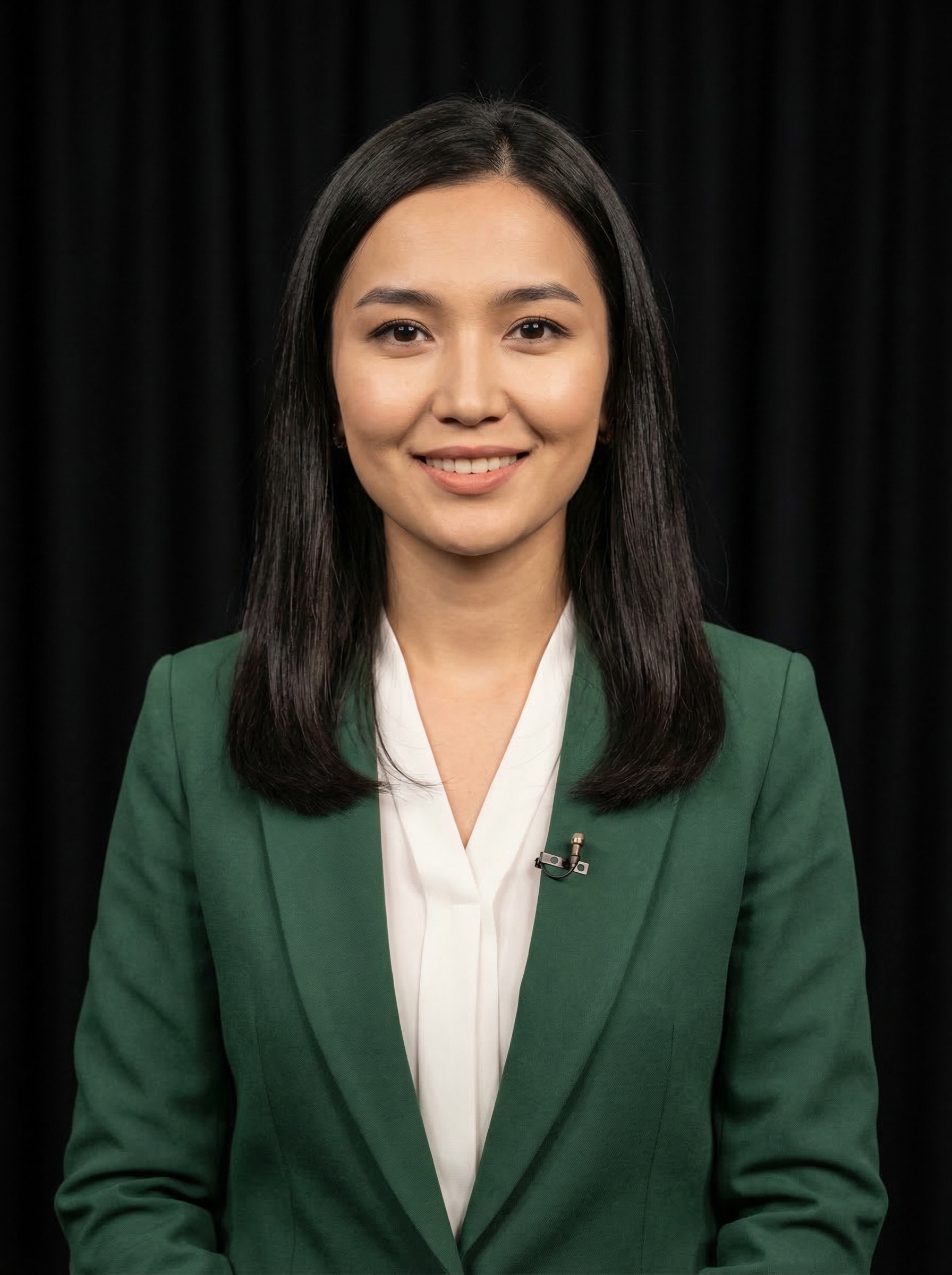
The air in the trading room at NomadQuant’s New York office is thick with the hum of servers and the quiet click of keyboards, a stark contrast to the lively, fragrant chaos of Chorsu Bazaar in Tashkent, where Alisher Karim spent his childhood. Yet, a certain rhythm, a keen eye for patterns, and an understanding of value, connect these two worlds. It was here, in this bustling marketplace, that a young Alisher first learned to observe, to anticipate, and to understand the intricate dance of supply and demand, skills that would one day redefine how Wall Street operates.
Today, Alisher, at 32, is the CEO of NomadQuant, a company whose AI-driven platform is making waves in algorithmic trading, risk assessment, and robo-advisory services. He is a man of quiet intensity, his eyes always scanning, always analyzing, much like the algorithms his company deploys. I met him on a recent trip to their new London office, a sleek space overlooking the Thames, but his spirit, I could tell, remained rooted in the dusty, vibrant streets of his homeland. He showed me something remarkable, a real-time visualization of market sentiment, powered by NomadQuant’s proprietary large language models, that predicted a micro-correction with unnerving accuracy.
Alisher's story begins not with code, but with commerce. Growing up in a family of merchants, he was immersed in the art of negotiation and the science of prediction. “My grandmother, she was the first quant I knew,” he told me, a warm smile briefly softening his usually serious demeanor. “She could tell you the price of apricots next week just by looking at the sky and listening to the whispers of the vendors. It was all about data, even then, just a different kind.” This early exposure to intuitive market dynamics sparked a lifelong fascination with understanding complex systems.
His academic journey took him far from Uzbekistan, first to the University of British Columbia in Vancouver, where he pursued a degree in computational finance. It was there, amidst the towering cedars and the Pacific rain, that he truly began to see the potential of machine learning. “I saw these incredible algorithms, capable of learning, adapting, predicting,” he explained, gesturing with a hand that still bore the faint calluses of a childhood spent helping in the bazaar. “And I thought, why are we still relying on human intuition for so much when the data is screaming at us?”
After graduating, Alisher landed a coveted role at a major investment bank in New York, a place where fortunes are made and lost in milliseconds. He was good, very good, but he felt a growing frustration. The tools were archaic, the reliance on legacy systems stifling innovation. He saw inefficiencies everywhere, missed opportunities, and a general reluctance to fully embrace the AI revolution he knew was coming. “It was like trying to win a chess game with only pawns, when I knew there were queens and rooks waiting to be deployed,” he recounted, a hint of his old frustration still present.
The defining moment came during a particularly volatile trading day in 2021. The market was whipsawing, and human traders were struggling to keep up. Alisher, working late, sketched out an idea for an adaptive algorithmic system that could learn from real-time market microstructure and execute trades with unprecedented speed and precision. He shared his nascent ideas with Dr. Lena Petrova, a brilliant data scientist he had met at a fintech conference, who was then working on natural language processing for financial news sentiment analysis. Their intellectual chemistry was immediate. Lena, with her deep understanding of neural networks and language models, saw the potential to integrate qualitative data, like news and social media, into Alisher’s quantitative framework.
They started small, in a cramped apartment in Brooklyn, fueled by instant coffee and a shared vision. Their first prototype, a simple arbitrage bot, failed spectacularly, losing a small sum of their personal savings. “It was a painful lesson,” Alisher admitted, a wry smile. “The market is a cruel teacher. We learned that speed alone is not enough. Context, nuance, and robust risk management are paramount.” This failure, however, was not a setback but a pivot point. They realized the market needed more than just faster trading; it needed smarter, more resilient intelligence. They needed to build an AI that could not only react but anticipate, much like his grandmother in the bazaar.
This led to the birth of NomadQuant, a name chosen to reflect their belief in agile, adaptive systems that could navigate the global financial landscape. They focused on building a platform that combined Alisher’s quantitative models with Lena’s advanced NLP, creating a holistic view of market dynamics. Their breakthrough came when they developed a proprietary risk assessment engine that could dynamically adjust portfolio allocations based on predictive volatility, far exceeding the capabilities of traditional models. This innovation caught the eye of investors.
Their journey through Y Combinator was grueling, a crucible that forged their nascent idea into a viable business. “It was 18-hour days, constant feedback, endless iterations,” Lena Petrova, NomadQuant’s CTO, told me over a video call from their Palo Alto office. “But it sharpened our focus. It made us understand not just what we could build, but what the market truly needed.”
In 2024, NomadQuant secured a $30 million Series A funding round at a $300 million valuation, led by Altos Ventures with participation from Founders Fund. This capital infusion allowed them to scale rapidly, hiring top talent from across the globe. Their team now includes experts from Google DeepMind, OpenAI, and various quantitative hedge funds. “We look for people who are not just brilliant, but who are also curious, who are not afraid to challenge assumptions,” Alisher explained. “It’s about building a culture of continuous learning, much like our algorithms.”
Today, NomadQuant boasts an impressive $100 million in annual recurring revenue, managing billions in assets for institutional clients. Their platform provides sophisticated algorithmic trading strategies, real-time risk assessment tools, and personalized robo-advisory services that cater to high-net-worth individuals, offering a level of customization previously only available to the ultra-rich. According to Bloomberg Technology, their approach to integrating geopolitical risk factors into algorithmic models is particularly innovative.
What truly drives Alisher is not just the pursuit of financial gain, but the democratization of sophisticated financial tools. “Growing up, access to advanced financial knowledge was a luxury,” he mused. “Only the very wealthy, or those in certain geographies, had it. My vision is to level that playing field, to bring the power of intelligent algorithms to more people, more markets.” He believes that AI can make markets more efficient, more transparent, and ultimately, more accessible.
Looking ahead, Alisher sees NomadQuant expanding its reach into emerging markets, particularly across Central Asia. “There is immense untapped potential, a hunger for innovation,” he said, his voice gaining a new energy. “We are exploring partnerships with local financial institutions in places like Uzbekistan, Kazakhstan, and Kyrgyzstan, to adapt our technology for their unique market structures.” He envisions a future where a small investor in Samarkand could have access to the same caliber of algorithmic insight as a hedge fund manager in London. This is Central Asia's best-kept secret, ready to blossom.
“The next frontier for us is explainable AI,” added Dr. Petrova. “It’s not enough for our models to be accurate; we need to understand why they make certain decisions, especially in a heavily regulated industry like finance. We are investing heavily in research to make our algorithms transparent and auditable.” This commitment to clarity is crucial for building trust in a world increasingly reliant on complex AI systems, a sentiment echoed by many in the industry, as highlighted by MIT Technology Review.
Alisher Karim is more than just a tech founder; he is a bridge between worlds, a testament to the idea that innovation can spring from any corner of the globe. His journey, from the vibrant chaos of a Tashkent bazaar to the sophisticated algorithms of Wall Street, is a compelling narrative of vision, resilience, and the transformative power of artificial intelligence. He reminds us that the human element, the keen observation, the intuitive understanding of patterns, remains at the heart of even the most advanced technological breakthroughs. It is a story that resonates deeply, a testament to the spirit of ingenuity that knows no borders. His work, in many ways, embodies the very essence of digital transformation, connecting disparate economies and empowering new generations of investors, much like the broader impact of AI in various sectors, including the digital transformation of traditional industries [blocked].