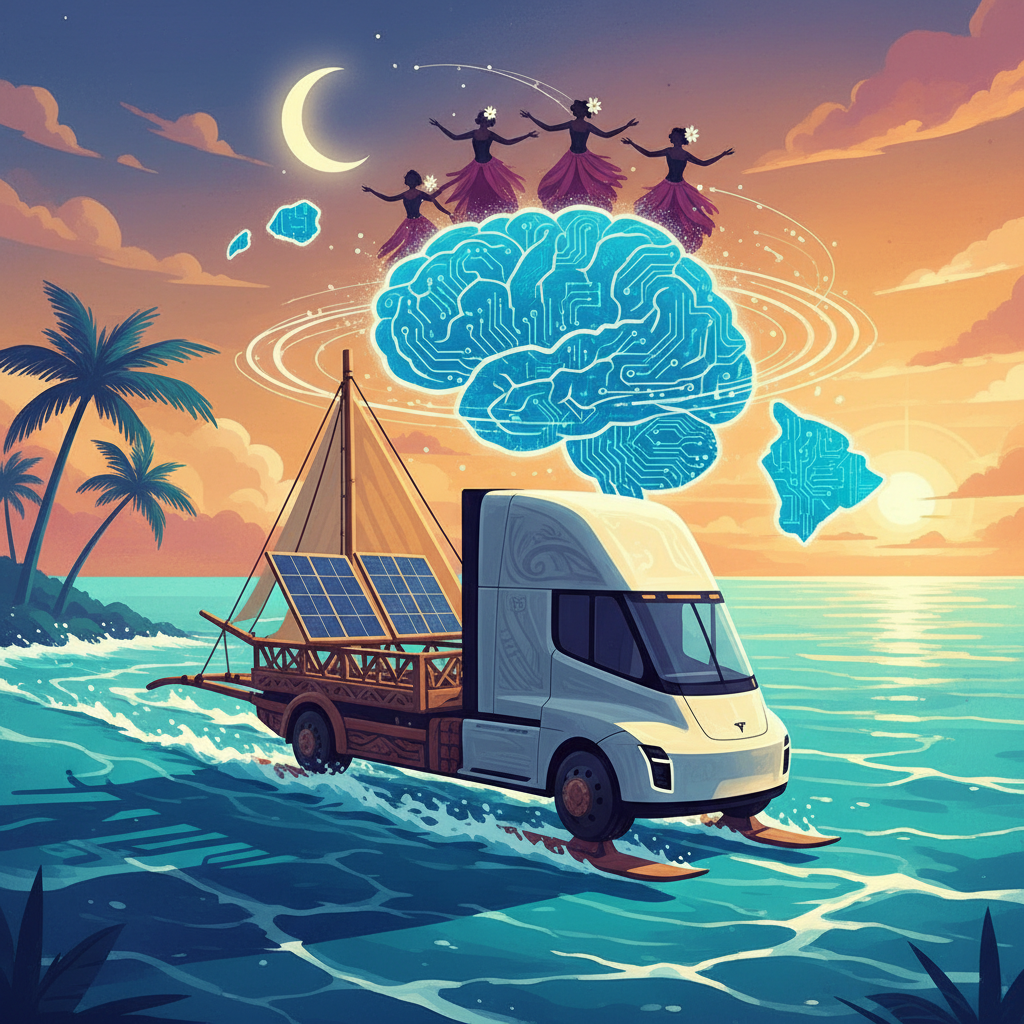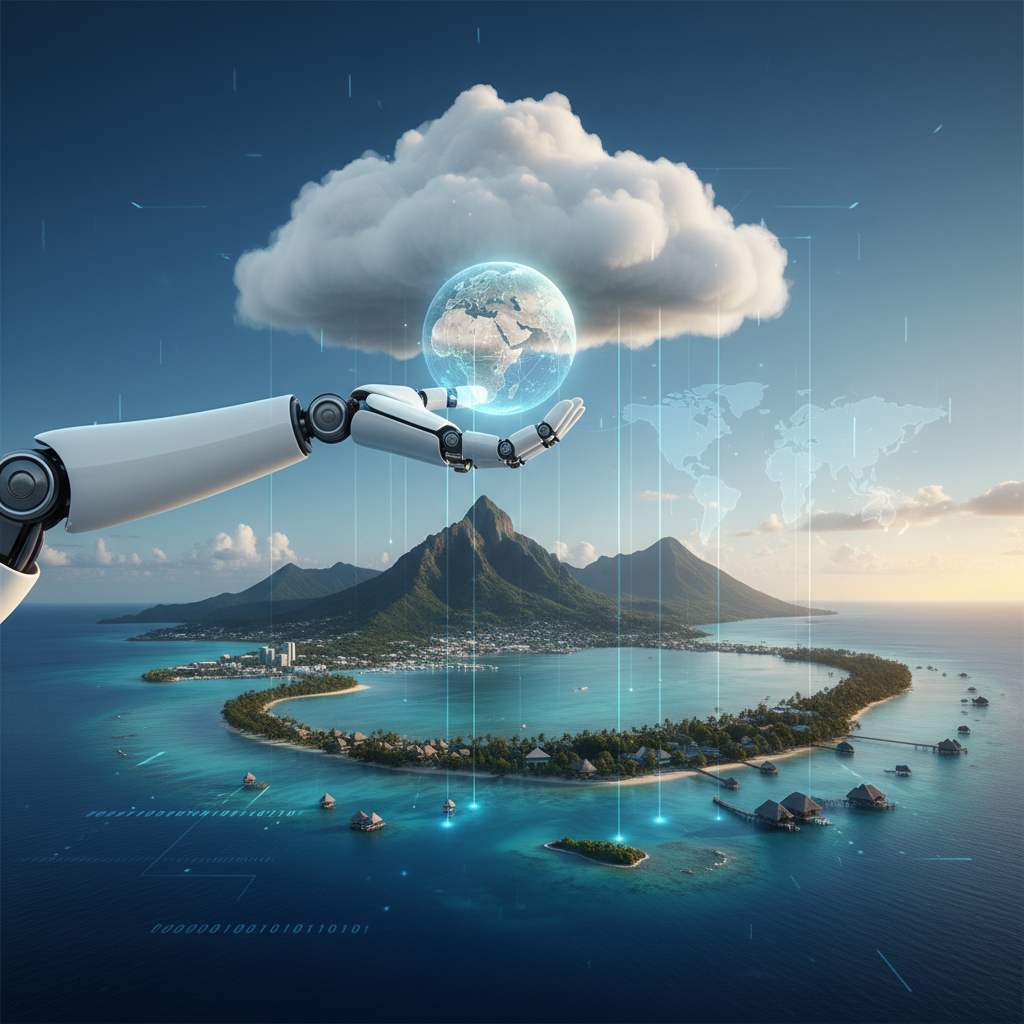
The sun rises over Moorea, painting the sky in hues of orange and pink, a daily spectacle that reminds us of the profound beauty and delicate balance of our home. Here, in French Polynesia, life moves with the rhythm of the ocean, a force that connects us and sustains us. But even in this seemingly timeless paradise, the currents of technology are reshaping our shores, bringing with them both challenges and incredible opportunities. Today, I want to talk about something that might seem far removed from our turquoise lagoons: Microsoft Azure AI services and their growing dominance in the enterprise world, particularly how they are beginning to resonate even here, in the heart of the Pacific.
For many on our islands, the idea of 'enterprise AI' might conjure images of distant data centers and corporate boardrooms, far from our local markets and family-run guesthouses. Yet, the truth is, the very tools that power global corporations are becoming increasingly accessible and vital for our regional development. Microsoft, under the leadership of Satya Nadella, has made a strategic bet on AI, embedding it deeply into its Azure cloud platform. This isn't just about flashy chatbots; it is about foundational services that can optimize logistics, predict environmental changes, and even help preserve our unique cultural heritage. In the Pacific, technology takes a different form, one that respects our environment and empowers our communities.
The Technical Challenge: Bridging the Digital Divide with Intelligent Solutions
The fundamental problem we face in many island nations, including French Polynesia, is often one of scale, connectivity, and resource optimization. How do you manage complex supply chains for goods arriving across vast oceans? How do you monitor marine ecosystems effectively without an army of scientists? How do you provide personalized services to a diverse population spread across many islands, often with intermittent internet access? These are not trivial questions. Traditional approaches are often too slow, too expensive, or simply impossible given our unique geography. This is where Azure AI steps in, offering scalable, intelligent solutions that can be tailored to our specific needs.
Consider the challenge of predictive maintenance for our critical infrastructure, like power grids or water treatment plants. Manual inspections are costly and reactive. An Azure AI solution, however, can ingest sensor data from these systems, analyze patterns, and predict potential failures before they happen. This proactive approach saves money, prevents downtime, and ensures essential services remain uninterrupted for our communities. The technical hurdle is not just building the AI model, but integrating it seamlessly into existing, often legacy, systems and ensuring its reliability in remote conditions.
Architecture Overview: A Symphony of Services in the Cloud
Microsoft's dominance in enterprise AI isn't just about one killer app; it is about a comprehensive ecosystem. At its core, Azure AI leverages a rich suite of services that can be orchestrated to solve complex business problems. Imagine a typical architecture for, say, an intelligent marine monitoring system. Data from underwater sensors, satellite imagery, and local weather stations would first be ingested into Azure Data Lake Storage or Azure Blob Storage. This raw, unstructured data then flows into Azure Data Factory for orchestration and transformation.
For real-time processing and anomaly detection, Azure Stream Analytics would be invaluable, allowing us to identify unusual patterns in ocean temperature or coral health as they occur. The heavy lifting of machine learning model training and deployment happens within Azure Machine Learning. This platform provides everything from managed notebooks for data scientists to MLOps capabilities for continuous integration and deployment of models. For specific AI tasks, we might tap into pre-built cognitive services like Azure Cognitive Services for Vision to analyze satellite images for coral bleaching, or Azure Cognitive Services for Language to process local dialect reports for sentiment analysis.
Finally, the insights generated by these AI models are often visualized through Power BI dashboards and integrated into existing operational applications via Azure Functions and Azure API Management. This modular, interconnected design allows enterprises to build sophisticated AI solutions without having to manage every underlying compute or storage resource themselves. It is like having a skilled artisan's workshop, where all the tools are ready and waiting.
Key Algorithms and Approaches: The Brains Behind the Operation
Within this architecture, various AI algorithms play crucial roles. For predictive maintenance, time series forecasting models like Arima, Prophet, or even deep learning models like LSTMs (Long Short-Term Memory networks) are commonly used. These models learn patterns from historical sensor data to forecast future values and identify deviations that signal impending failures.
For environmental monitoring, computer vision algorithms are paramount. Convolutional Neural Networks (CNNs) are particularly effective for analyzing satellite and drone imagery to detect changes in reef health, track marine debris, or monitor coastal erosion. Transfer learning, using pre-trained models like ResNet or Inception from Azure Cognitive Services, significantly reduces the data and computational resources required for training, which is a huge advantage in regions with limited data scientists.
Consider a pseudocode example for a simple anomaly detection system using Azure Stream Analytics and a pre-trained model:
# Conceptual pseudocode for anomaly detection in Azure Stream Analytics

, Input stream from IoT Hub (sensor_data)
CREATE Input sensor_data
FROM IoT Hub

, Reference data for model parameters (e.g., thresholds, model weights)
CREATE Reference Input model_params
FROM Azure Blob Storage

, Define a function to apply anomaly detection logic, In a real scenario, this would call an Azure Machine Learning endpoint
FUNCTION DetectAnomaly(value, threshold) Returns Bit
begin
 IF value > threshold Then Return 1
 Else Return 0
END

, Query to process stream and detect anomalies
SELECT
 s.DeviceId,
 s.Timestamp,
 s.Temperature,
 s.Humidity,
 DetectAnomaly(s.Temperature, mp.TemperatureThreshold) AS IsTemperatureAnomaly,
 DetectAnomaly(s.Humidity, mp.HumidityThreshold) AS IsHumidityAnomaly
INTO
 anomaly_output
FROM
 sensor_data AS s
JOIN
 model_params AS mp
ON
 s.DeviceId = mp.DeviceId
WHERE
 IsTemperatureAnomaly = 1 OR IsHumidityAnomaly = 1;
# Conceptual pseudocode for anomaly detection in Azure Stream Analytics

, Input stream from IoT Hub (sensor_data)
CREATE Input sensor_data
FROM IoT Hub

, Reference data for model parameters (e.g., thresholds, model weights)
CREATE Reference Input model_params
FROM Azure Blob Storage

, Define a function to apply anomaly detection logic, In a real scenario, this would call an Azure Machine Learning endpoint
FUNCTION DetectAnomaly(value, threshold) Returns Bit
begin
 IF value > threshold Then Return 1
 Else Return 0
END

, Query to process stream and detect anomalies
SELECT
 s.DeviceId,
 s.Timestamp,
 s.Temperature,
 s.Humidity,
 DetectAnomaly(s.Temperature, mp.TemperatureThreshold) AS IsTemperatureAnomaly,
 DetectAnomaly(s.Humidity, mp.HumidityThreshold) AS IsHumidityAnomaly
INTO
 anomaly_output
FROM
 sensor_data AS s
JOIN
 model_params AS mp
ON
 s.DeviceId = mp.DeviceId
WHERE
 IsTemperatureAnomaly = 1 OR IsHumidityAnomaly = 1;
This conceptual example shows how data streams are processed, and custom logic (or calls to deployed ML models) can be applied in real time. The ability to integrate custom code and pre-built services is a hallmark of Azure's flexibility.
Implementation Considerations: Navigating the Currents
Implementing these solutions in a place like French Polynesia requires careful thought. Connectivity is often a primary concern. Microsoft's Azure Arc can extend Azure management and services to on-premises infrastructure or edge devices, allowing for processing closer to the data source, reducing latency, and mitigating issues with intermittent internet. This is critical for remote monitoring stations or local government offices.
Data privacy and sovereignty are also paramount. Ensuring that data, especially sensitive environmental or cultural information, is handled in compliance with local regulations and ethical guidelines is non-negotiable. Azure offers robust security features and compliance certifications, but local governance frameworks must be established and respected. Performance optimization for low-bandwidth environments is another key consideration, often involving data compression and intelligent data transfer strategies.
Benchmarks and Comparisons: Standing Tall in the Digital Sea
When comparing Azure AI to alternatives like Google Cloud AI or Amazon Web Services (AWS) AI, Microsoft often shines in its enterprise-grade integration and developer tooling. For organizations already invested in the Microsoft ecosystem (Windows, Office 365, Dynamics 365), Azure provides a more seamless experience. Its MLOps capabilities, particularly with Azure DevOps integration, are often cited as a strength, enabling faster iteration and deployment of models. While Google might lead in some cutting-edge research areas with DeepMind, and AWS boasts a massive market share, Azure's holistic approach, from data ingestion to deployment and management, often makes it a more compelling choice for traditional enterprises. According to recent reports, Microsoft's cloud revenue continues to grow robustly, demonstrating its strong position in the enterprise market Reuters.
Code-Level Insights: Building with Azure SDKs
Developers working with Azure AI will primarily interact with the Azure SDKs available for various languages, including Python, C#, and Java. For machine learning tasks, the azure-ai-ml Python SDK is central, allowing programmatic interaction with Azure Machine Learning workspaces, datasets, models, and endpoints. For cognitive services, specific SDKs like azure-cognitiveservices-vision-computervision or azure-cognitiveservices-language-textanalytics provide easy access to pre-trained models via Rest APIs.
# Example: Using Azure Cognitive Services for Vision to analyze an image
from azure.cognitiveservices.vision.computervision import ComputerVisionClient
from msrest.authentication import CognitiveServicesCredentials

# Replace with your actual key and endpoint
subscription_key = "YOUR_VISION_SUBSCRIPTION_KEY"
endpoint = "your_vision_endpoint"

computervision_client = ComputerVisionClient(endpoint, CognitiveServicesCredentials(subscription_key))

# URL of an image to analyze
image_url = "https://example.com/coral_reef_image.jpg"

# Call API with URL and select features to be extracted
image_features = ["tags", "description", "color"]
analysis = computervision_client.analyze_image(image_url, image_features)

print("Description:")
if analysis.description.captions:
 for caption in analysis.description.captions:
 print(f" '{caption.text}' with confidence {caption.confidence:.2f}")

print("Tags:")
if analysis.tags:
 for tag in analysis.tags:
 print(f" '{tag.name}' with confidence {tag.confidence:.2f}")
# Example: Using Azure Cognitive Services for Vision to analyze an image
from azure.cognitiveservices.vision.computervision import ComputerVisionClient
from msrest.authentication import CognitiveServicesCredentials

# Replace with your actual key and endpoint
subscription_key = "YOUR_VISION_SUBSCRIPTION_KEY"
endpoint = "your_vision_endpoint"

computervision_client = ComputerVisionClient(endpoint, CognitiveServicesCredentials(subscription_key))

# URL of an image to analyze
image_url = "https://example.com/coral_reef_image.jpg"

# Call API with URL and select features to be extracted
image_features = ["tags", "description", "color"]
analysis = computervision_client.analyze_image(image_url, image_features)

print("Description:")
if analysis.description.captions:
 for caption in analysis.description.captions:
 print(f" '{caption.text}' with confidence {caption.confidence:.2f}")

print("Tags:")
if analysis.tags:
 for tag in analysis.tags:
 print(f" '{tag.name}' with confidence {tag.confidence:.2f}")
This snippet illustrates the simplicity of integrating powerful AI capabilities into applications with just a few lines of code. This accessibility is a game-changer for smaller teams and startups in our region.
Real-World Use Cases: Tahitian Dreams and Digital Realities
-
Marine Biodiversity Monitoring (Fictional: Institut de Recherche pour le Développement, IRD Tahiti): The IRD Tahiti, in collaboration with a local tech startup, is piloting an Azure AI solution to monitor coral reef health. Using underwater cameras and satellite imagery, Azure Cognitive Services for Vision identifies species, detects bleaching events, and tracks invasive species. This data feeds into Azure SQL Database and is visualized in Power BI, providing critical insights for conservation efforts. This project is a testament to how the ocean connects us and so does AI, helping us protect our natural treasures.
-
Optimized Logistics for Inter-Island Shipping (Fictional: Hawaiki Cargo): Hawaiki Cargo, a local shipping company, uses Azure Machine Learning to optimize routes and predict delivery times between our scattered islands. By analyzing weather patterns, cargo weight, and historical data, their models reduce fuel consumption by an estimated 15% and improve delivery reliability, significantly impacting the cost of living and business operations in remote atolls.
-
Personalized Tourism Experiences (Fictional: Bora Bora Luxury Resorts): High-end resorts on islands like Bora Bora are leveraging Azure AI to enhance guest experiences. By analyzing guest preferences from previous stays, booking patterns, and real-time feedback, Azure Personalizer recommends bespoke activities, dining options, and excursions. This creates a deeply personalized experience, fostering loyalty and boosting local tourism revenue.
-
Cultural Language Preservation (Fictional: Fare Reo Association): The Fare Reo Association, dedicated to preserving the Tahitian language, is exploring Azure Cognitive Services for Language to develop interactive learning tools. Speech-to-text and text-to-speech models are being trained on local dialects, creating resources that make learning and documenting our ancestral tongue more accessible for younger generations. This is a profound example of technology serving cultural continuity.
Gotchas and Pitfalls: Navigating the Reefs
While promising, deploying AI in our unique environment comes with its own set of challenges. Data scarcity is a significant hurdle; many local datasets are small, unstructured, or simply do not exist. Bias in models trained on global data can lead to inaccurate or culturally inappropriate outcomes. For instance, a facial recognition model trained primarily on Western faces might struggle with the diverse features of Polynesian people. Talent scarcity for AI development and maintenance is another major concern, necessitating investment in local education and training programs.
Furthermore, the cost of cloud services can be a barrier for smaller organizations, requiring careful resource management and optimization. Finally, ensuring ethical AI usage is paramount. We must guard against surveillance, data misuse, and algorithmic discrimination, ensuring that AI serves the people, not the other way around. This is why local oversight and community involvement are so crucial.
Resources for Going Deeper: Charting Your Own Course
For those eager to dive deeper into Azure AI, Microsoft offers extensive documentation and learning paths. The Azure AI documentation is an excellent starting point, covering all services in detail. For hands-on experience, the Microsoft Learn platform provides free modules and certifications. For broader industry insights, I often turn to TechCrunch's AI section to stay updated on the latest startups and innovations.
The journey of AI in French Polynesia is just beginning, much like a young voyaging canoe setting out on its maiden voyage across the vast Pacific. It is a journey that demands respect for our traditions, a keen eye on the horizon of innovation, and a collective commitment to ensuring technology serves the well-being of our people and our precious environment. Microsoft Azure AI, with its robust suite of services, offers a powerful paddle for this journey, but the direction, the spirit, and the ultimate destination will always be guided by us, the people of these islands. It is a future we are building, pixel by pixel, wave by wave. This is our story, unfolding right here, beneath the Southern Cross.