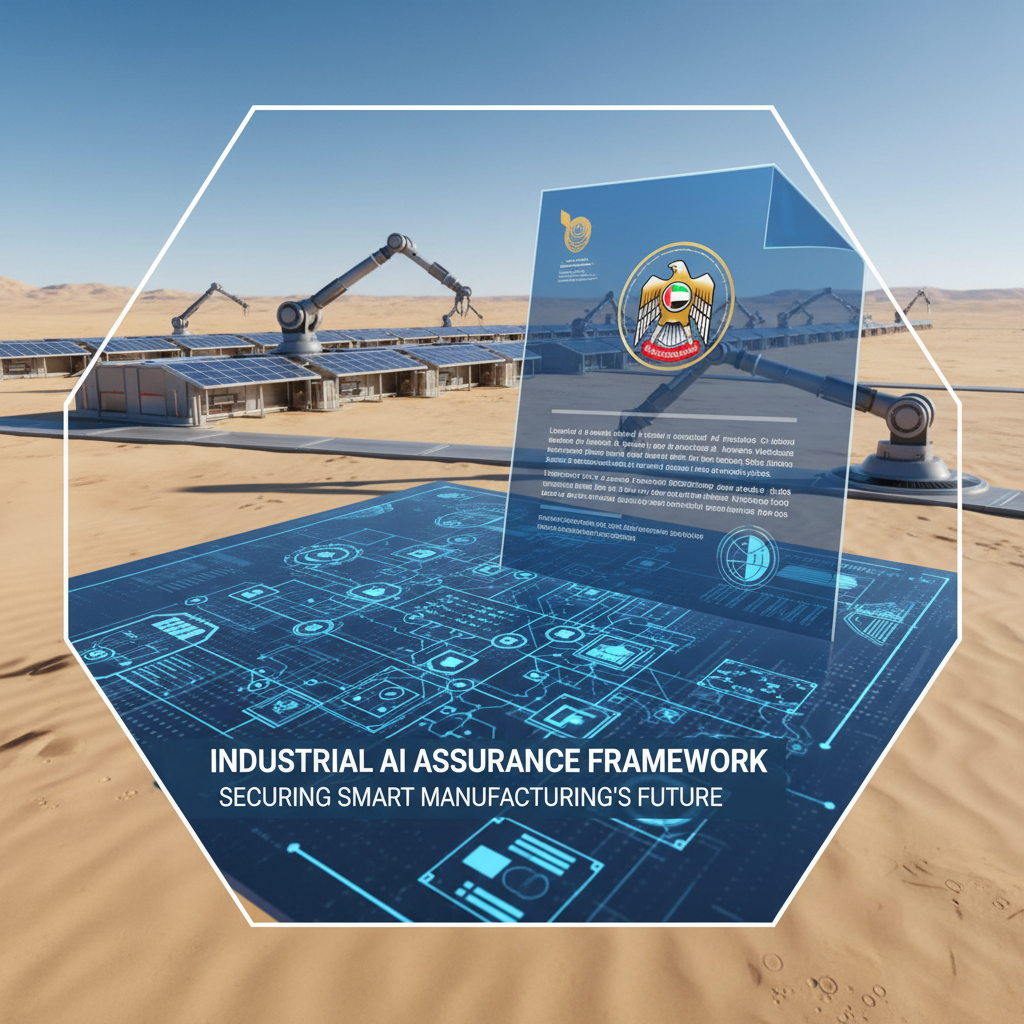

The sands of the Arabian Peninsula have long been synonymous with visionary ambition, a spirit that once again manifests in the UAE's latest policy declaration. In a move poised to reshape the global landscape of industrial automation, the Ministry of Industry and Advanced Technology (MoIAT) has officially launched the 'Industrial AI Assurance Framework'. This comprehensive regulatory blueprint is not merely an incremental step, it is a foundational pillar for the next generation of smart factories across the Emirates, designed to govern everything from predictive maintenance algorithms to advanced quality control systems powered by artificial intelligence.
This is what ambition looks like. The framework, announced by His Excellency Dr. Sultan Al Jaber, Minister of Industry and Advanced Technology, during the 'Future of Manufacturing' summit in Abu Dhabi last month, signals a clear intent: the UAE doesn't just adopt the future, it builds it. The core objective is to establish robust standards for the ethical, secure, and reliable deployment of AI in critical manufacturing processes, ensuring that the nation's burgeoning industrial sector remains at the cutting edge of technological innovation while upholding principles of safety and accountability. This initiative directly addresses concerns surrounding data integrity, algorithmic bias, and operational transparency within highly automated environments, areas where many nations are still grappling with nascent regulatory approaches.
Behind this pioneering initiative lies a deep understanding of the strategic imperative to diversify the UAE's economy and solidify its position as a global manufacturing hub. The 'Operation 300 Billion' strategy, aiming to increase the industrial sector's contribution to GDP from AED 133 billion to AED 300 billion by 2031, relies heavily on advanced technologies like AI. MoIAT, in collaboration with the UAE Artificial Intelligence Office and the Dubai Future Foundation, has spent over two years consulting with international experts, leading technology firms such as Siemens and Honeywell, and local industrial conglomerates. This collaborative approach underscores a commitment to creating regulations that are both forward-thinking and practically implementable, avoiding the pitfalls of overly prescriptive or technologically outdated mandates. The UAE's AI strategy is decades ahead, focusing on long-term sustainability and global competitiveness.
In practice, the Industrial AI Assurance Framework introduces several key provisions. Firstly, it mandates rigorous testing and validation protocols for all AI systems deployed in manufacturing, particularly those involved in safety-critical functions like robotic assembly or real-time anomaly detection in heavy machinery. Manufacturers will be required to demonstrate the explainability of their AI models, ensuring that decisions made by autonomous systems can be understood and audited by human operators. Secondly, a 'Data Sovereignty and Security Protocol' will be enforced, requiring that sensitive manufacturing data, especially that which feeds AI models, adheres to strict local storage and encryption standards, safeguarding intellectual property and operational continuity. Thirdly, the framework outlines clear responsibilities for human oversight and intervention, establishing a 'human-in-the-loop' principle for critical AI-driven processes, thereby mitigating risks associated with full automation failures. For instance, a predictive maintenance system might identify a potential fault, but a human engineer must still authorize the shutdown or repair, especially in high-risk scenarios.
The industry's reaction has been largely positive, albeit with a healthy dose of pragmatism. Mr. Ahmed Al-Mansoori, CEO of Emirates Advanced Industries, commented,