The announcement of OpenAI's deep integration into Apple's ecosystem, bringing advanced AI capabilities directly to iPhones and Macs, sent ripples across the global technology landscape. For many, it signaled a new era of ubiquitous, intelligent assistance. Yet, from my vantage point in Dakar, a different question immediately arose: what does this mean for the linguistic and cultural diversity of Africa, a continent often an afterthought in Silicon Valley’s grand designs? My investigations have led me to a remarkable Senegalese startup, Yennenga AI, which is not merely observing this global shift but actively shaping how Africa will participate.
The Founder's Vision: A 'Baobab Moment' for African AI
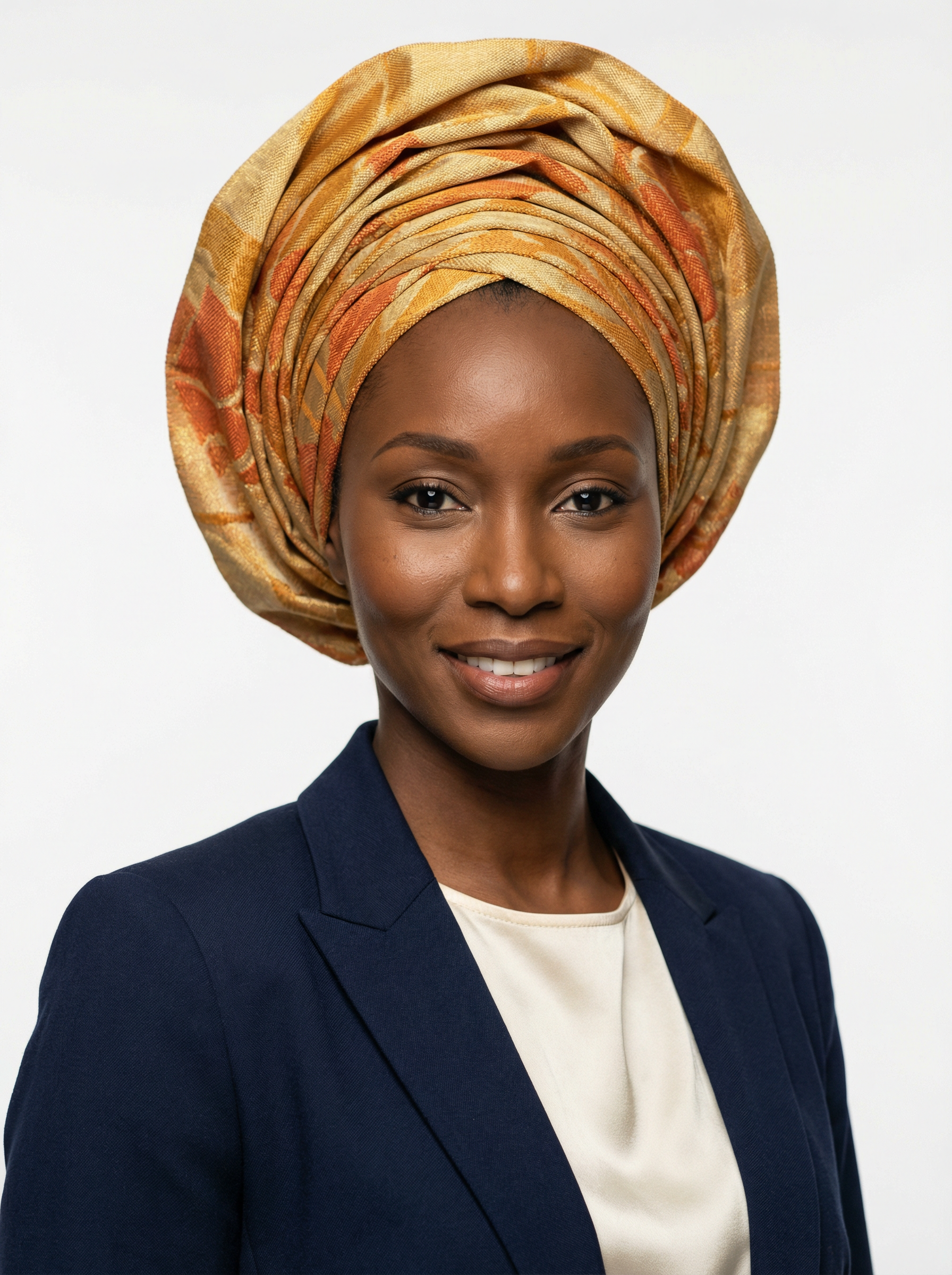
At the heart of Yennenga AI is Dr. Fatou Ndiaye, a Senegalese linguist and computer scientist whose journey began not in the gleaming labs of California, but amidst the vibrant, polyglot markets of Sandaga and Kermel in Dakar. Dr. Ndiaye, a graduate of Cheikh Anta Diop University and later holding a PhD from a prestigious European institution, returned to Senegal with a singular conviction: Africa’s digital future could not be dictated by models trained solely on Western data. Her 'aha moment,' as she describes it, occurred during a research trip to rural Fouta Toro, where she observed elders struggling to interact with basic digital devices that offered no support for Pulaar, their native tongue. “It was a baobab moment,” she told me, referencing the iconic African tree, “a realization that our digital infrastructure, our very connection to the global information superhighway, was rooted in foreign soil. We needed to cultivate our own.”
Dr. Ndiaye founded Yennenga AI in late 2022, naming it after the legendary warrior princess of Burkina Faso, a symbol of strength and independence. Her initial team comprised fellow Senegalese and West African researchers, many of whom had studied abroad but chose to return, drawn by her vision of an African-centric AI. The startup’s mission is ambitious: to develop large language models specifically trained on the rich tapestry of African languages, dialects, and cultural contexts, making AI truly accessible and relevant for the continent’s diverse populations.
The Problem: A Digital Babel in the Age of AI
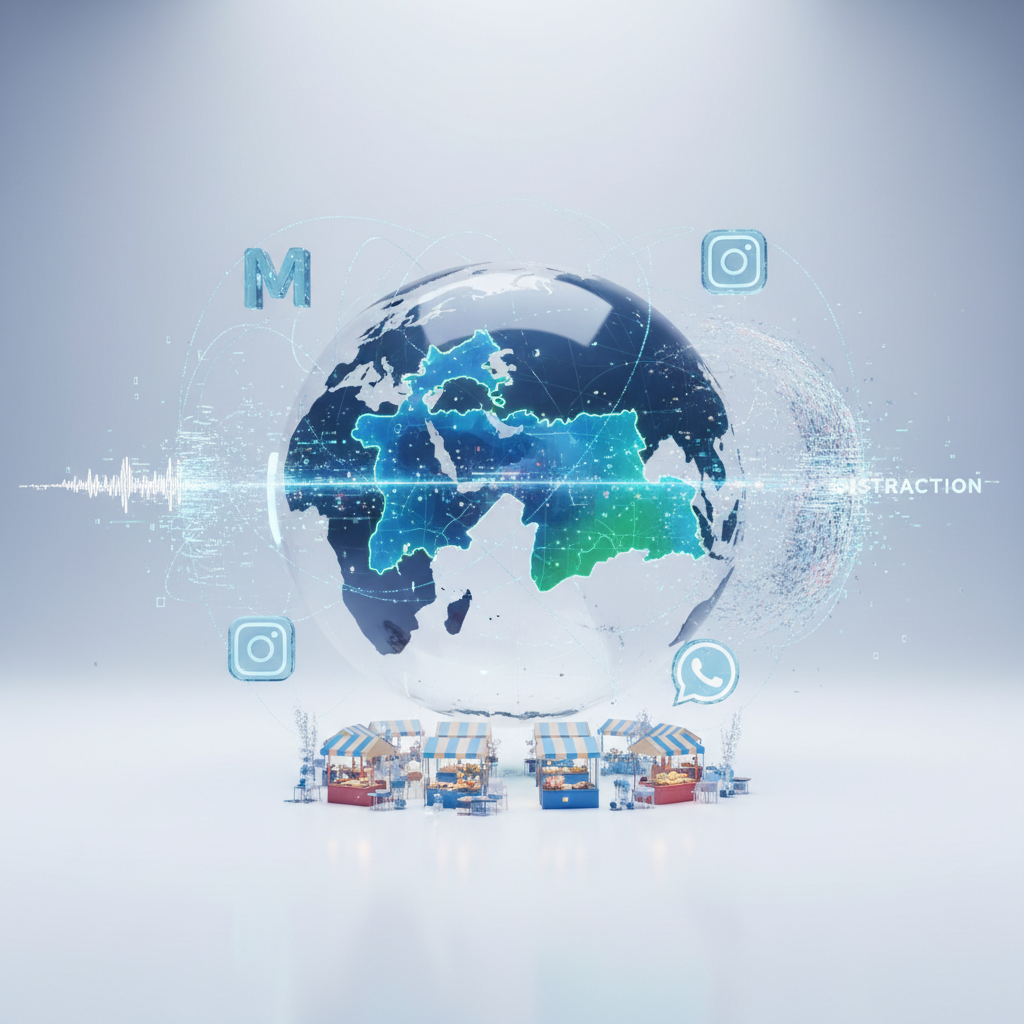
The problem Yennenga AI addresses is profound. Global AI models, including those powering OpenAI’s offerings, are predominantly trained on vast datasets of English and other major European and Asian languages. While impressive in their capabilities, they often falter when confronted with the nuances of Wolof, Bambara, Hausa, Swahili, or the hundreds of other languages spoken across Africa. This linguistic bias is not just an inconvenience; it creates a significant digital divide, limiting access to information, education, healthcare, and economic opportunities for millions. Imagine trying to use an AI assistant that cannot understand your grandmother’s proverbs or accurately translate local administrative documents. This is the reality for many.
“The integration of AI into devices like the iPhone is a double-edged sword for us,” explained Dr. Ndiaye during our recent conversation at their modest but bustling office in the Technopole. “On one hand, it brings powerful tools closer to the people. On the other, if these tools speak only a few dominant languages, they risk further marginalizing our own. Our goal is to ensure that when an iPhone user in Thiès asks Siri a question in Wolof, the underlying AI, whether it is Apple’s or OpenAI’s, can seamlessly tap into a model that truly understands.”
The Technology: Building Bridges with Data and Dedication
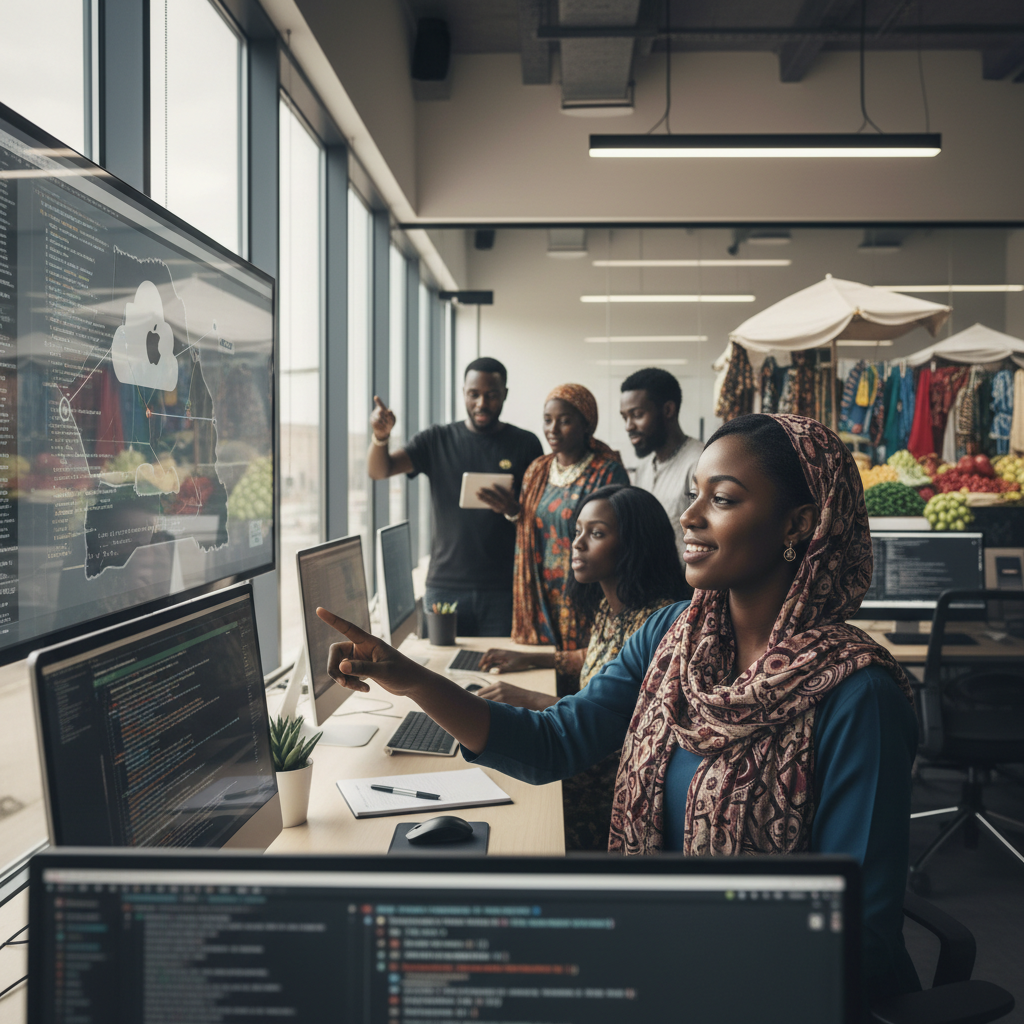
Yennenga AI’s core technology revolves around developing specialized large language models (LLMs) and speech recognition systems tailored for African linguistic diversity. This involves a painstaking process of collecting, curating, and annotating massive datasets of text and speech in various African languages. This is where the investigative journalist in me found fascinating details. The documents reveal that Yennenga AI has partnered with local universities, cultural institutions, and even community radio stations across Senegal, Mali, and Burkina Faso to gather authentic linguistic data, a stark contrast to the often-anonymous data scraping practices of global tech giants. They employ a hybrid approach, leveraging transfer learning from existing foundational models while dedicating significant resources to fine-tuning and pre-training on locally sourced data.
Their models are designed to be lightweight and efficient, capable of running on edge devices or integrating via APIs with larger cloud-based systems. This strategic decision aligns perfectly with the future of on-device AI championed by Apple and OpenAI, allowing for localized processing and reduced latency. My sources tell me that Yennenga AI is currently in advanced discussions with several major mobile network operators in West Africa, exploring partnerships to embed their language models directly into local digital services, a move that could significantly expand their reach.
Market Opportunity: A Continent Awaiting its Voice
The market opportunity for Yennenga AI is immense. Africa, with its rapidly growing youth population and increasing smartphone penetration, represents one of the last major frontiers for digital growth. The continent is home to over 1.4 billion people and more than 2,000 languages. As of 2023, only a fraction of these languages are adequately supported by mainstream AI. The demand for localized digital solutions, from voice assistants to educational tools and e-commerce platforms, is skyrocketing.
According to a recent report by the African Development Bank, the digital economy in Africa is projected to reach over $300 billion by 2025. A significant portion of this growth will be driven by increased digital inclusion, which hinges on overcoming language barriers. Yennenga AI positions itself as a critical enabler for this inclusion. Their business model includes licensing their LLMs and speech technologies to mobile operators, fintech companies, educational technology providers, and even government agencies seeking to digitize public services in local languages.
Competitive Landscape: Local Agility Versus Global Might
The competitive landscape is complex. On one side are the global behemoths like OpenAI, Google, and Meta, with their colossal resources and foundational models. Their recent push into on-device AI, particularly with Apple, presents both a challenge and an opportunity. Yennenga AI cannot compete on raw compute power or the sheer scale of general-purpose models. However, their competitive edge lies in their deep linguistic and cultural expertise, their agility, and their focus on niche markets that global players often overlook or address superficially.
“We are not trying to build the next GPT from scratch,” Dr. Ndiaye clarified. “We are building the bridge that allows GPT, or any other powerful model, to speak Wolof, to understand the nuances of a Mandinka conversation, and to interpret the context of a Senegalese proverb. Our strength is our local knowledge and our commitment to authenticity.”
Other smaller African AI startups are emerging, but few possess Yennenga AI’s specific focus on foundational language models for a broad array of African languages. Their early mover advantage in data collection and community engagement is a significant barrier to entry for potential competitors.
Funding and Future: Cultivating a Digital Renaissance
Yennenga AI has secured initial seed funding from a consortium of West African impact investors and a European venture capital firm known for its focus on emerging markets. While specific figures remain undisclosed, sources close to the company indicate that their latest round in late 2025 valued the company at approximately $20 million, a modest sum by Silicon Valley standards but a significant endorsement for an African AI startup. This funding has allowed them to expand their data collection efforts and hire more linguistic experts and engineers.
What is next for Yennenga AI? Dr. Ndiaye envisions a future where African languages are not just understood by AI, but actively contribute to its evolution. They are exploring partnerships with global tech companies, including potentially Apple and OpenAI, to offer their localized models as plugins or specialized modules within larger AI frameworks. This is just the tip of the iceberg for what they aim to achieve.
“The goal is not just to translate, but to truly understand, to preserve, and to empower,” Dr. Ndiaye concluded, her gaze firm. “When a child in a remote Senegalese village can interact with the most advanced AI in their mother tongue, that is when we will have truly democratized technology. That is when Africa will truly find its voice in the digital age.” It is a vision that resonates deeply, a testament to the fact that innovation, true innovation, often springs from addressing the most fundamental human needs, right here on our own soil. The global AI narrative, dominated by giants, would do well to listen to the quiet, determined voices emerging from places like Dakar. For more insights into the evolving AI landscape, particularly in emerging markets, one might consult TechCrunch's AI section or MIT Technology Review. The journey of Yennenga AI is a potent reminder that the future of AI is not solely in the hands of a few powerful corporations, but also in the ingenuity and resilience of those who seek to make it truly universal. For a broader perspective on how AI impacts local economies, one could consider the discussions around NVIDIA's Chip Diplomacy and the Atlas Mountains: How Morocco's Green Ambition Reshapes the AI Supply Chain [blocked] and its implications for regional technological independence.