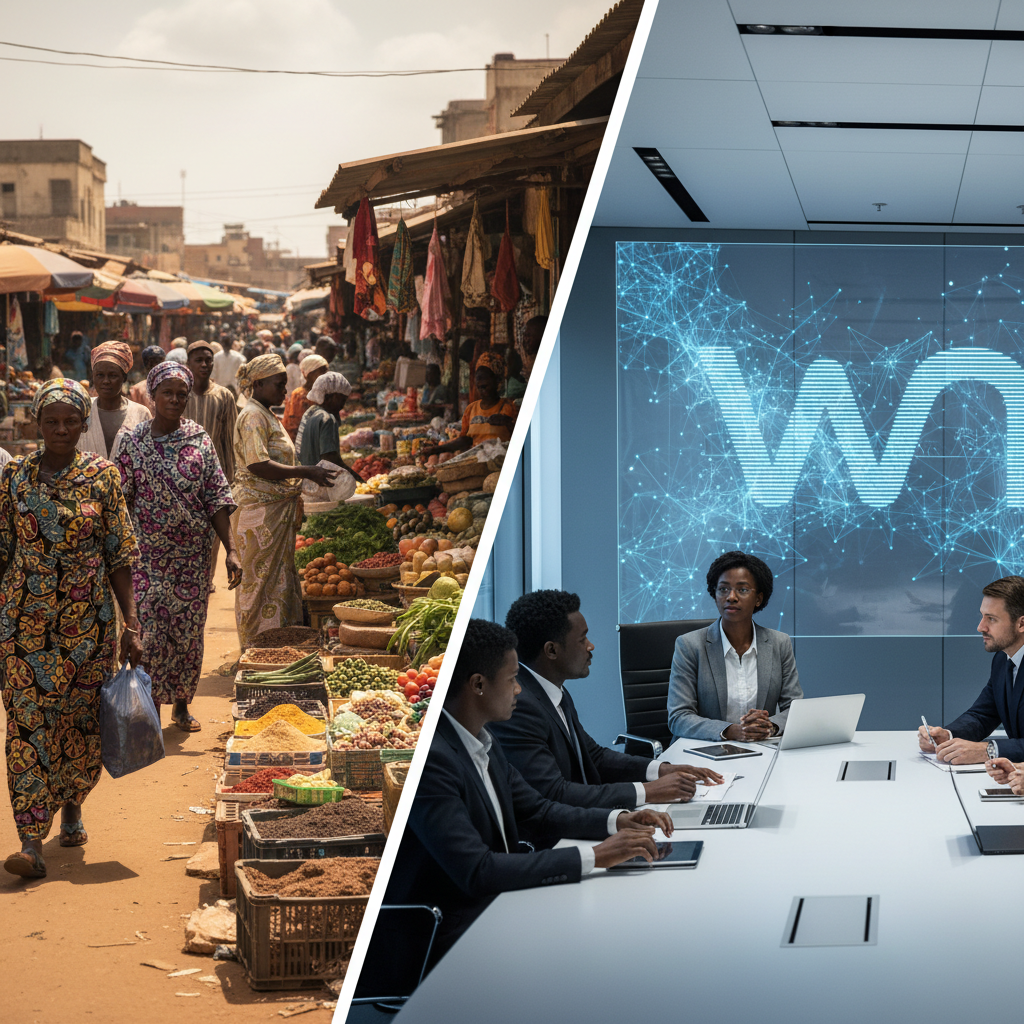

The sun beats down on the Treichville market in Abidjan, a symphony of voices, colors, and the scent of spices. Here, every transaction, every negotiation, is a dance of human connection and ingenuity. Now, imagine bringing the cold logic of artificial intelligence into this vibrant chaos, not to replace, but to empower. This is the promise, and the challenge, of enterprise AI in Côte d'Ivoire, a promise that IBM Watson, in its latest reinvention, hopes to fulfill.
For years, IBM Watson was a name synonymous with AI, a pioneer. Yet, like many trailblazers, it faced its share of growing pains, struggling to translate its impressive capabilities into widespread, tangible business value. But the tech world, much like the seasons along the Ebrié Lagoon, is constantly shifting. Today, we are witnessing what many are calling Watson's quiet resurgence, a strategic pivot away from a one-size-fits-all super-brain towards a more modular, enterprise-focused suite of AI tools, often delivered through consulting partnerships. This is not just a technological shift, it is a human one, impacting how businesses, big and small, operate and grow.
I recently sat down with Madame Adjoua Kone, a visionary entrepreneur who runs a growing logistics company right here in Abidjan. Her fleet of trucks crisscrosses West Africa, delivering goods from the port to remote villages. "Efficiency is everything," she told me, her eyes sparkling with determination. "Every minute a truck is delayed, every misrouted package, it costs us. We have looked at AI solutions, but sometimes they feel so distant, so American. We need something that understands our roads, our people, our way of doing business." Her words echo a sentiment I have heard across the continent: the need for AI that is not just powerful, but also culturally relevant and adaptable.
IBM, under the leadership of CEO Arvind Krishna, has been clear about its strategy: focus on hybrid cloud and AI, particularly for enterprise clients. This means less emphasis on flashy consumer applications and more on robust, secure, and scalable AI solutions for businesses. Their approach now leans heavily on open source technologies and a collaborative ecosystem, a significant departure from their earlier, more proprietary stance. This shift is critical for markets like Côte d'Ivoire, where bespoke solutions and integration with existing, often diverse, IT infrastructures are paramount. "We are seeing a renewed focus on practical, industry-specific applications of AI," explained Dr. Ngozi Okonjo-Iweala, Director-General of the World Trade Organization, in a recent address on digital trade in Africa. "This pragmatic approach is essential for developing economies to truly leverage AI for growth and inclusion." Her insight underscores the global recognition of Africa's unique needs in the AI landscape.
The enterprise AI consulting market is booming globally, projected to reach hundreds of billions of dollars in the coming years. Companies like Accenture, Deloitte, and Capgemini are all vying for a piece of this pie, offering services ranging from AI strategy development to implementation and maintenance. IBM Consulting, with its deep industry expertise and now a more flexible Watson portfolio, is positioning itself to be a major player. But the real question for us in Côte d'Ivoire is whether this global wave will genuinely reach our shores and uplift our local businesses.
Picture this: a small cocoa cooperative in Divo, struggling to predict crop yields due to unpredictable weather patterns. Could a localized Watson AI solution, integrated by a local consulting firm, analyze satellite imagery, historical data, and even local oral traditions about rainfall to provide more accurate forecasts? This is the kind of impact that excites me, the kind that can truly transform lives.
However, challenges remain. The cost of implementing sophisticated AI systems can be prohibitive for many African businesses. There is also a significant skills gap. While Côte d'Ivoire boasts a growing number of tech-savvy youth, the specialized expertise required to deploy and manage enterprise-grade AI is still scarce. "Training and capacity building are non-negotiable," emphasized Dr. Fred Nii Ayi, a prominent Ghanaian AI researcher, in a recent interview with TechCrunch. "Without investing in our human capital, even the most advanced AI tools will gather dust." This is a critical point, one that cannot be overlooked by global tech giants looking to expand their footprint here.
IBM's strategy now includes a strong focus on industry-specific AI models, often pre-trained on vast datasets relevant to sectors like finance, healthcare, and manufacturing. This could significantly reduce the time and cost associated with custom AI development, making it more accessible for businesses in emerging markets. For instance, a pre-trained model for supply chain optimization could be adapted for Madame Kone's logistics company, helping her navigate the complexities of West African trade routes more effectively.
I spoke with Jean-Luc Kouakou, a young Ivorian data scientist who returned home after studying abroad. He now works with a local tech consultancy, helping small and medium-sized enterprises (SMEs) adopt digital tools. "Many of our clients are still hesitant about AI," he admitted. "They hear 'AI' and think of robots taking jobs. Our job is to show them how it can be a partner, a tool to make their work easier, more profitable." He told me something I will never forget: "The biggest barrier is not the technology, it is the trust. We need to build solutions that speak to their reality, not just Silicon Valley's." This highlights the crucial role of local consultants who can bridge the cultural and technological divide.
The shift towards a more open and collaborative AI ecosystem, with IBM Watson playing a part, also presents opportunities for local innovation. Ivorian startups could build their own applications on top of Watson's foundational models, creating tailored solutions for the unique challenges of our market. This is where the spirit of the Treichville market, with its vibrant entrepreneurship, can truly merge with the power of global technology.
Looking ahead, the success of IBM Watson's reinvention in markets like Côte d'Ivoire will hinge not just on its technological prowess, but on its ability to foster genuine partnerships, invest in local talent, and understand the nuanced needs of our businesses. It is about more than just selling software; it is about building a future together. As we continue to navigate this exciting, sometimes bewildering, digital landscape, one thing is clear: the human element, the trust, the understanding of local context, will always remain at the heart of true progress. The enterprise AI market here is not just about algorithms, it is about people, their dreams, and their determination to build a better Côte d'Ivoire. For more insights into how AI is shaping global business, you can explore reports from Reuters Technology.