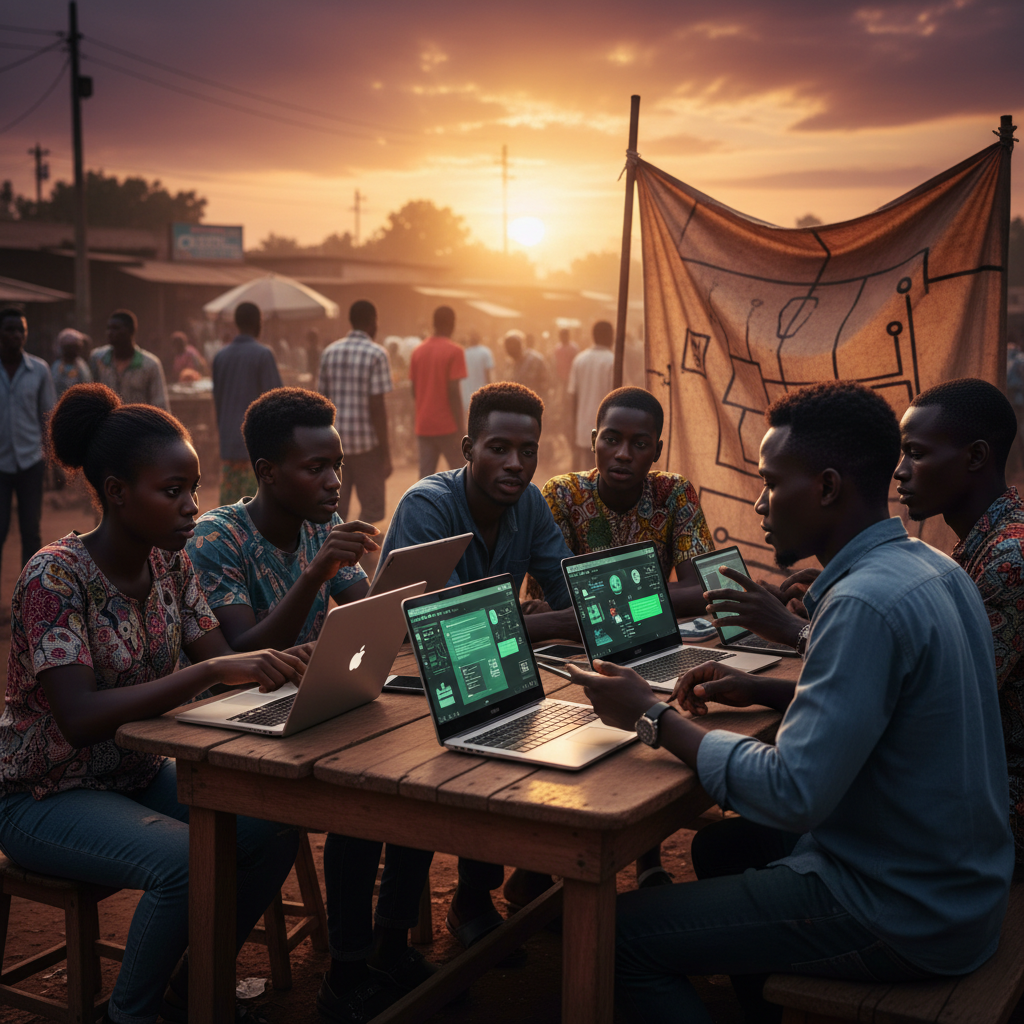
The sun rises over Ouagadougou, painting the dusty streets in familiar hues, but today, something new is stirring beneath the surface. It is not about gold prices or rainfall predictions, it is about the quiet struggles many face every day, struggles often hidden behind a brave face. Today, a Burkinabè startup called SanaMind has announced the launch of its AI-powered mental health platform, a development that could reshape how our communities in Burkina Faso, and potentially across West Africa, approach psychological well-being. This is not just another app from Silicon Valley; this is local innovation, built for local needs.
SanaMind, founded by Dr. Aminata Diallo, a psychiatrist trained in Dakar and Paris, and her tech partner, Moussa Traoré, a software engineer from Bobo-Dioulasso, has been in stealth mode for nearly two years. Their platform, accessible via basic smartphones and feature phones through Ussd and SMS, aims to provide immediate, confidential mental health support. Think therapy chatbots, but designed with an understanding of our proverbs, our social structures, and the unique pressures of life here. Dr. Diallo stated, "We recognized a massive gap. With only a handful of psychiatrists for millions of people, traditional mental health care is a luxury for most. SanaMind is not meant to replace human therapists, but to be a first line of support, a discreet friend you can talk to when no one else is available." She shared this during a press briefing at the Joseph Ki-Zerbo University, emphasizing the collaborative spirit behind their work.
The urgency of this initiative is undeniable. The World Health Organization estimates that mental health conditions account for 13% of the global burden of disease, and in low-income countries, the treatment gap is often over 75%. In Burkina Faso, the figures are stark. Years of conflict, displacement, and economic hardship have taken a heavy toll. Many people carry invisible wounds, and the stigma around mental illness often prevents them from seeking help. "We have seen a significant increase in stress, anxiety, and trauma-related disorders in recent years," noted Dr. Oumarou Soro, head of psychiatry at the Yalgado Ouédraogo University Hospital. "Any tool that can safely and effectively extend our reach is welcome, provided it is implemented thoughtfully and ethically." His comments reflect a cautious optimism shared by many in the medical community.
SanaMind's core offering is a conversational AI agent, trained on a vast dataset that includes anonymized local psychological case studies, traditional Burkinabè storytelling, and West African linguistic nuances. The company claims its algorithms are designed to detect distress, offer cognitive behavioral therapy (CBT) techniques adapted for local contexts, and provide resources for severe cases. They are also developing addiction algorithms, specifically targeting issues prevalent in the region, such as alcohol abuse and substance use among youth, a growing concern in urban centers like Ouagadougou and Bobo-Dioulasso.
However, the introduction of AI into such a sensitive domain is not without its challenges. Data privacy is a major concern. SanaMind has stated that all user data is encrypted and stored on servers within Burkina Faso, adhering to local data protection laws. "We understand the deep trust users must place in us," said Moussa Traoré. "Our commitment to privacy and data security is paramount. We are not selling data, we are protecting it, because this is about our people's well-being." This is a crucial point, especially when considering the track record of some larger tech companies with user data.
Experts are weighing in on this groundbreaking initiative. Dr. Ndeye Fatou Ndoye, a leading AI ethics researcher at the Cheikh Anta Diop University in Dakar, Senegal, expressed both excitement and caution. "The potential for AI to democratize mental health care in Africa is immense, but we must be vigilant," she explained in an interview. "Bias in AI models, even inadvertently, can lead to misdiagnosis or inappropriate advice. Furthermore, the human element of empathy and nuanced understanding is something AI cannot fully replicate. SanaMind's success will depend on its continuous validation and transparent oversight, and its ability to integrate with, not replace, human care." Her concerns echo broader discussions about AI ethics globally, as detailed by outlets like MIT Technology Review.
The reality on the ground is that access to mental health services is severely limited. A recent report by the Ministry of Health indicated that less than 10% of people with mental health conditions in Burkina Faso receive adequate treatment. This stark figure underscores why solutions like SanaMind are not just innovative, but absolutely essential. Forget the hype, this is what matters: real people needing real help, now.
SanaMind is not operating in a vacuum. They have partnered with local community health workers and traditional healers, recognizing the importance of integrating modern solutions with existing cultural practices. This hybrid approach is key to gaining trust and ensuring adoption in communities where traditional beliefs hold significant sway. They are also collaborating with the Ministry of Health to ensure their platform aligns with national health strategies and can serve as a referral pathway to human professionals when necessary. This pragmatic approach is a hallmark of effective development in our region.
The company has secured initial funding from a consortium of local investors and a grant from the African Development Bank, a testament to the growing belief in homegrown tech solutions. Their business model includes a freemium service, with basic chatbot interactions free and premium features, such as personalized daily check-ins and access to a curated library of wellness exercises, available for a small subscription fee. This tiered approach aims to ensure accessibility for a broad user base, while also creating a sustainable revenue stream.
Looking ahead, SanaMind plans to expand its language offerings beyond French and local languages like Moore, Dioula, and Fulfulde, to cover more West African dialects. They also envision integrating with other digital wellness tools and potentially developing specialized modules for specific populations, such as displaced persons or veterans. The long-term vision is not just to provide a service, but to foster a culture of open dialogue about mental health, breaking down the stigma that has long silenced so many.
This development from SanaMind is a significant step, not just for Burkina Faso, but for the entire continent. It demonstrates that meaningful AI innovation can emerge from anywhere, driven by a deep understanding of local challenges and a commitment to community well-being. While the road ahead is long, and challenges around data, ethics, and adoption remain, the courage to build solutions from within, for within, is a powerful force. As we watch SanaMind unfold, it serves as a reminder that the most impactful technologies are often those that speak directly to the heart of human need, in a language we all understand. For more insights into how AI is shaping global health, you can explore reports on Reuters Technology. This is what actually happened: a homegrown effort to heal the mind, one conversation at a time.