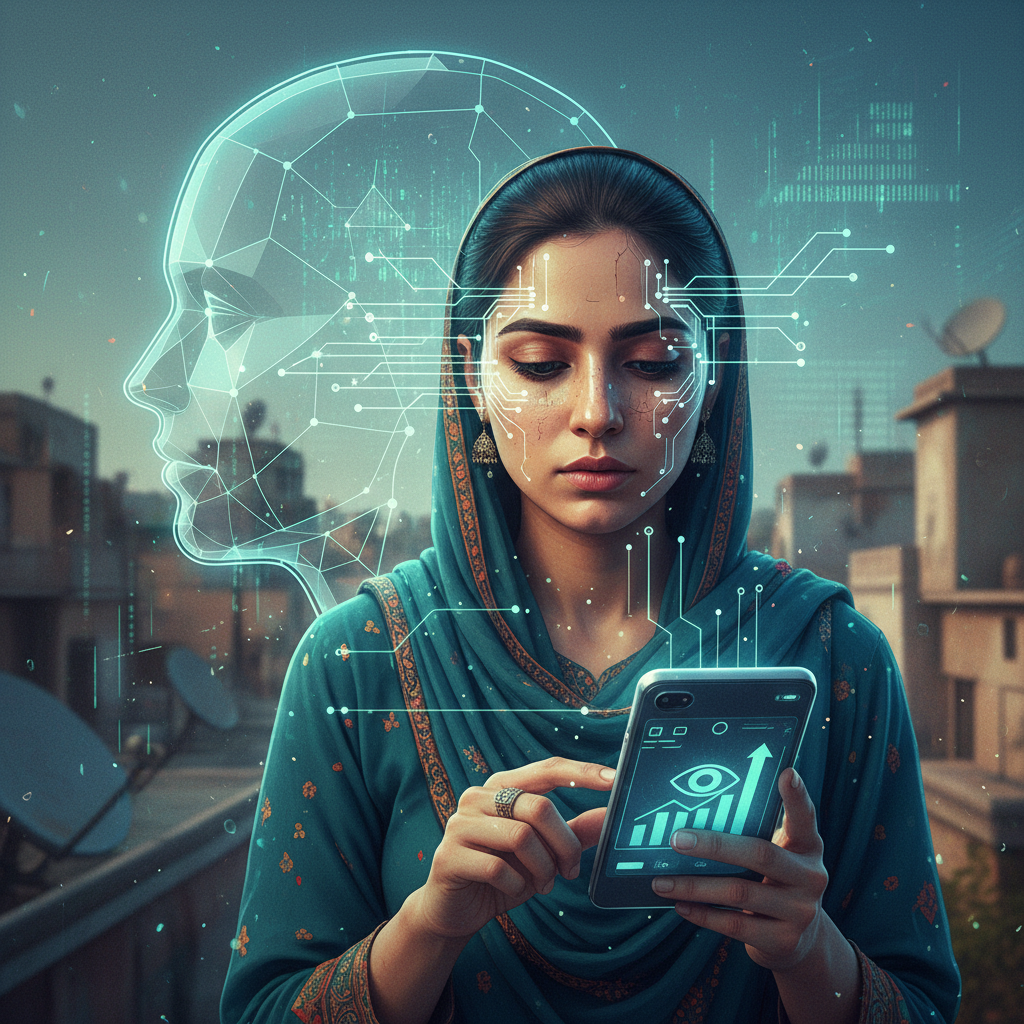

The hum of servers in Silicon Valley, the strategic maneuvers between tech giants like NVIDIA, AMD, and Intel, all vying for supremacy in the AI chip market, might seem a world away from the dusty streets and resilient spirit of Myanmar. Yet, as a journalist here, I see how these global technological tides, even when seemingly distant, create profound ripples that touch the very core of human cognition, behavior, and relationships in our communities. Here, the stakes are different; this is about survival, not convenience.
I remember Daw Khin Mar, a textile artisan from Mandalay, her hands gnarled from decades of weaving intricate patterns. Her small business, like many others, struggled to reach markets beyond her immediate village. The internet, when available, was a fickle friend, often throttled or completely shut down. When a local tech collective, using a repurposed satellite dish and some low-cost, open-source AI tools running on older, less powerful chips, helped her digitize her designs and connect with buyers in Yangon and even abroad, it was nothing short of a miracle. The AI wasn't a fancy generative model requiring NVIDIA's latest H100 GPU; it was a simple image recognition system and a translation tool. But for Daw Khin Mar, it was a lifeline.
This small story illustrates a much larger psychological phenomenon at play. The global AI chip war, with its billions of dollars and cutting-edge research, dictates who gets access to the most powerful AI capabilities. NVIDIA's Cuda platform, for instance, has become the de facto standard for deep learning, creating a significant barrier to entry for those without the capital to invest in their high-end GPUs. Intel and AMD are fiercely competing, pushing their own architectures and software ecosystems. But what does this mean for human minds, especially in places like Myanmar where digital infrastructure is fragile and access is a privilege, not a given?
Dr. Myat Mon, a cognitive psychologist at the University of Yangon, explains it eloquently. "When access to advanced AI is concentrated in the hands of a few, it creates a cognitive divide. Those with access can leverage AI for learning, problem-solving, and even emotional support, enhancing their cognitive capacities. Those without are left behind, not just economically, but cognitively too." She added, "We see increased frustration, feelings of disenfranchisement, and a sense of being perpetually outmaneuvered, even when the technology itself isn't directly visible. It's a subtle but pervasive form of psychological stress." This isn't just about having a faster computer; it's about the psychological impact of being excluded from the tools that are increasingly shaping global knowledge and opportunity.
Recent research, though often focused on Western populations, sheds light on this. A study published in MIT Technology Review found that individuals regularly interacting with sophisticated AI tools reported higher levels of perceived self-efficacy and problem-solving confidence. Conversely, a lack of access correlated with increased feelings of digital anxiety and helplessness. While these studies don't directly measure the impact of the NVIDIA versus AMD versus Intel rivalry, they highlight the psychological cost of the resulting digital inequality. The more powerful the chips become, the wider this cognitive gap can grow if access remains uneven.
In Myanmar, where internet shutdowns are a grim reality and basic connectivity is a daily struggle, the psychological effects are amplified. Imagine trying to run a small business, stay connected with family, or access vital information, only to be constantly thwarted by slow speeds or complete blackouts. Then imagine seeing reports of advanced AI models, powered by Jensen Huang's NVIDIA chips or Lisa Su's AMD innovations, performing feats that seem like magic. This disparity can breed a profound sense of powerlessness. It's not just about missing out on a new app; it's about feeling disconnected from the global flow of information and progress, which can erode mental well-being and social cohesion.
U Hla Tun, a community organizer in a remote village in Shan State, shared his observations. "Before, we used to rely on word of mouth, on community elders. Now, information moves so fast, but only for some. When we can't access it, when our phones are just bricks because the internet is cut, people feel isolated. They feel like they don't know what's happening, what's true. This creates mistrust, even within families." He believes that the global chip race, by pushing the boundaries of what AI can do, inadvertently increases the psychological burden on those who cannot participate. "Technology can be a lifeline, yes, but only if you can hold it in your hands and actually use it," he stated, his voice tinged with a familiar weariness.
The broader societal implications are stark. If the most advanced AI capabilities remain concentrated in regions with robust infrastructure and economic power, it risks exacerbating existing inequalities. Imagine AI-powered educational tools, personalized healthcare diagnostics, or sophisticated agricultural planning systems that could revolutionize lives. If these tools require the latest, most expensive chips and stable, high-bandwidth internet, they will remain out of reach for billions. This creates a feedback loop: lack of access hinders development, which in turn limits the ability to acquire advanced technology, further widening the gap. This isn't just a market battle for chip dominance; it's a battle for cognitive equity and human potential.
What can be done? It starts with recognizing that the psychological impact of technological disparity is real and profound. We need a concerted effort to democratize access to AI, not just the finished products, but the underlying infrastructure. This means investing in resilient, accessible internet connectivity, promoting open-source AI initiatives that can run on less powerful hardware, and fostering local innovation. Companies like Google and Microsoft, with their vast resources, could play a more significant role in developing lightweight AI models that are optimized for challenging environments, rather than solely focusing on pushing the boundaries of high-performance computing. We need to remember that the most advanced AI is only truly impactful when it serves humanity, not just a privileged few.
Practical advice for readers, especially those in challenging environments, involves building digital resilience. Learn basic digital literacy, explore offline AI tools where possible, and advocate for better infrastructure. For those in more privileged positions, consider supporting initiatives that aim to bridge the digital divide. Understand that your access to cutting-edge AI, whether powered by NVIDIA, AMD, or Intel, comes with a responsibility to advocate for those who are excluded. The future of human cognition and well-being depends not just on how powerful our chips become, but on how equitably we distribute their benefits. This is about survival, not convenience, and the psychological toll of exclusion is a price too high to pay. For more insights into how tech shapes our world, you might find this overview of AI news helpful. We must ensure that the global AI chip race does not inadvertently create a global cognitive chasm. Our collective future depends on it. The fight for equitable access to technology, even the seemingly distant chip wars, is a fight for the human mind itself. You can also explore how other nations are grappling with the digital divide and AI's impact, such as in this article about When Google's Gemini Sees and Hears: Is Multimodal AI a New Colonialism for Africa, or a Path to Sovereignty? [blocked].