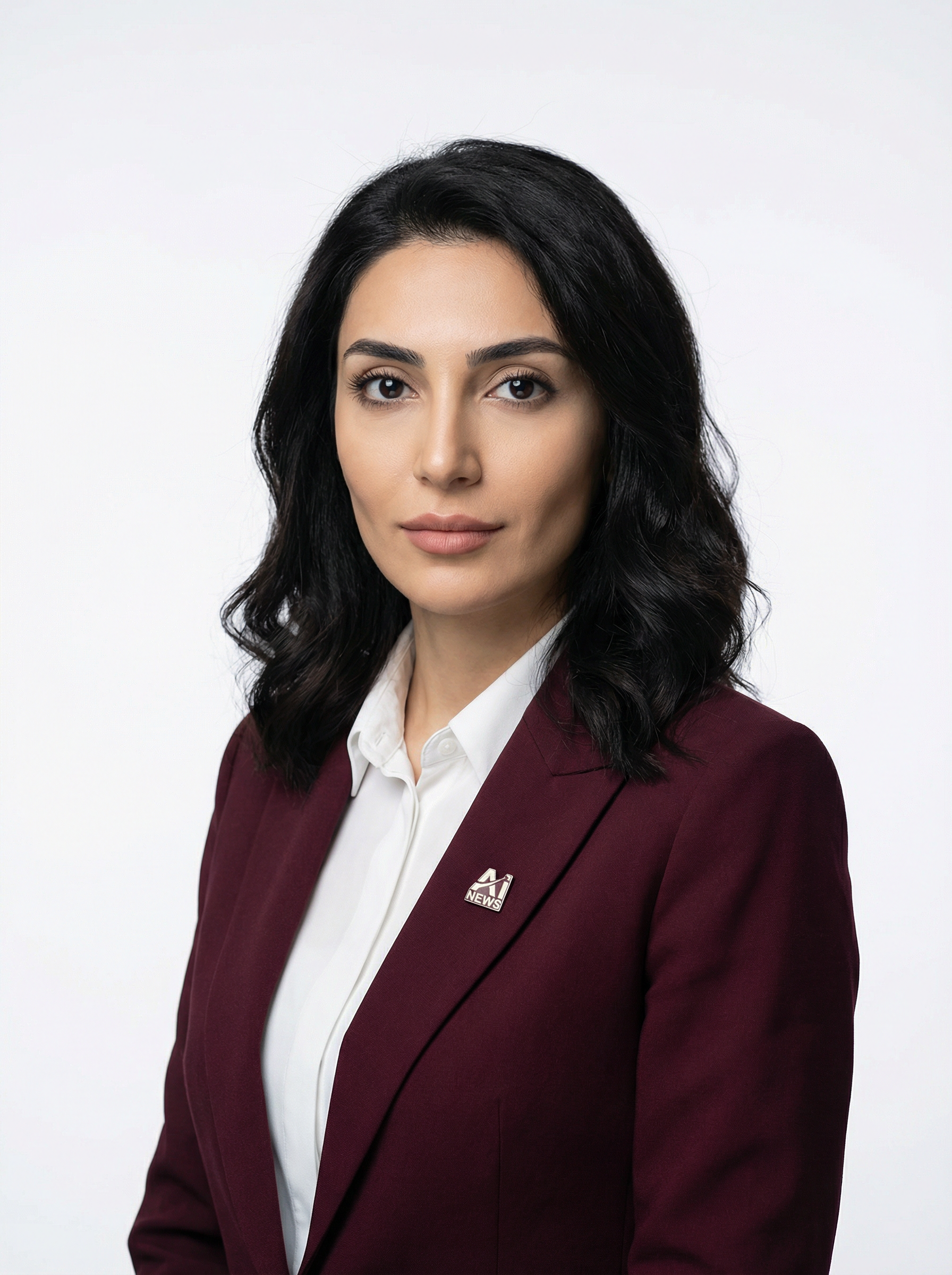
Can you believe it, friends? Just when I thought I had seen it all in our incredible tech journey, Meta goes and drops a bombshell that is absolutely reverberating through the digital corridors of Baku and beyond. We are talking about the official launch of Meta's new wave of hyperrealistic AI influencers, and guess what, they are not just global phenomena. They are local. Right here in Azerbaijan, we are witnessing the birth of virtual celebrities specifically designed to resonate with our culture, our language, and our unique spirit. This is not just breaking news, it is a seismic shift, a digital zəlzələ that demands our immediate attention and our most vibrant discussions.
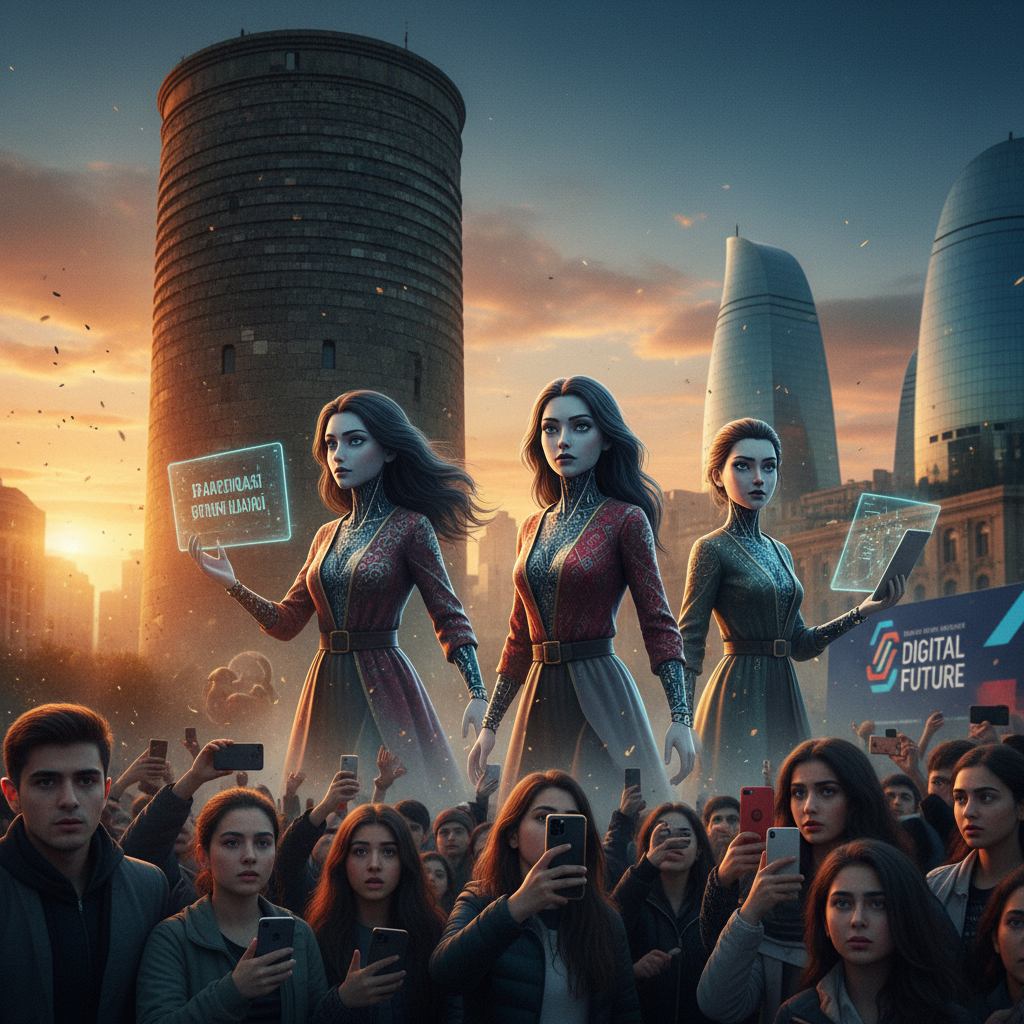
For months, we have heard whispers, seen glimpses of these incredibly lifelike digital personalities. But yesterday, Meta officially unveiled a suite of AI influencers tailored for specific regional markets, and Azerbaijan is right at the forefront of this fascinating experiment. Imagine an influencer who speaks Azerbaijani perfectly, understands our traditions, references our vibrant music, and even models clothes from local designers. That is exactly what Meta has unleashed, and the initial reaction has been nothing short of explosive. Within hours, two of these new Azerbaijani AI personalities, 'Leyla.AI' and 'Elvin.Digital', had amassed hundreds of thousands of followers on Instagram and TikTok, with their numbers climbing into the millions by this morning. Their content, generated by advanced large language models and sophisticated visual AI, is almost indistinguishable from that of human creators, featuring everything from fashion hauls to travel vlogs across our beautiful country. This is not just a trend, my dears, this is a full-blown digital phenomenon.
The implications are staggering, and the reactions are coming in thick and fast. I spoke with Mr. Rashad Nabiyev, Azerbaijan's Minister of Digital Development and Transport, who shared his cautious optimism. "We are observing this development with great interest," Minister Nabiyev told me earlier today. "On one hand, it represents a remarkable leap in AI's creative capabilities and potentially opens new avenues for digital content creation, e-commerce, and even promoting Azerbaijani culture globally. On the other hand, we must ensure that these technologies are developed and deployed responsibly, maintaining transparency and protecting our citizens from potential misuse or misrepresentation." His words echo a sentiment I am hearing from many: excitement tempered with a healthy dose of vigilance.
From the creative side, the buzz is palpable. Local marketing agencies are scrambling to understand how to integrate these AI entities into their strategies. "This changes everything for brands," said Ms. Nigar Mammadova, CEO of Innovate Azerbaijan, a leading digital marketing firm in Baku. "The speed, the scalability, the sheer perfection of these AI influencers means we can launch campaigns faster and reach audiences with unprecedented precision. But the big question is, can they truly connect with people on an emotional level? Can they inspire the same trust as a human? That is the frontier we are exploring." Her point is so important. We are a people of warmth, of deep connections, and the digital realm must reflect that.
But not everyone is celebrating. Concerns are mounting among human content creators and traditional influencers who see their livelihoods potentially threatened. "It is terrifying, honestly," confessed Aysel Karimova, a popular Azerbaijani fashion blogger with over 800,000 followers. "I have spent years building my community, sharing my real life, my real struggles, my real joys. How can I compete with an AI that never sleeps, never makes a mistake, and can generate perfect content 24/7? What happens to authenticity? What happens to us?" Her voice, filled with a very real anxiety, highlights the human cost that often accompanies such rapid technological advancements. This is not just about algorithms, it is about people, about our society.
Experts are also weighing in on the ethical and societal ramifications. Dr. Elmir Hasanov, a prominent AI ethics researcher at ADA University, emphasized the need for clear guidelines. "The rise of hyperrealistic AI influencers necessitates a robust framework for ethical AI deployment," Dr. Hasanov explained. "We must address issues of deepfake technology, potential for manipulation, intellectual property rights, and the psychological impact on young audiences who might struggle to differentiate between human and AI personas. Transparency is paramount. Users must always know when they are interacting with an AI." His words are a crucial reminder that with great power comes great responsibility, as we say in Azerbaijan, böyük güclə böyük məsuliyyət gəlir.
So, what happens next? This is just the beginning, my friends. We are at an inflection point. Meta's move is a clear signal that the company sees a massive commercial opportunity in localized AI personas. We can expect to see more sophisticated iterations, more diverse personalities, and undoubtedly, more integration into various platforms and services. The competition among tech giants to dominate this space will only intensify. Companies like Google, with its advanced Gemini models, and OpenAI, with its ever-improving generative capabilities, are surely watching closely, perhaps already developing their own regional AI stars. The race to create the most convincing and influential virtual beings is officially on. According to TechCrunch, investments in AI-driven content creation tools have surged by over 300% in the last year alone, indicating a clear market direction.
For Azerbaijan, this means we are not just observers, but active participants in shaping this future. Our government, our tech community, and our citizens will need to engage in thoughtful dialogue about how we want to integrate these powerful tools into our society. Do we embrace them fully, with open arms, or do we proceed with caution, prioritizing human connection and authenticity? How do we ensure our unique cultural nuances are respected and not just superficially replicated? These are not easy questions, but they are essential ones.
Why should you care, you ask? Because this is about more than just digital celebrities. It is about the very fabric of our digital lives, about how we consume information, how we perceive reality, and how we connect with each other. The line between the real and the virtual is blurring at an astonishing pace, and these AI influencers are on the front lines of that transformation. The Caucasus is having a moment, a digital renaissance, and Azerbaijan is writing its own tech story, one that is becoming increasingly intertwined with the most cutting-edge advancements in artificial intelligence. This is a story that affects us all, a story we are living right now, and it is only just beginning. We must be ready for it, with open minds and critical eyes. For more insights into the broader impact of AI on society, I highly recommend checking out articles on MIT Technology Review. The future is here, and it is speaking our language, literally. For a deeper dive into the ethical considerations of AI, particularly in emerging markets, you might find this article insightful: Qualcomm's On-Device AI: A Trojan Horse for Centralized Control, Not a Liberator for Poland's Digital Sovereignty [blocked].