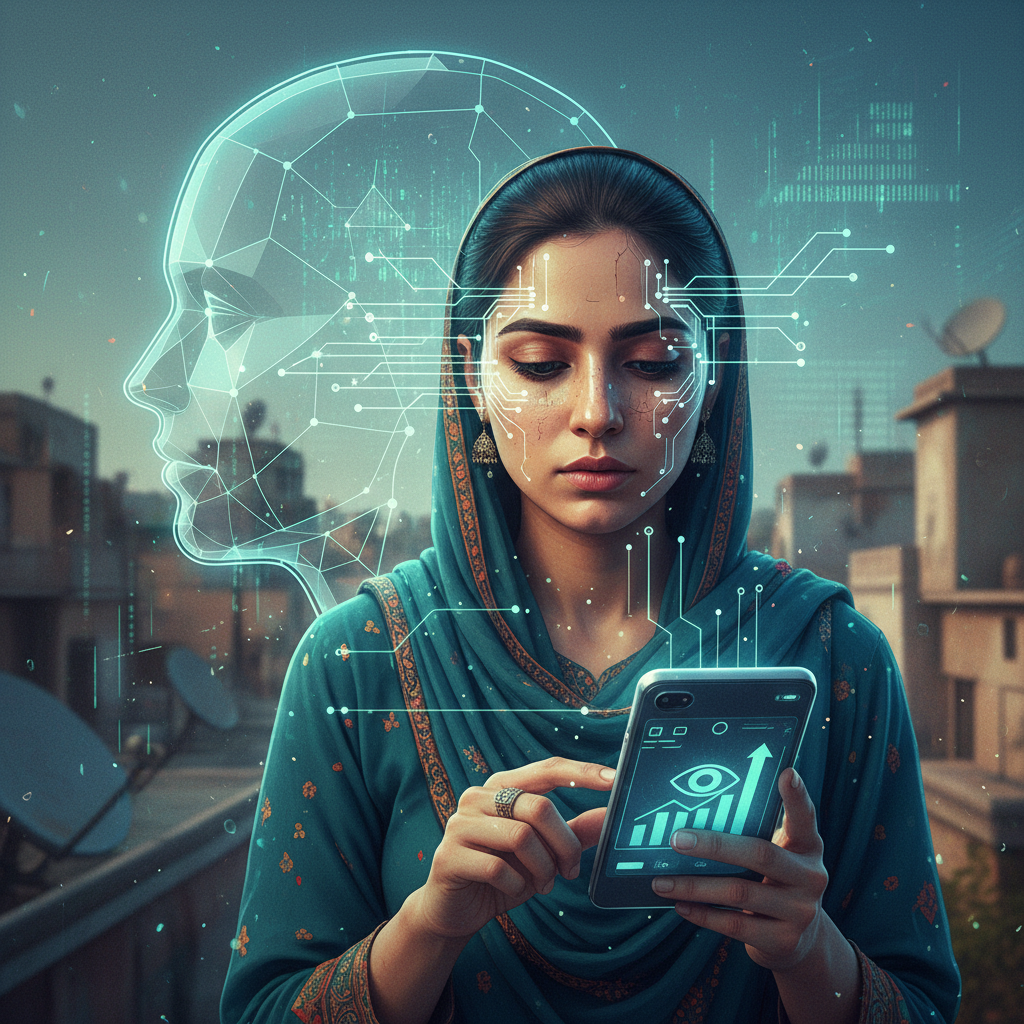

You're going to want to sit down for this, because the tech world, bless its ever-churning heart, is once again doing its best impression of a revolving door. One minute, everyone is fawning over Sam Altman's latest pronouncements, the next, the whispers from the East grow louder, carrying the distinct hum of processing power. We're talking about Baidu's Ernie Bot, Tencent's foundational models, and the whole armada of Chinese AI champions that are no longer just playing catch-up, but are very much in the race, and perhaps even setting the pace in certain lanes.
Here in Zambia, under our bright, sometimes blinding, sun, the conversation often revolves around immediate needs: food security, access to education, reliable electricity. AI, for many, still feels like a distant cousin living in a fancy mansion far away. But trust me, that cousin is coming to visit, and they're bringing a whole lot of luggage. The question is, whose luggage are we unpacking: Silicon Valley's or Beijing's?
For years, the narrative has been clear: Western tech giants, primarily American, held the keys to the digital kingdom. Google, Microsoft, Meta, OpenAI, you know the names. Their products, their algorithms, their very philosophies have shaped our online lives. But China, with its formidable state-backed investments and a massive domestic market, has been cultivating its own digital garden, and it's now blooming with impressive, if sometimes opaque, flowers.
Baidu's Ernie Bot, for instance, has been making significant strides. While it might not generate the same global headlines as OpenAI's GPT models, its capabilities are undeniable, particularly within the Chinese ecosystem. It's integrated into Baidu's vast array of services, from search to smart devices, creating a seamless, if somewhat walled, user experience. And this isn't just about chatbots. We're talking about advanced computer vision, natural language processing, and autonomous driving systems that are becoming increasingly sophisticated.
“The West has had a head start, yes, but to ignore the sheer scale and speed of innovation coming out of China would be a grave mistake,” says Dr. Chanda Mwape, a Zambian AI researcher who recently returned from a fellowship in Shenzhen. “Their approach is often different, more integrated with government policy and industrial application from the outset. For countries like Zambia, this presents both opportunities and challenges. Are we just consumers, or can we be partners?” Dr. Mwape, a former lecturer at the University of Zambia, now heads a local AI ethics think tank.
Indeed, the irony is almost too perfect. For decades, Africa has been a battleground for geopolitical influence, a place where superpowers vie for resources and allegiances. Now, the new frontier is digital, and the weapons are algorithms and data. China's Belt and Road Initiative has already laid significant physical infrastructure across the continent, including fiber optic cables. This digital backbone is now ripe for the integration of Chinese AI services and platforms.
Consider the financial sector. Mobile money has revolutionized how Zambians transact, bringing millions into the formal economy. Companies like MTN and Airtel, while global, operate with local nuances. Now, imagine Chinese fintech giants, armed with highly sophisticated AI models for credit scoring, fraud detection, and personalized financial products, entering this space. They could offer services tailored to the unbanked or underbanked, potentially leapfrogging traditional banking infrastructure. This isn't just theoretical. Ant Group, with its Alipay platform, has already demonstrated its prowess in financial inclusion at scale.
“We are seeing a clear shift in the global AI landscape,” explains Mr. Chen Li, a senior analyst at the Africa-China Tech Observatory in Nairobi. “Chinese companies are not just exporting technology, they are exporting a model of digital development that emphasizes integration and rapid deployment. For many African nations, who often feel left behind by Silicon Valley’s priorities, this can be very appealing. It’s a different kind of partnership, perhaps more pragmatic.”
But what does this mean for data sovereignty and privacy here in Zambia? Western tech companies, despite their own controversies, operate under a different regulatory framework than their Chinese counterparts. The EU's GDPR, for example, has set a global standard for data protection. China has its own data laws, but their enforcement and implications, especially for non-Chinese citizens using Chinese platforms, are less understood or scrutinized in the global arena.
If Baidu's Ernie Bot, or a similar Chinese AI, becomes the dominant tool for education, healthcare, or even agricultural advice in Zambia, what happens to the data generated? Who owns it? Who controls it? These are not trivial questions. They are fundamental to our digital future.
Let's take agriculture, the backbone of Zambia's economy. Imagine AI-powered drones, perhaps from a Chinese manufacturer, using computer vision to monitor crop health, predict yields, and optimize irrigation. This technology could be transformative, boosting productivity and food security. But if the underlying AI models are opaque, and the data flows back to servers thousands of kilometers away, what are the long-term implications for our farmers and our national data assets? It's a delicate balance between progress and control.
“We need to be proactive, not reactive,” states Ms. Nambela Banda, a policy advisor at the Zambian Ministry of Technology and Science. “Our government is actively engaging with both Western and Eastern tech partners, but we must prioritize our national interests. This means developing our own regulatory frameworks, investing in local AI talent, and ensuring that any technology adopted serves Zambian development goals, not just foreign commercial interests.” Her words echo a growing sentiment across the continent that Africa must define its own digital destiny.
There's also the cultural aspect. AI models are trained on vast datasets, and these datasets reflect the biases and perspectives of their creators. If Chinese AI becomes pervasive, will it subtly, or not so subtly, influence our cultural narratives, our social norms, or even our political discourse? It's a question that has already been raised about Western AI models, and it applies equally, if not more so, to those from other cultural contexts.
In a twist that surprised absolutely no one, the race for AI dominance is not just about who has the smartest algorithms, but who can build the most compelling ecosystems and forge the most strategic partnerships. China's approach, often characterized by long-term strategic investments and a willingness to operate in markets that Western companies might deem too risky or less profitable, positions it uniquely for engagement with developing nations like Zambia. You can read more about global AI developments on TechCrunch.
Ultimately, Zambia, and Africa as a whole, stands at a critical juncture. We can choose to be passive recipients of whatever AI technologies the global powers decide to offer, or we can assert our agency. This means fostering local innovation, investing in digital literacy, and crafting policies that protect our data and our sovereignty. It means asking tough questions about who benefits, and who truly controls the narrative. The digital future is not just happening to us, it's something we must actively shape. For more on the broader implications of AI, check out Wired's AI coverage. The future, as they say in the villages, is not for sleeping.