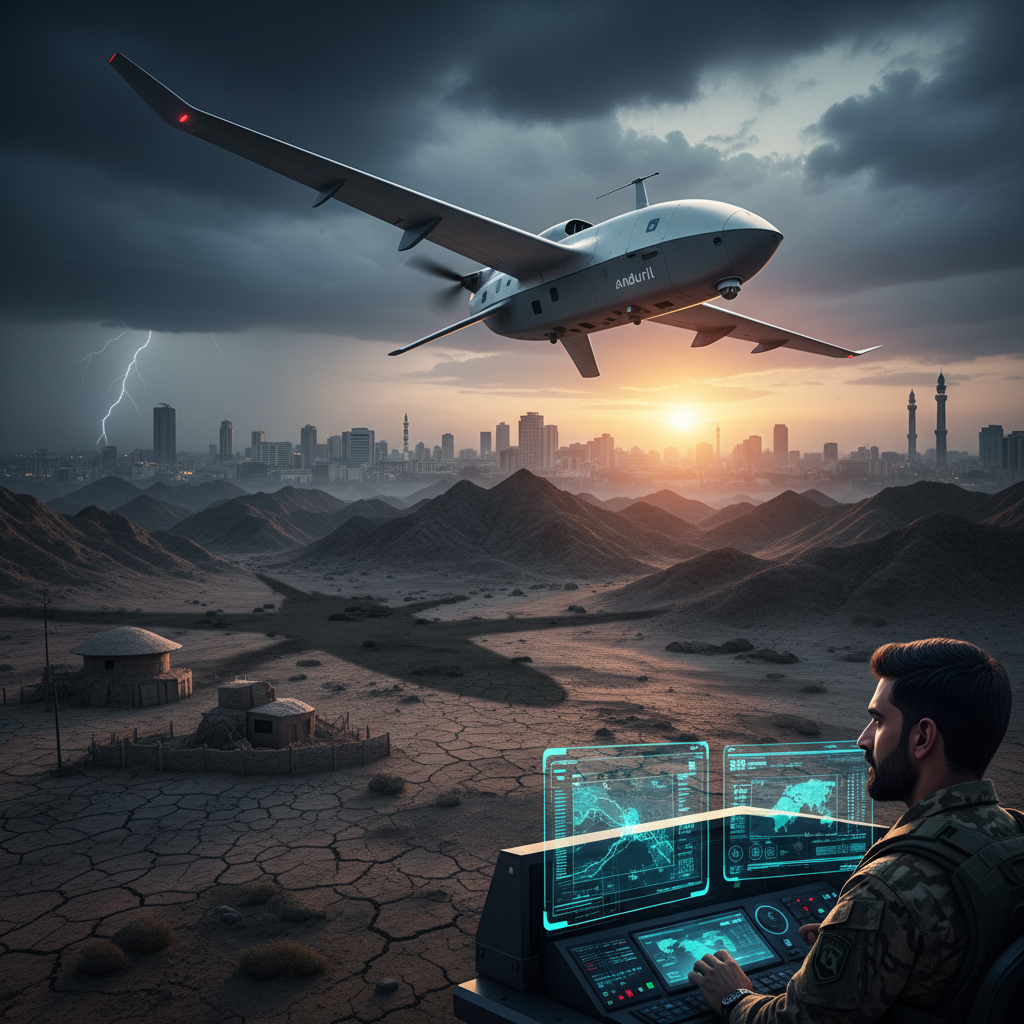

The news hit like a monsoon storm in the dry season: Anduril Industries, Palmer Luckey's controversial defense AI startup, has just clinched a monumental $4.2 billion contract with the Pentagon. This isn't just another defense deal; it's a seismic shift in how warfare is conceived and executed, pushing autonomous systems and AI-powered surveillance to the forefront. For us in South Asia, particularly in Pakistan, this development isn't abstract; it's a looming shadow that demands immediate attention and critical scrutiny. We must ask ourselves: what does a future dominated by such technology mean for our borders, our people, and our fragile peace?
Anduril's philosophy, built on what it calls 'software-defined defense,' essentially means integrating AI into everything from drones and surveillance towers to battlefield management systems. Their flagship products, like the Lattice AI platform, promise to process vast amounts of sensor data, identify threats, and even suggest or execute responses with unprecedented speed. While the Pentagon touts efficiency and reduced human risk, the implications for regions already grappling with complex geopolitical tensions are profound. Imagine AI-driven systems making split-second decisions near contested borders, or autonomous drones patrolling airspace with minimal human oversight. The margin for error shrinks, and the potential for unintended escalation skyrockets.
“This contract solidifies Anduril’s position as a dominant player in the future of defense, and it’s a future that relies heavily on AI,” stated Dr. Aisha Khan, a senior defense analyst at the Islamabad Policy Research Institute. “The sheer scale of this investment means these technologies will proliferate. We need to understand the ripple effects, especially for nations adjacent to major powers that might adopt similar systems or become testing grounds.” Dr. Khan’s words echo a growing anxiety among regional experts who see this as a dangerous acceleration of an AI arms race, one where ethical considerations often lag far behind technological advancements.
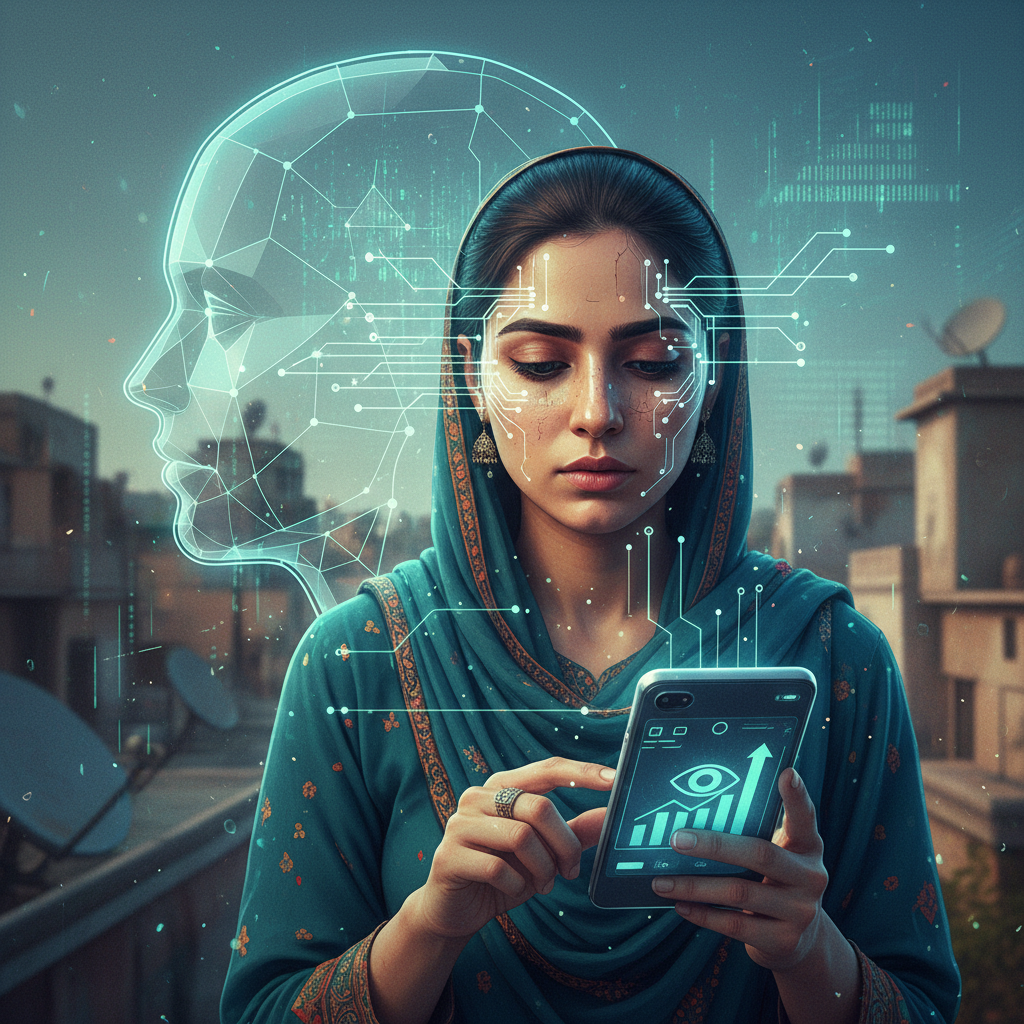
My concern, and it is a deep one, centers on the human element, or rather, its potential erosion. When algorithms dictate surveillance patterns, identify targets, or even manage response protocols, what happens to accountability? What happens to the nuanced understanding of local contexts, the cultural sensitivities that are so vital in conflict zones? Pakistan, with its complex security landscape and diverse populations, cannot afford to be a passive observer in this technological evolution. The digital divide already creates immense inequalities, and the introduction of advanced defense AI without robust ethical frameworks and digital literacy initiatives could exacerbate existing vulnerabilities.
“We are already struggling with basic digital access and cybersecurity infrastructure,” explained Mr. Tariq Shah, a technology policy advisor to the Ministry of Information Technology and Telecommunication. “To then face the prospect of sophisticated AI-driven defense systems operating in our vicinity, potentially gathering data or influencing narratives, without our own robust counter-strategies or even clear understanding, is deeply concerning. Our national security now has a significant AI dimension that we are only beginning to grasp.” His point is critical: the conversation around AI in Pakistan often focuses on economic development and digital inclusion, but this breaking news forces us to confront its darker, more militarized applications.
The immediate impact of this Pentagon contract might not be felt directly on Pakistani soil tomorrow, but the strategic implications are undeniable. As these systems are deployed and refined, their capabilities will inevitably influence regional security doctrines. Neighboring countries, both allies and adversaries, will closely watch their performance and likely seek to develop or acquire similar technologies. This creates a dangerous feedback loop, where each advancement by one side prompts a reactive escalation from another. It’s a classic security dilemma, but supercharged by AI’s speed and autonomy.
What happens next is crucial. Will Pakistan invest adequately in its own AI research and development, not just for economic growth but for national security and defense? Will we prioritize ethical AI guidelines and international cooperation to prevent autonomous weapons systems from spiraling out of control? The global conversation around AI governance, often dominated by Western powers and tech giants like Google and OpenAI, needs diverse voices. Voices from countries like Pakistan, which stand to be significantly impacted by these developments, must be heard. We cannot allow our future to be decided by algorithms developed in distant labs, without our input or understanding.
This isn't merely a technological update; it's a profound challenge to our sovereignty and our values. The promise of AI for development, for healthcare, for education, is immense. Women in Pakistan are coding the future, building incredible solutions for our communities. But we cannot ignore the flip side, the potential for AI to be weaponized, to deepen existing power imbalances, and to dehumanize conflict. The $4.2 billion question isn't just about how many drones Anduril will build, but what kind of world those drones will help create.
“The lack of transparency surrounding autonomous weapons systems is a global problem, but it hits harder in regions where trust is already fragile,” commented Ms. Zahra Ali, a human rights lawyer advocating for digital rights in Lahore. “When AI is involved in decisions that could lead to loss of life, the public has a right to know the parameters, the safeguards, and the accountability mechanisms. Without that, it’s a black box, and that’s a recipe for disaster.” Her advocacy underscores a fundamental truth: technology, especially powerful technology, must serve humanity, not the other way around.
As a journalist, my role is to shine a light on these issues, to amplify the voices that are often marginalized in these high-stakes discussions. This is a human rights issue disguised as a tech story, and it demands our unwavering attention. We need to push for greater transparency, for international treaties governing autonomous weapons, and for a commitment to human oversight in all critical defense applications. The future of peace in South Asia, and indeed the world, may very well depend on how we respond to the algorithmic battlefield that Anduril and others are so rapidly constructing. Don't look away. For more on the broader implications of AI in defense, you can follow discussions on MIT Technology Review or Reuters Technology. The conversation around AI ethics is ongoing and vital, as highlighted by various reports on Wired. We must ensure that our region is not merely a recipient of these technologies but an active participant in shaping their ethical deployment.