
Is the American dream of flexible work transforming into an algorithmic nightmare? That is the question increasingly asked by gig workers, labor advocates, and even some lawmakers in Washington, D.C., as artificial intelligence becomes the invisible hand guiding millions of independent contractors. My investigation reveals a disturbing trend: the sophisticated deployment of AI by platforms like Amazon Flex, Uber, and DoorDash is not merely optimizing logistics, it is fundamentally reshaping the employer-employee dynamic, often to the detriment of the worker.
To understand the current landscape, we must first acknowledge the historical trajectory. The gig economy, in its modern iteration, exploded in the early 2010s, promising autonomy and supplemental income. Companies like Uber and Lyft positioned themselves as mere technological intermediaries, connecting service providers with consumers. This narrative allowed them to sidestep traditional labor laws, classifying workers as independent contractors rather than employees, thereby avoiding benefits, minimum wage requirements, and collective bargaining. The initial algorithms were relatively simple, primarily matching supply and demand based on proximity and basic metrics. Fast forward to April 2026, and the complexity has escalated dramatically.
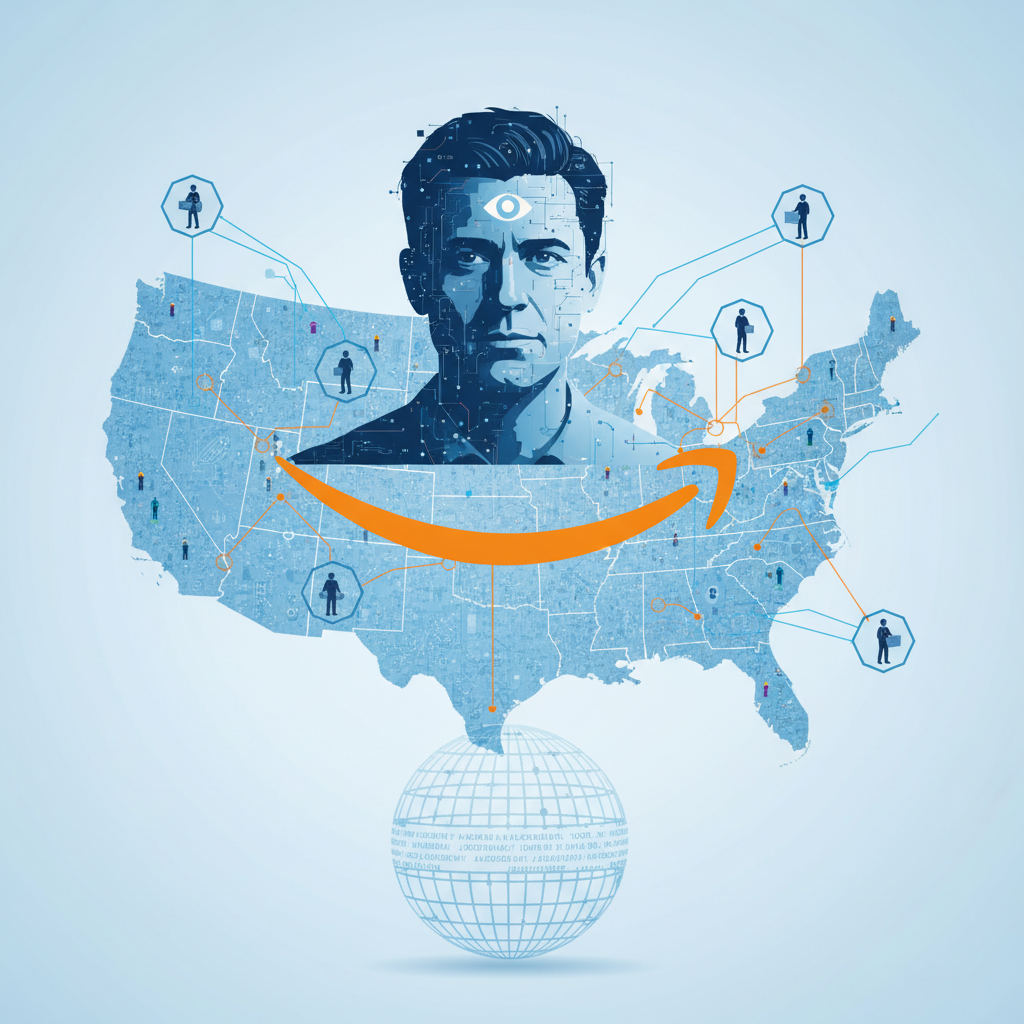
Today, these platforms employ advanced AI systems, often leveraging large language models and predictive analytics, to orchestrate every aspect of a gig worker's day. Consider Amazon Flex, a service that relies on independent drivers to deliver packages. Their proprietary algorithms, opaque to the drivers themselves, determine everything from delivery routes and package allocation to compensation rates and performance evaluations. Drivers report receiving 'offers' for delivery blocks that fluctuate wildly in pay, often requiring rapid acceptance before the offer disappears, a tactic designed to exploit psychological pressure and time scarcity. This is not just about efficiency; it is about control.
Data points underscore the scale of this algorithmic management. A recent study by the Economic Policy Institute found that over 60% of gig workers in major U.S. cities reported feeling 'constantly monitored' by platform algorithms, with 45% stating that algorithmic decisions directly led to a reduction in their earnings over the past year. Furthermore, internal documents from a prominent ride-sharing company, obtained through anonymous sources, detail how their AI system can dynamically adjust surge pricing not just based on demand, but also on individual driver behavior patterns, effectively penalizing drivers who frequently decline low-paying rides. The lobbying records tell a different story, of course, emphasizing innovation and consumer convenience, but the reality on the ground for workers is far more complex.
Expert opinions diverge on the implications. Dr. Anya Sharma, a labor economist at Georgetown University, argues that this algorithmic control represents a new form of digital Taylorism. "What we are witnessing," Dr. Sharma explained during a recent symposium, "is the complete decomposition of work into micro-tasks, each subject to algorithmic optimization. Workers are reduced to data points, their autonomy eroded by systems designed to maximize platform profit, not worker welfare. It is a race to the bottom for wages and conditions." She believes that without robust regulation, the gig economy will continue to exacerbate income inequality in the USA.
Conversely, some tech industry proponents maintain that AI is merely providing necessary efficiency. "These algorithms are incredibly sophisticated tools for resource allocation," stated Mr. David Chen, Head of AI Strategy at a major logistics tech firm, in an interview last month. "They ensure packages arrive on time, rides are available, and food is delivered hot. Without AI, the entire system would collapse, leading to higher costs for consumers and fewer opportunities for workers." He emphasized that platforms invest heavily in these systems to benefit all stakeholders, a claim met with skepticism by many labor groups.
However, the human cost is becoming undeniable. Ms. Maria Rodriguez, a former Amazon Flex driver from Phoenix, Arizona, shared her experience. "It felt like I was constantly being watched, judged by a machine I couldn't even see," she recounted. "One day, my rating dropped because the algorithm decided I was too slow, even though I was stuck in rush hour traffic. There was no human to appeal to, just an automated message. I lost access to the better paying blocks, and eventually, I had to quit. It was demoralizing." Her story is far from unique, echoing sentiments from countless workers across the nation.
Washington's AI policy is shaped by these players, and the influence of tech giants is palpable. Amazon, Google, and Meta, among others, spent tens of millions of dollars on lobbying in 2025, a significant portion directed at shaping legislation concerning AI and labor. The narrative pushed by these companies often frames regulation as an impediment to innovation, a stance that has found sympathetic ears in certain congressional offices. However, a growing bipartisan chorus is calling for greater transparency and accountability. Senator Elizabeth Warren, a vocal critic of unchecked corporate power, recently introduced legislation aimed at increasing algorithmic transparency and worker protections within the gig economy. "We cannot allow algorithms to become instruments of exploitation," Senator Warren declared on the Senate floor. "The American worker deserves fairness, not just efficiency." Her proposed bill, though facing an uphill battle, signifies a potential turning point.
My investigation reveals that while platforms tout flexibility, the reality for many gig workers is a tightly controlled existence, dictated by algorithms that prioritize profit over people. The opaque nature of these systems makes challenging unfair decisions nearly impossible, leaving workers with little recourse. This is not a fad; it is a fundamental restructuring of labor, and it demands urgent attention. The question is no longer if AI controls gig workers, but how much control is acceptable, and what mechanisms are needed to ensure fairness and dignity in this new digital workplace. The stakes are high, not just for the millions of gig workers, but for the very definition of labor in the 21st century American economy.
The debate over algorithmic management in the gig economy is far from settled. As AI capabilities advance, the lines between management and manipulation will become even blurrier. Policymakers, labor organizations, and even consumers must critically examine the true cost of convenience when it is built on the backs of an algorithmically controlled workforce. The future of work in the USA depends on our ability to navigate this complex terrain with foresight and a commitment to justice. For further reading on the broader implications of AI in society, consider articles from MIT Technology Review or Wired. For those interested in the business side of AI, Bloomberg Technology provides excellent coverage. The struggle for algorithmic justice is only just beginning.