The digital winds of change, much like the khamsin sweeping across our Saharan plains, are once again reshaping the landscape of human endeavor. This time, the gusts carry the seeds of generative artificial intelligence, scattering them across the fertile fields of creativity. At the vanguard of this transformation stands Adobe Firefly, a suite of AI-powered tools that promises to democratize design, accelerate production, and unlock new artistic frontiers. Yet, from my desk in Algiers, observing this technological surge, I cannot help but ask: is this truly a renaissance for creativity, or merely a sophisticated mirage, particularly for the burgeoning artistic communities across Africa?
My position is unequivocal: while generative AI offers undeniable efficiencies and novel capabilities, its current trajectory risks commodifying creativity, devaluing human artistry, and exacerbating existing disparities if not carefully managed. The mathematics behind this is elegant, a complex interplay of algorithms learning from vast datasets, but the societal implications are far more intricate, akin to a mosaic where each tessera represents a human story, a livelihood, a cultural expression.
Adobe Firefly, with its text-to-image generation, generative fill, and text effect capabilities, has been lauded by many as a game-changer. It allows designers to iterate at speeds previously unimaginable, to conjure intricate patterns or realistic textures with simple prompts. For a small design studio in Oran, or a fledgling marketing agency in Tizi Ouzou, the prospect of generating multiple design options in minutes, rather than hours, is undeniably appealing. This efficiency, proponents argue, frees artists from mundane tasks, allowing them to focus on higher-level conceptualization and innovation. Indeed, figures from Adobe itself suggest a significant reduction in production times for certain creative workflows, sometimes by as much as 30 to 50 percent, according to their internal reports.
However, this narrative of liberation often overlooks the profound implications for the very definition of 'creativity' and the economic viability of human artists. When a machine can generate an image indistinguishable from one crafted by a human, what becomes of the value proposition of human skill and unique vision? The fear is not merely that AI will replace artists, but that it will dilute the perceived value of art itself. As one prominent Algerian calligrapher, whose intricate Kufic designs are the culmination of decades of practice, remarked to me recently, "If a machine can mimic my hand, what then is the soul in my ink?" This sentiment resonates deeply within communities where artistry is not merely a profession, but a cultural inheritance, a lineage of skill passed down through generations.
Anticipating counterarguments, many will point to the 'tool' analogy: just as the camera did not replace the painter, nor the synthesizer the musician, generative AI is merely another instrument in the artist's toolkit. They argue that Firefly empowers artists, providing them with superpowers to realize visions previously constrained by time or technical skill. Furthermore, the argument is made that AI will create new job categories, new forms of art, and new markets, much like the digital revolution did with web design and animation. "We are not replacing artists; we are augmenting them," stated Scott Belsky, Adobe's Chief Product Officer and Executive Vice President of Creative Cloud, in a recent interview, emphasizing the collaborative potential of these technologies. Reuters often covers these corporate perspectives, highlighting the efficiency gains and market expansion.
My rebuttal to this perspective is twofold. Firstly, the 'tool' analogy, while superficially appealing, often glosses over a critical distinction: previous tools extended human capabilities; generative AI, in its current form, often simulates human creative output. A camera captures light; it does not invent the scene. A synthesizer manipulates sound waves; it does not compose the melody from scratch without human input, at least not yet with true artistic intent. Firefly, by generating content from prompts, steps into a domain previously exclusive to human imagination and skill. Let me walk you through the architecture: the models are trained on vast datasets of existing human-created art, effectively learning patterns and styles. While the output can be novel, its genesis is fundamentally derivative, a complex statistical interpolation of past human efforts. This raises significant ethical questions regarding intellectual property and fair compensation for the artists whose work implicitly fuels these models. The debate around data provenance and artist compensation is far from settled, and it is a critical concern for artists who rely on their unique style for their livelihood.
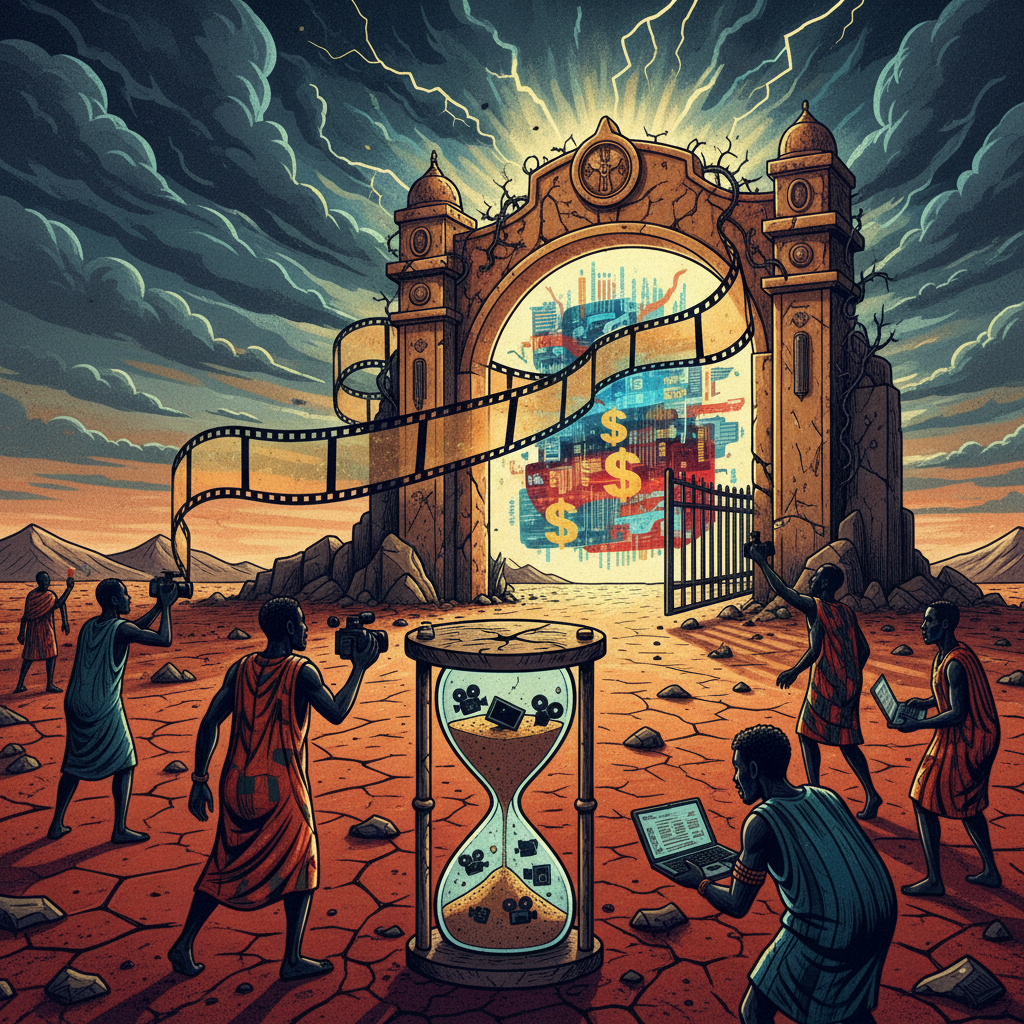
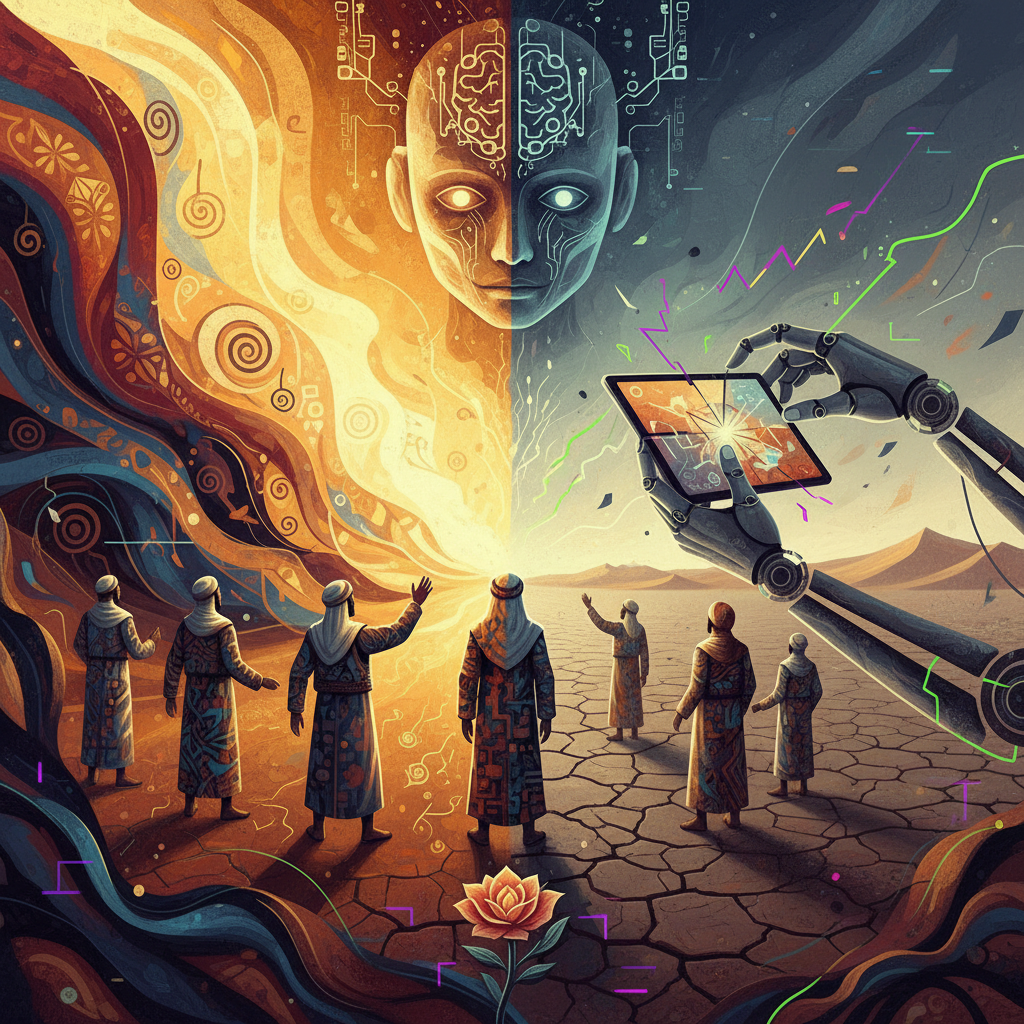
Secondly, the promise of new job categories and markets often overlooks the immediate economic displacement and the barriers to entry for those in less privileged regions. For an artist in Algiers or Dakar, access to high-speed internet, powerful computing resources, and the subscription fees for sophisticated AI tools like Firefly can be prohibitive. While the global north discusses augmentation, many in the global south are grappling with the potential erosion of traditional creative industries without adequate infrastructure or policy frameworks to adapt. The digital divide, far from narrowing, risks widening into a chasm where only those with access to the most advanced tools and training can compete. The implications for cultural preservation and the diversity of artistic voices are profound. If the algorithms are predominantly trained on Western datasets, will our unique Algerian aesthetic, our Amazigh patterns, our Andalusian melodies, find their authentic expression, or will they be homogenized into a global, algorithmically palatable average? This is not merely a technical problem; it is a cultural imperative.
From a technical standpoint, the advancements in generative adversarial networks (GANs) and diffusion models are truly remarkable. The ability to generate coherent and aesthetically pleasing imagery from natural language prompts is a testament to decades of research in artificial intelligence. However, the commercial deployment of these technologies, particularly by giants like Adobe, necessitates a deeper ethical consideration than is currently being given. We must ask: who truly benefits from this efficiency? Is it the individual artist, or primarily the corporations seeking to streamline production and reduce costs? The current economic models often favor the platform providers and large enterprises, leaving individual creators vulnerable.
The creative industry, much like the ancient scholars of Baghdad who preserved and advanced mathematics, must engage with this new technology not with blind enthusiasm, but with critical discernment. We need robust regulatory frameworks that protect artists' rights, ensure fair compensation for data used in training, and promote equitable access to these powerful tools. We need initiatives that empower local artists to leverage AI in ways that enhance, rather than diminish, their unique cultural expressions. Organizations like MIT Technology Review have highlighted the need for ethical AI development, a call that resonates strongly here.
The embrace of generative AI by the creative industry is inevitable, much like the rising sun. But how we navigate this dawn will determine whether it illuminates a path to shared prosperity and artistic flourishing, or casts long shadows of economic insecurity and cultural dilution. For Algeria, and for Africa, the challenge is to harness this technology not as passive consumers, but as active participants, shaping its evolution to serve our unique cultural heritage and empower our artists, ensuring that the soul in the ink, the spirit in the clay, and the rhythm in the melody remain unmistakably human. The conversation must move beyond mere efficiency to encompass equity, ethics, and the very essence of human creativity.